Italian immigrants in south of Santa Catarina: origins, a new homeland and the time that has passed
May 2017
They are no longer here to tell us how everything happened. From the history books we can know a good deal of the facts, places and multiple analyzes that still have repercussions on the theme of European emigration to the New World in nineteenth and first decades of twentieth century. Passed from generation to generation oral memory added to discoveries of ancient documents and other archaeological materials are also important elements to better clarify and detail these historical moments. The massive human displacement during the process of emigration towards the New World was configured as a great alternative that benefited mutual interests of these two worlds. From the extreme misery, hunger and lack of perspective to which they were immersed, the need to be impelled to abandon their people and their land any fate would be better. Read more »
Many of our ancestors were part of this large population contingent. Entire families set out on the other side of the unknown ocean carrying only a few personal objects left behind. They left everything behind, or almost everything. Fact is that the greatest good they could bring with them was not in objects, it was in their strength, honor and dignity. And in this sense, consciously or not, perhaps we can look at the ocean as a great aid to this process: as the one capable of undoing marks, of leaving no trace and of irreparably separating worlds. The one able to leave on the other side the hopelessness that would never return, the one capable of separating forever: past and future. A reality for those who emigrated and for those who remained there.
Cross the ocean should be the greatest proof they would have to undergo to reach the Edenic America: this is not how it happened. The movement of the ship, noise of the sea, foam of the waves, icy wind were part of the interminable days of crossing. We will never know what really happened with each of them during this strenuous trajectory: sorrows, uncertainties, fears, sorrows, rages, despair ... hopes. We will never know in full what they really felt. Today we know that this was only the beginning of the long journey that was to come: for young and old, and for a whole generation of men, women and children who would come to settle in another land, join another people and be part of another new country.
Getting to the mainland did not necessarily mean the end of the journey for them. It meant the end of a pathway that had left no traces, no way back, or perhaps a place where there could be a last look back in the attempt to glimpse the homeland that had been forever on the horizon, and from that moment on would come to exist only in memories. Also a place where the dream ceased to be a dream and turned into another harsh reality: to continue the arduous way to the colonies that they would inhabit, much of it on foot, in carts or on loins of mules.
They had to establish themselves within a new culture, with other rules, another language, other habits and other customs. Had to integrate with a totally different environment to their own and to deal with people of the most different origins: Europeans, muletears, indigenous and blacks. Had to adapt to a new lifestyle completely different from the one they had come up with, in exchange for a piece of land that would be paid for with their work. Jungle, insects, venomous animals were part of the environment. They were just a work force that was there only to occupy lands considered vacant. They had no way to go back and the only alternative was to face the challenge of the early days, without adequate tools, without food or medicine often. Difficult times but certainly part of the reality lived by many of our Italian ancestors who came to colonize the south of Santa Catarina: theme of this work.
Large-scale exploitation of coal, railroads, bridges, new roads and pathways has contributed to greater integration between the colonies and trade in products through ports and Santa Catarina mountains. And as time passed these difficulties were overcome with great determination, solidarity and faith.
Already in the distance echoed the singing of the carts bringing their belongings. Most probably the homesickness of the native land did not disappear, but gradually it divided space with the new world that was being constructed with their hands, every day a new life. From the ground came the food: manioc, corn, grapes, vegetables, from the amimals came: meat, lard, milk, eggs, leather and the driving force for plowing the earth. Techniques and tools were introduced to improve processes: water wheels, mills, stills, ironworks, etc. Religiousness was always the safe haven where they could express their pain and their joys and renew their faith in God for better days. A place of coziness and convergence, union and support to seek the necessary forces to face the so hard fate that life had reserved for them. In festivities it was possible to exalt a little the abundant gastronomy that the earth already allowed them obtain. Songs and dances referred back to the traditions they brought from their origins. Language was already permeated by new expressions and by Portuguese speaking. Playng "boccia" and "mora", polenta, fortaia, salami, wine, speech and the most pronounced gesture evidenced their roots, their ancestry and their soul.
And so years and decades went by: planting, harvesting, building, expanding, mixing with other peoples. Their children came, and children`s children, children`s grandchildren... A story that began 140 years ago since the first group with 291 Venetian and Lombard immigrants after thirty days left Havre port in Normandy, France, with stops in Rio de Janeiro, Desterro and Laguna for boat exchanges, and more twelve days by land from Morrinhos port in Tubarão arrived at the Colony of Azambuja, currently District of Pedras Grandes city.The following video of 14 minutes in Portuguese revisits this land route made by pioneer immigrants in Santa Catarina State. With the presentation of Eusébio Pasini Tonetto, edited by Roger Gnecco, participation of Elzo Felippe and songs by Maria do Carmo Marcon, Tio Angelin and Eco di Venessia Group, all descendants of Italian colonizing immigrants, incorporate through music, sounds and voice a little of the soul of their heirs.
With subtitles in Italian, translation of Fabíola Maria Prado Cechinel, a synthesis of this video can be visualized in:https://www.youtube.com/watch?v=xduVRQ3xKSU
They are no longer here to tell us how everything happened or what they felt. Perhaps not even this was possible if not in their mother language... that one which enables humans express their truest and deepest feelings. Perhaps visual language of images, resource I use in this work, allows us to go further. More than words written or spoken let us perceive a little more about the feeling they have projected through their work: their origins, environment they lived, influence they had on the peoples who related, on the adaptation of habits and customs and everything they have built. As a subjective code I think that between the lines of all that they left us is reflected much of the deepest feeling of these valiant men and women who have planted their roots here.
And it was about in this extensive environment and expressive material heritage that I set out to know, experience and record in images. There were five years of travels and thousands of kilometers by more than twenty cities of the south of Santa Catarina, and Arroio Trinta city in the Midwest, originally colonized by Italian immigrants from Treviso, Urussanga cities and surroundings. Many photographic equipment and hundreds of images formed a rich photographic collection which helped me to understand a little more about the immigration issue that occurred in the south of the State, as well as about the place and time that I lived my youth in Criciúma city.
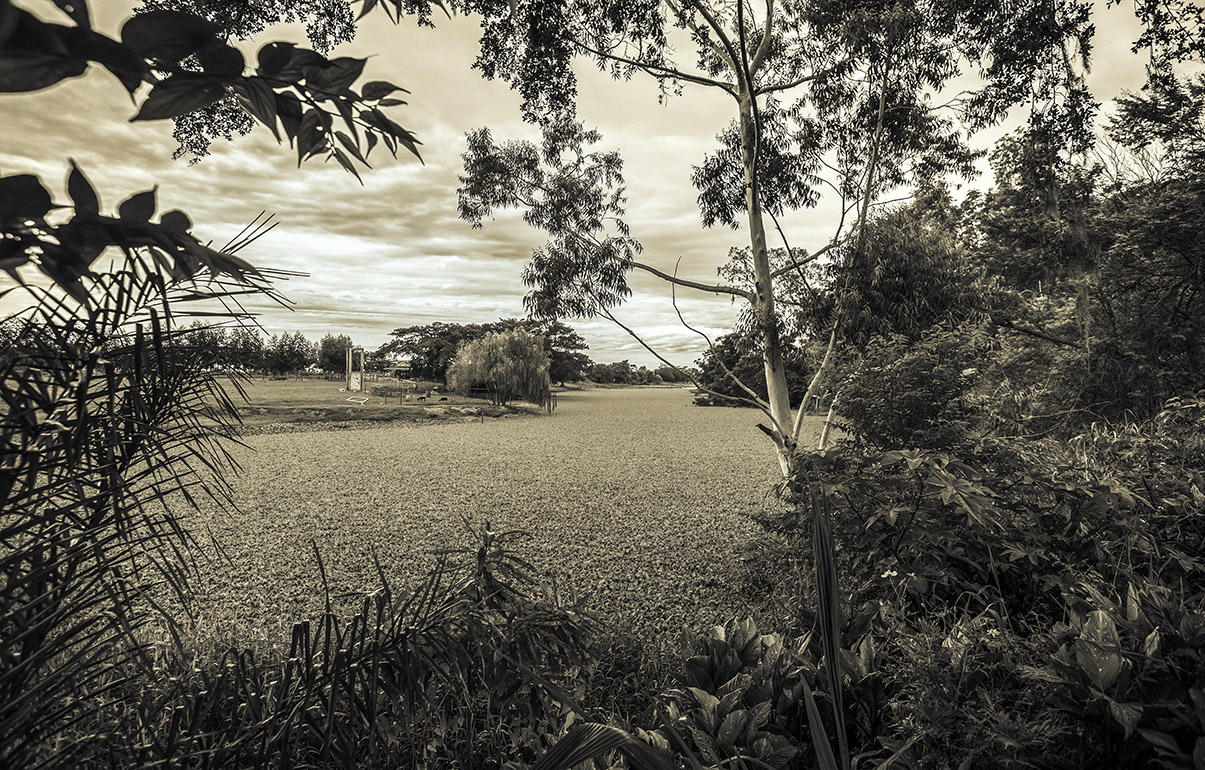
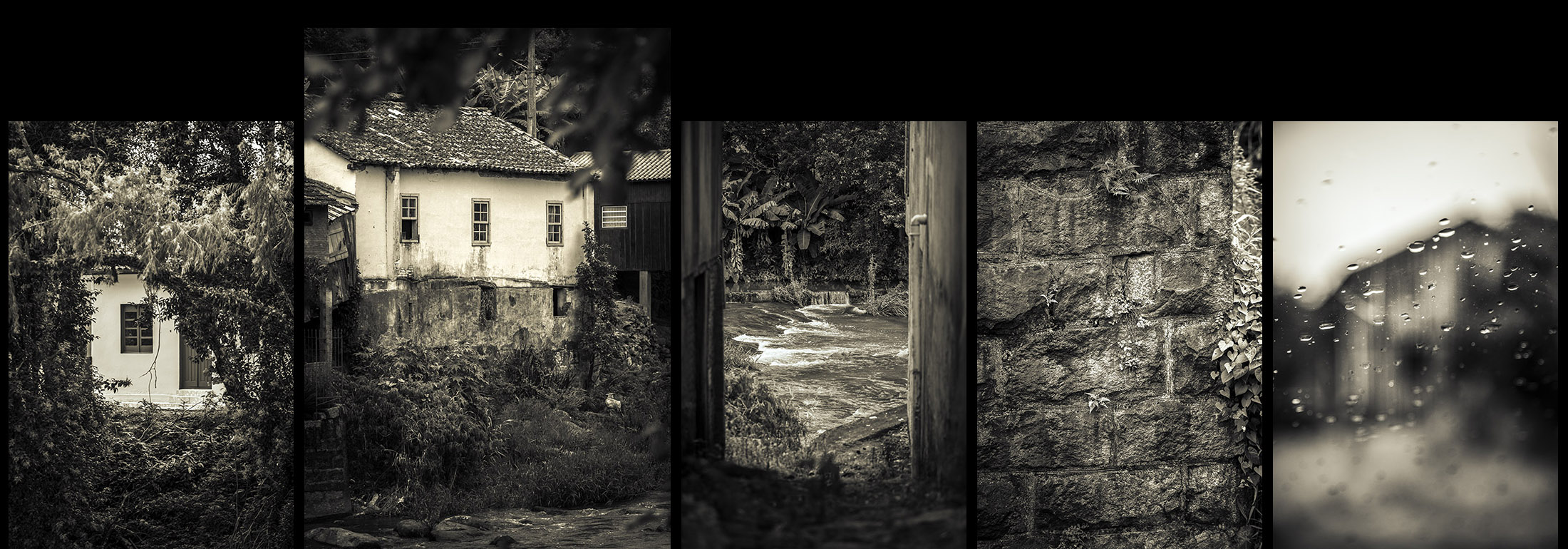
I start this virtual exhibition with monochrome photographs that revisit the pathway of the immigrants in Santa Catarina soil, and in sequence with color photos the places I visited. Original and revealing this work is an invitation to reflection: about our origins, about how much the work force of a people is capable, and also about what contribution each of us is able to give in order to build something even better.
This work is a tribute to Italian immigration but it is also a tribute to all the people who immigrated and made their lives here, and that the result of their strength and work have made this a great country. I also dedicate this work to all those who migrate. So that their pain will not be in vain and that their fearlessness in face the challenge of unknown will provide the necessary force to accomplish their mission, compensated by the results that this fight is capable of giving you.
I offer this photographic exhibition to my parents Sonia Léa and Oduvaldo, on behalf of all those who preceded us, and to my grandson Vítor in the name of future generations, so that this work will be preserved with affection as a document of great value that it is: because preserving the past is (the) future.
Special thanks
- To Eusébio Pasini Tonetto, Turismologist, Writer and Extensionist of Epagri. Descendant of pioneer Italian immigrants, Eusébio contributed significantly with historical information about immigration and elaboration of the concept of this work, as well as his participation in the video in Portuguese: “Italianos colonizadores no sul de Santa Catarina: origens, a nova pátria e o tempo que passou”, that integres this work. For his friendship, receptivity and dedication to historical research on Italian immigration in the south of Santa Catarina my biggest thank you!
- To Roger Gnecco, company owner of Impacto Soluções Multimídia, for his dedication and quality undertook in the video editing: “Italianos colonizadores no sul de Santa Catarina: origens, a nova pátria e o tempo que passou” (in Portuguese).
- To Fabíola Maria Prado Cechinel, President of the Comitato Veneto of Santa Catarina, who contributed so much with her knowledge and to translate into Italian of the video in Portuguese: “Italianos colonizadores no sul de Santa Catarina: origens”.
- To my mother Sonia Léa Reichardt Machado, descendant of German and Italian immigrants that went to Rio Grande do Sul State in the past, and to my sister Lisiane Machado for her great contributions and support.
- To my cousin Maria Teresa Machado for her great incentive of my photographic project.
- To Mário Correia da Silveira Neto for his web support and site management.
- To psychologist Ana Cláudia Judice Alleotti for her great contribution to my photographic project.
- To Maria do Carmo Marcon for her musical contribution to this work, and to her mother Mrs. Cleonice Felippe Marcon for the stories she told me about her Italian ancestors at Pedras Grandes.
- To uncle Angelin, descendant of Italian colonizing immigrants and a traditional musician from Pedras Grandes for his musical contribution to this work.
- To Eco di Venessia group from Nova Veneza for their musical contributions to this work, especially to the musician Onévio J. Colombo and the conductor Edson Antônio Ghisleri.
- To Mr. Elzo Felippe, descendant of Italian colonizing immigrants and a traditional winemaker from Azambuja in Pedras Grandes, for his interview that integrates the video “Italianos colonizadores no sul de Santa Catarina: origens, a nova pátria e o tempo que passou” (in Portuguese).
- To Murilo Felippe, businessman and descendant of Italian immigrants, for his contribution and support during the capture of images made in Azambuja, Pedras Grandes.
- To Mrs. Ivete Felippe and Mrs. Marcolina, Secretaries of Saint Mark Church in Azambuja, Pedras Grandes.
- To Mrs. Eliete and Mrs. Chalane of Culture House of Pedras Grandes.
- To Mrs. Cenilda Maria Mazzuco, Secretary of Saint Gervasius and Saint Protasius Church in Rio Maior, Urussanga.
- To Mrs. Iris Cancelier who authorized images of the centennial fig tree, the stone house and historical objects on her family's property, and her son Filipo de Brida, owner of Cassana Handicraft Brewery in Rio Maior, Urussanga.
- To Idemar Ghizzo, Museologist at the Plínio Benício Historical Documentation Centre located at the Stone House of Princess Isabel Open-Air Museum in Orleans.
- To Mr. João Pedro de Pieri, his wife Vitalina and their family who authorized images in the colonial millstone of their property in Treze de Maio.
- To Father Nivaldo Caron owner of Belvedere Castle in Treze de Maio.
- To Gabriel da Conceição, Journalist, and Susan Borloluzzi Brogni, Secretary of Culture, Sport and Tourism at the City Hall of Nova Veneza.
- To Mr. Vilmar Vitório Ferro, Saint Mark Parish Eucharist Minister in Nova Veneza.
- To Realdo Medeiros of Augusto Casagrande Museum in Criciúma.
- To Ricardo Neves of Octávio Fontana Visitation Mine in Criciúma.
- To Amadio Vettoretti, in memoriam.
- To Mrs. Lorilza of Railroad Museum in Tubarão.
- To Werner Thaler, Sculptor in Treze Tílias, for his support in my photographic project, for his contributions in the concept of this exhibition and mainly for his suggestion to include images of Arroio Trinta, located in the Midwest of Santa Catarina, that was colonized by Italians immigrants from southern Santa Catarina.
- To Professor Silvano Abati, descendant of Italian colonizing immigrants, for his historical informations and for his great support during the recordings in Arroio Trinta.
- Ildefonso Cividini, Vice Mayor of Arroio Trinta, descendant of Italian colonizing immigrants, for his informations about the colonization of the city.
- To Samir Ruzza, Journalist, for sending me the DVD of the film in Portuguese “Arroio Trinta - Da genética ao coração”, work made by him for graduation in Social Communication at Univali, Itajaí in 2011, under the guidance of Valkyrie Michela John.
- To Vani Boza, Journalist, for sending me the book of her authorship “Arroio Trinta e sua identidade” (in Portuguese).
- To Mrs. Maria Terezinha Dandolini who sent me the text of her authorship “História da Comunidade de Turvo”.
- To Stevan Grützmann Arcari, Epagri winemaker in Urussanga, for his technical contributions about grape and Goethe wine.
- To Renato Mariot Damian and Matheus Damian, descendants of Italian colonizing immigrants, owners of Casa Del Nonno Winery in Urussanga.
- Luiz and Patrícia Mazon, owners of Vigna Mazon in Urussanga.
- To Quarezemin Winery in Içara.
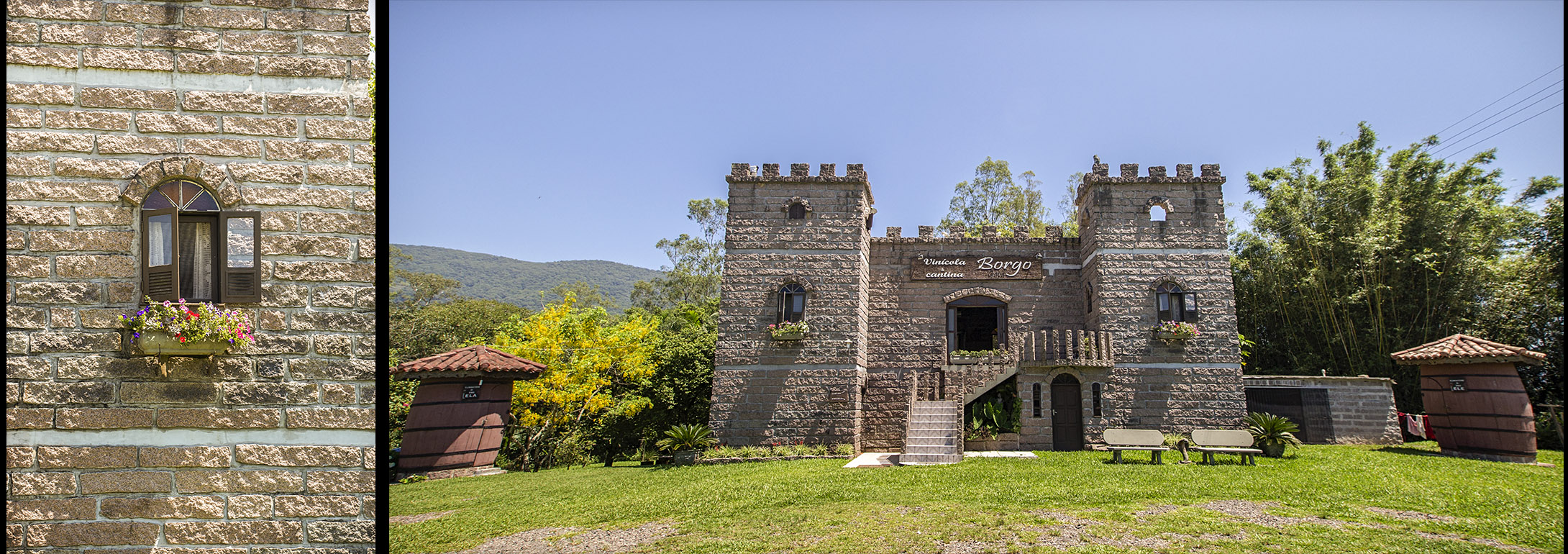
- To Onévio J. Colombo and his wife owners of Borgo Winery in Nova Veneza.
- To Miguel Damiani and his wife, artisan producers of Goethe wine in Nova Veneza.
- To Larissa Bortolotto, Luana Mondardo Bortolotto, Cleonice Mondardo Bortolotto and Ângelo Bortolotto owners of Ristorante Veneza in Nova Veneza.
- To Dioclédia and Alemão owners of Bibi Restaurant in Pedras Grandes.
- For contributions I received of this friends: Ana Paula Nunes Teodoro from Tubarão, Brigitte Gorini from Nova Veneza, Carlos Eduardo Rohrer Felder fromTreze Tílias, Clovis Luiz Godoy from Arroio Trinta, David Massuda from Florianópolis, Débora Richter Cicogna from Joinville, Heládio Tonetto from Turvo , Father Joel Sávio from Criciúma, Gonzalo Humeres Flores from Florianópolis and Léo Piacentini from Treze Tílias.
- To Municipal Guard of Florianópolis: www.pmf.sc.gov.br/entidades/guardamunicipal
- To ProGoethe - Goethe Grape and Wine Producers` Association: www.progoethe.com.br
- To Hotel Ibis Criciúma: www.ibis.com/en/hotel-6315-ibis-criciuma/index.shtml
- To Art Hotel in Tubarão: www.arthotel.com.br
- To Hotel Tirol in Treze Tílias: www.hoteltirol.com.br
- To Hotel San Ghermann in Arroio Trinta: www.hotelsanghermann.com
References
Books
- Tonetto, E. P.; Ghizzo, I.; Pirola, L. Colônia Azambuja: a imigração italiana no sul de Santa Catarina. Florianópolis: Epagri, 2015, 211 p.
- Italianos em Santa Catarina. Volumes 1 and 2 / organized by Walter F. Pizza; with collaboration of Ana Maria Marques... [ et all. ]. - Florianópolis: Lunardelli, 2001.
- Marzano, Luigi. Colonos e missionários italianos na floresta do Brasil / Luigi Marzano; Translation João Leonir Dall`Alba. - Florianópolis: UFSC Ed. / Urussanga City Hall, 1985. p. 200.
- Vieira Ferreira, Fernando Luís, 1868 - 1960. Azambuja e Urussanga: memória sobre a fundação, pelo engenheiro Joaquim Vieira Ferreira, de uma colônia de migrantes italianos em Santa Catarina / Fernando Luís Vieira Ferreira - 2nd ed. - Orleans: Gráfica do Lelo Ltda, 2001. 102.: il.
- Dall`Alba, João Leonir, 1938. Imigração Italiana em Santa Catarina. Caxias do Sul, Caxias do Sul University Ed., Porto Alegre, São Lourenço de Brindes Superior School of Theology, Florianópolis, Lunardelli Ed., 1983.
- Boiteux, Lucas Alexandre, (1880-1996). Primeira página da colonização italiana em Santa Catarina / Lucas Alexandre Boiteux. 2nd ed. / Organized by Nylson Reis Boiteux / Caxias do Sul: EDUCS, 1998. 110 p. il.
- Vanni, Julio Cezar, 1927. Itália, Meu Amor / Julio Cezar Vanni. - Niterói: Clube de Literatura Cromos, 1993.
- Palú Filho, Antonio Sérgio. Italianos no Novo Mundo: história, imigração, genealogia, heráldica / Antonio Sérgio Palú Filho, Susete Moletta. - 2nd ed. rev. and atual. - Curitiba, PR: Author`s Edition, 2012. 400 p.: il.
- Cabral, Oswaldo Rodrigues, 1903-1978. História de Santa Catarina / Oswaldo R. Cabral - 4th ed. - Florianópolis: Lunardelli, 1994.
- Mosimann, João Carlos. Catarinenses - Gênese e História / João Carlos Mosimann. Florianópolis: Author`s Edition - 2010. 616 p.:il.
- Peron, André; Maar, Alexander; Netto, Fernando Del Prá. Santa Catarina: História, Espaço Geográfico e Meio Ambiente. Florianópolis: Insular, 2nd ed., 2011.
- Cabral, Oswaldo Rodrigues et al. Povo e Tradição em Santa Catarina / Empreendimentos Educacionais Ed.. Florianópolis, SC.
- Baldin, Nelma. Tão fortes quanto a vontade, história da imigração italiana no Brasil: os vênetos em SC / Nelma Baldin. Florianópolis: Insular, UFSC Ed., 1999. p. 272: il.
- Brandão, Carlos Rodrigues. Identidade & Etnia - Construção da Pessoa e Resistência Cultural / Brasiliense Ed.. São Paulo.
- Mundo em Movimento: ensaios sobre migrações / organizadores Giralda Seyferth ... [et al.]. – Santa Maria: UFSM Ed., 2007. 432p.
- De pioneiros a cidadãos: imagens da imigração italiana no Rio Grande do Sul (1875-1960) / Orgs. Núncia Santoro de Constantino and Cleodes Piazza Julio Ribeiro. - Porto Alegre: Consulate General of Italy in Rio Grande do Sul, 2005. 166 p.: il.
- Piazza, Walter F. A colonização italiana em Santa Catarina / Edição do Governo do Estado de Santa Catarina - IOESC. Florianópolis, 1976.
- Pellizzetti, Beatriz. Pioneirismo italiano no Brasil Meridional; estudo de caso. Curitiba / Instituto Histórico, Geográfico e Etnográfico Paranaense / 1981. 336 p. ilust.
- Bernardi, Aquiles. Nanetto Pipetta; translation of Maria Adami Tcacenco and Alberto Victor Stawinski. Porto Alegre, São Lourenço de Brindes Superior School of Theology; Caxias do Sul, EDUCS, 1988. 252 p. ilust.
- Cultura, imigração e memória: percursos & horizontes: 25 anos do Ecirs / Org.: Cleodes Maria Piazza Julio Ribeiro and Clemente Pozenato. - Caxias do Sul, RS: Educs, 2004. 428 p.: il.
- Seyferth, Giralda. Imigração e cultura no Brasil / Giralda Seyferth. - Brasília: University of Brasilia Ed., 1990. 103 p.
- Santos, Roselys Izabel Correa dos, 1946; A Terra Prometida: emigração italiana: mito e realidade / Roselys Izabel Correa dos Santos- Itajaí: Univali Ed., 1998. 299 p.
- Martins, José de Souza. O imaginário na Imigração Italiana. José de Souza Martins. São Caetano do Sul, SP. Fundação Pró-Memória de São Caetano do Sul, 2003./ History Notebooks Series 2:/ 103p.
- Stoltz, Roger. Cartas de Imigrantes. Edições Est. Porto Alegre, 1997.
- Mazzurana, Valdemar Muraro, 1945. Operários da primeira hora: a épica da imigração italiana no sul de Santa Catarina: romance / Valdemar Muraro Mazzurana - Palhoça: Unisul Ed., 2012. 337 p.
- Instituto do Patrimônio Histórico e Artístico Nacional (Iphan). O patrimônio cultural da imigração em Santa Catarina / Instituto do Patrimônio Histórico e Artístico Nacional; organization of Maria Regina Weissheimer; text of Dalmo Vieira Filho. - Brasília, DF : Iphan, 2011.
- Campos, Bernardino de Senna. Memórias do Araranguá / Bernardino de Senna Campos; selection and coordination of Father João Leonir Dall`Alba. - Florianópolis: Lunardelli Ed., 1987. 176 pp.: il.
- Dall`Alba, João Leonir, 1938. Histórias do Grande Araranguá / João Leonir Dall`Alba. Araranguá (SC): Gráfica Orion Ed., 1997. 519 p.: il.
- Hobold, Paulo. A história de Araranguá / Paulo Hobold; complemented and updated by Alexandre Rocha. Araranguá: [s. n.], 2005. 311 p.: il.
- Gorini, Semiramis. Morro dos Conventos: fatos, emoções e mitos / Semiramis Gorini; Presentation, Edmundo Kanan Marques. - Porto Alegre; Observatório Gráfico, 2013.
- Boza, Vani. Arroio Trinta e sua identidade / Vani Boza. Preface by Roseli T. Secco Felchilcher. - União da Vitória [Pr] : UNIUV, 2010. 164p. : il.
- Scapin, Alzira. Itália - Arroio Trinta: distância que separa, raízes que unem / Alzira Scapin and Claudio Spricigo - Curitiba: Vale Visare, 2010. 1. ed. 384 p.
- Naspolini Filho, Archimedes. De Cresciuma a Criciúma: 1880-1960 / Archimedes Naspolini Filho. - Criciúma : Author`s Edition, 2007. 228 p.: il.
- Naspolini Filho, Archimedes. Criciúma 130 janeiros / Archimedes Naspolini Filho. - Criciúma (SC) : Author`s Edition, 2010. 184 p.: il.
- Naspolini Filho, Archimedes. Câmara Municipal de Criciúma: os primeiros 85 anos / Archimedes Naspolini Filho. - Criciúma, SC : Author`s Edition, 2011. 224 p.: il.
- Pimentel, José et all. Criciúma - Amor; Cricúma - Trabalho / Uirapuru Ed. : Itajaí.
- Criciúma 1880 - 1980 “A Semente Deu Bons Frutos” / All rights reserved to Otília Arns. Florianópolis, 1985.
- Belolli, Mário et al. História do Carvão de Santa Catarina / Mário Belolli, Joyce Quadros, Ayser Guidi. Criciúma: IOESC Mário Belolli, Joyce Quadros, Ayser Guidi. Criciúma: Meg, 2010. V. 2, 315 p.: il.
- Bortolotto, Zulmar Hélio. História de Nova Veneza / Zulmar Hélio Bortolotto. - Florianópolis: 2nd, Insular Ed., 2012. 416 p.: il.
- Mazzurana, Valdemar Muraro. Museu Ao Ar Livre - Um Roteiro de Histórias e Lembranças / Professor Valdemar Muraro Mazzurana; Students of the First Phase in Business Administration Course FAAVART - 2002. Orleans, 2003.
- Teixeira, José Warmuth, 1933 - Ferrovia Tereza Cristina: uma viagem ao desenvolvimento / por José Warmuth Teixeira. 2nd ed. rev. and ampl. - Tubarão : Author`s Edition, 2011. 254 p.: il. color.
- Dandolini, Maria Terezinha; História da Comunidade de Turvo.
- Costa, Marcia Marques. Tanti anni dopo / Marcia Marques Costa. - Urussanga, SC: Author`s Edition, 2012. 500 p.: il.
- Baldessar, Mons Quinto Davide. Imigrantes: Sua História, Costumes e Tradições / Urussanga e Nova Veneza Ano 100, 1991.
- Corrêa, Isaque de Borba. Dicionário Catarinense - tratado de dialetologia, falares, subfalares e expressões idiomáticas no estado barriga-verde/ Isaque de Borba Corrêa. Florianópolis: Insular, 2000. 200 p.: il.
- Salgado, Sebastião. Êxodos; São Paulo: Companhia das Letras, 2000.
- Pavesi, Izabella. Buscando Vestígios / Izabella Pavesi. - Blumenau: Nova Letra, 2016. 178 p.:
- Costa, Rovílio. Antropologia Visual da Imigração Italiana. Porto Alegre, São Lourenço de Brindes Superior School of Theology; Caxias do Sul, Caxias do Sul University, 1976.
- Dittmer, Kunz. Etnología General: Formas y evolucíon de la cultura / Fondo de la Cultura Económica, Mexico, DF, 1954.
- Poutignat, Philippe. Teorias da etnicidade: seguido de grupos étnicos e suas fronteiras de Fredik Barth / Philippe Poutignat, Jocelyne Streiff- Fenart; translation Elcio Fernandes. - 2nd ed. - São Paulo: Unesp Ed., 2011. 250p.
- Marconi, Marina de Andrade. Antropologia: uma introdução / Marina de Andrade Marconi, Zelia Maria Neves Presotto 7th Ed. – 4th reimpr. - São Paulo: Atlas, 2011.
- A importância das raízes culturais para a identidade cultural do indivíduo, by Susie Barreto da Silva.
- Maalouf, Jorge Fouad. O sofrimento de imigrantes: um estudo clínico sobre os efeitos do desenraizamento no self / PhD in Clinical Psychology, Pontifical Catholic University of São Paulo. São Paulo, 2005.
- Jung, Carl Gustav. Os arquétipos e o inconsciente coletivo / C. G. Jung; [translation Maria Luíza Appy, Dora Mariana R. Ferreira da Silva]. - Petrópolis, RJ: Vozes, 2000.
- Jung, C. G. Four Archetypes / Oxon, England; Ark Edition, 1986.
- Jung, Carl Gustav et al. O Homem e seus Símbolos / Concepção e organização de C. G. Jung; Translation by Maria Lúcia Pinho. Nova Fronteira Ed.; 16th print. Brazilian Special Edition.
- Psicanálise e colonização: Leituras do sintoma social no Brasil / org. Edson Sousa. - Porto Alegre: Artes e Ofícios, 1999. 299 p.
- Um inconsciente pós-colonial, se é que ele existe / Association Freudienne Internationale – Porto Alegre: Artes e Ofícios, 2000. 320 p.: il.
- Chevalier, Jean. Dicionário de Símbolos: (mitos, sonhos, costumes, gestos, formas, figuras, cores, números); Jean Chevalier, Alain Gheerbrant, collaboration of: André Barbault ... [et al.]; Coordination Carlos Sussekind; Translation of Vera da Costa e Silva ... [et al.]. - 24th ed. - Rio de Janeiro: José Olympio, 2009.
Songs
- Maria do Carmo Marcon, Itinha: “Va Pensiero”
- Uncle Angelin: “Pindotiba”.
- Musical Eco Di Venessia group: “La Bella Moricella”, “Ho Taiato Na Rama Fior”, “Il Cacciatore Del Bosco”, “Il Capitan Della Compagnia”, “Andando Per Na Incontrada”, “Sul Capello”, “Addio Mia Bella Anita”, “Quatro Cavai Che Trottano”, “La Bella Polenta”, “Valsugana”, “La Tonina”, “Il Fazzolettino”, “L’Italia L’Italia”, “Viva Venezia Viva San Marco”.
Films
- RAI Play, Cristianità of 05/07/2017, from 38:33 to 44:45, http://www.raiplay.it/video/2017/05/Cristianita-del-07052017-87bffb03-3705-4c3a-9287-bfc114fe34c0.html
- “Heimat - Crónica de uma nostalgia”. Filme de Edgar Heitz / Leopardo Filmes. Part 1: 98 min, part 2: 124 min. Lisbon, Portugal, 2013.
- “Arroio Trinta - Da genética ao coração”. Production and Direction: Samir Ruzza. Orientation: Valkyrie Michela John / Graduation work in Social Communication Course: Journalism. Univali, Itajaí, 2011.
- “Descendentes” - Epagri - Gerência de Marketing e Comunicação (GMC); Screenplay and Direction: Eonir Malgaresi; Images: Marco Lemos and Jonatan Jumes; Edition: Antonio Azevedo and Sebastião de Góis. Link: https://m.youtube.com/watch?v=H3HxIDz2ixs
- “Cartas Italianas”, 1996. Film by Éverson Faganello Comunicações. Ideia of Chico Faganello and José Santos; Production, Screenplay, Photography and Direction: Chico Faganello; Edition: Roger Gnecco and Sérgio Severino; Production Assistants in Italy: Anita Tomaselli, Paolo Centoni and Luciano Zaccaria; in Brazil: Luiza Lins; Marisa Naspolini and Rafael Pereira Oliveira.
Title: An epic journey Description: Composed from the poem attributed to Ângelo Giusti the song La Merica is considered the Anthem of Italian Immigration, which in melodious voices of those immigrant travelers America was sung as "a beautiful bouquet of flowers":
"... Merica, Merica, Merica, cossa saràlo `sta Merica? Merica, Merica, Merica, un bel mazzolino di fior ..."
Immigration process that occurred in Brazil between the late nineteenth and early twentieth centuries, among other purposes, brought labor and population to occupy vacant areas, part of a policy implemented by Brazilian Empire. These new inhabitants came to form part of the great fusion of races and cultures that today form Brazilian people. One hundred and forty years have passed since the first group of Italian families arrived in Azambuja, Pedras Grandes, Brazil. After the sea voyages in the Rivadavia and Rio de Janeiro packet boats the land route was made in Santa Catarina soil, where they came to establish their new homeland. The echoes and marks of this epic trajectory still remain everywhere in the south of Santa Catarina. This work is a tribute to our those brave ancestors. Revisiting this and other pathways presents images of their landmarks, ther achievements and the time that has passed. Research Sources: TONETTO, E. P.; GHIZZO, I.; PIROLA, L. "Colônia Azambuja: a imigração italiana no sul de Santa Catarina". Florianópolis: EPAGRI, 2015, 211p. Local: Florianópolis, Brazil Date of Registration: 13/04/2017
Nº 013-010
Title: North bay Description: It was by the North bay that in April 1877 the packet boat Rio de Janeiro arrived in Desterro, currently Florianópolis, with the first group of 291 Italian immigrants destined to begin the colonization of the south of Santa Catarina. North bay was also the route used to bring the great immigrant contingent that began the colonization of the south of Santa Catarina. The old Desterro port was located in the mainland of Florianópolis, in Coqueiros neighborhood near where later one of the pillars of the Hercílio Luz bridge was built. This bridge was inaugurated in 1926. There the immigrants came down to await the next boat to Laguna. This was where they first stepped on Santa Catarina soil. During the waiting days they were in the vicinity of the docks of the port because there was no infrastructure for reception these people. Currently this region continues to be an anchoring site for fishing vessels. Research Source: TONETTO, E. P.; GHIZZO, I.; PIROLA, L. "Colônia Azambuja: a imigração italiana no sul de Santa Catarina". Florianópolis: EPAGRI, 2015, 211p. Local: Florianópolis, Brazil Date of Registration: 05/01/2017
Nº 013-020
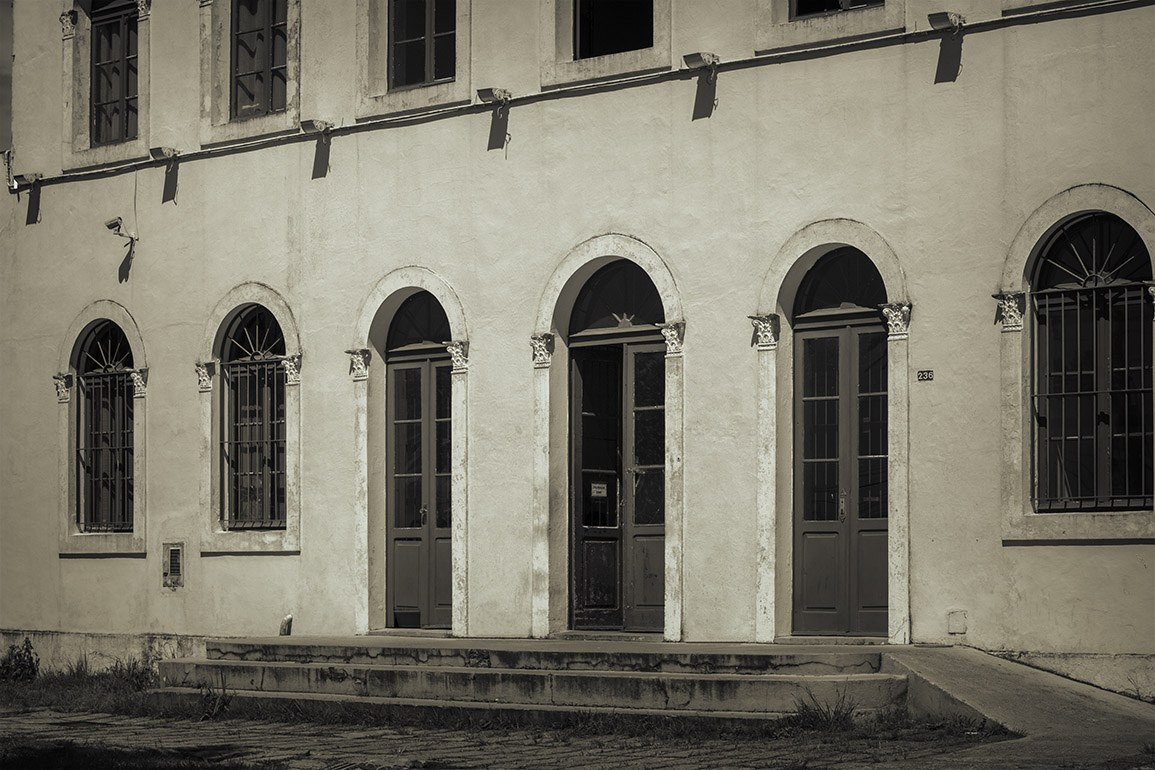
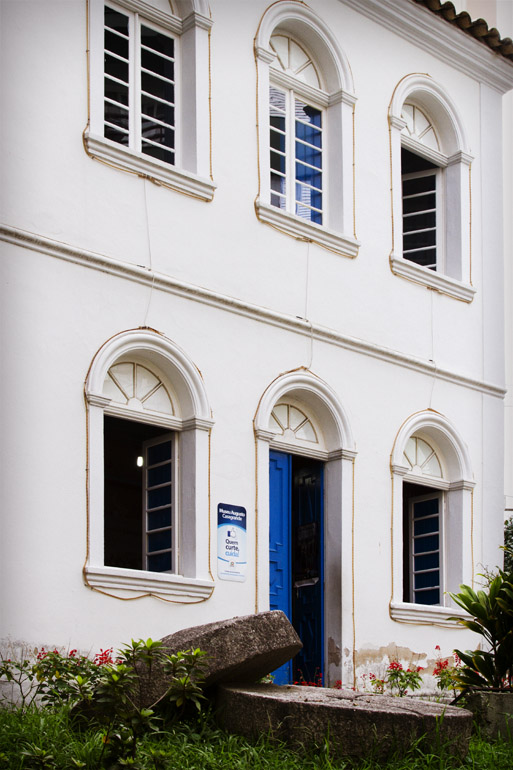
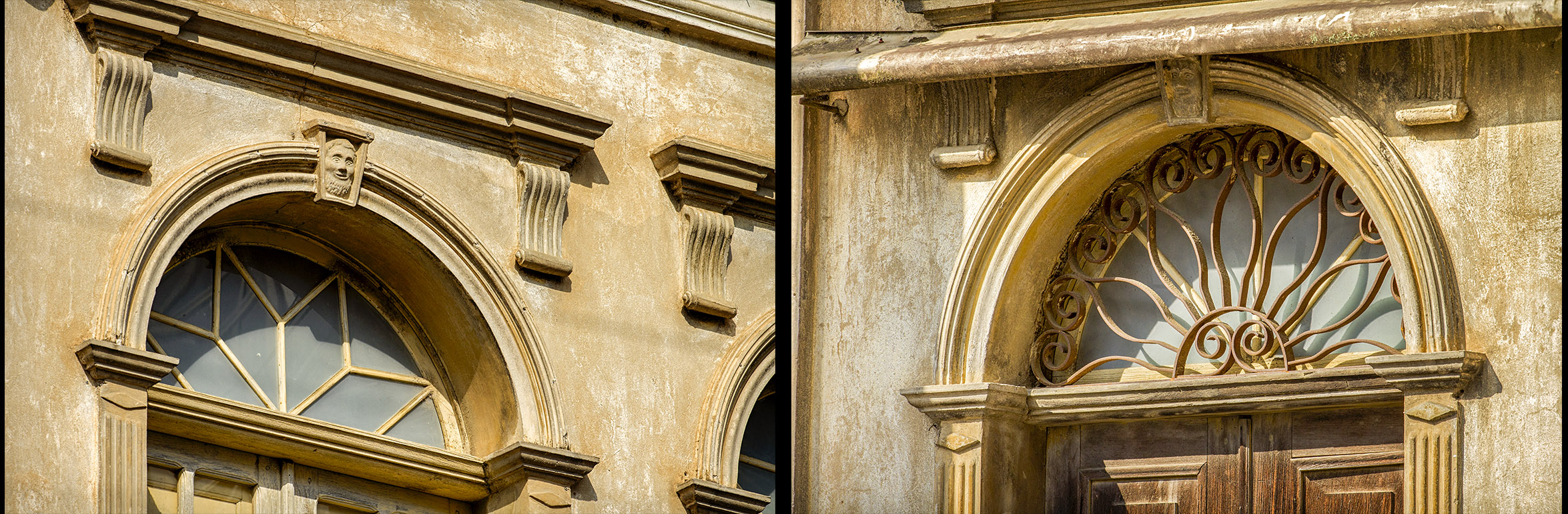
Title: Hostel of Immigrants Description: From 1877, at the beginning of the immigration to the south of Santa Catarina, until 1890, there was not an infrastructure to receive the passengers who passed through Desterro port. During the period that they were waiting for the boats to Laguna they remained in the vicinity of the docks. It was only at the end of 1889 that negotiations began for the construction of a place to house these immigrants: a house was acquired, reformed and adapted for that purpose. It was known as Immigrant Hostel of `Sacco do Padre`. The building called "Domingos Fossari" was used since 1890 as Hostel of Imigrantes and since 1990 as Tourist Portal of Florianópolis. It is currently used by the Municipal Guard of Florianópolis. Research Source: TONETTO, E. P.; GHIZZO, I.; PIROLA, L. "Colônia Azambuja: a imigração italiana no sul de Santa Catarina". Florianópolis: EPAGRI, 2015, 211p. Local: Florianópolis, Brazil Date of Registration: 05/01/2017
Nº 013-022
Title: Main entrance of the Hostel of Immigrants Description: FrFrom 1877, at the beginning of the immigration to the south of Santa Catarina, until 1890, there was not an infrastructure to receive the passengers who passed through Desterro port. During the period that they were waiting for the boats to Laguna they remained in the vicinity of the docks. It was only at the end of 1889 that negotiations began for the construction of a place to house these immigrants: a house was acquired, reformed and adapted for that purpose. It was known as Immigrant Hostel of `Sacco do Padre`. The building called "Domingos Fossari" was used since 1890 as Hostel of Imigrantes and since 1990 as Tourist Portal of Florianópolis. It is currently used by the Municipal Guard of Florianópolis. Research Source: TONETTO, E. P.; GHIZZO, I.; PIROLA, L. "Colônia Azambuja: a imigração italiana no sul de Santa Catarina". Florianópolis: EPAGRI, 2015, 211p. Local: Florianópolis, Brazil Date of Registration: 05/01/2017
Nº 013-023
Title: Hostel of Immigrants architecture details Description: From 1877, at the beginning of the immigration to the south of Santa Catarina, until 1890, there was not an infrastructure to receive the passengers who passed through Desterro port. During the period that they were waiting for the boats to Laguna they remained in the vicinity of the docks. It was only at the end of 1889 that negotiations began for the construction of a place to house these immigrants: a house was acquired, reformed and adapted for that purpose. It was known as Immigrant Hostel of `Sacco do Padre`. The building called "Domingos Fossari" was used since 1890 as Hostel of Imigrantes and since 1990 as Tourist Portal of Florianópolis. It is currently used by the Municipal Guard of Florianópolis. Research Source: TONETTO, E. P.; GHIZZO, I.; PIROLA, L. "Colônia Azambuja: a imigração italiana no sul de Santa Catarina". Florianópolis: EPAGRI, 2015, 211p. Local: Florianópolis, Brazil Date of Registration: 05/01/2017
Nº 013-023
Title: Main corridor and door of the Hostel of Immigrants Description: From 1877, at the beginning of the immigration to the south of Santa Catarina, until 1890, there was not an infrastructure to receive the passengers who passed through Desterro port. During the period that they were waiting for the boats to Laguna they remained in the vicinity of the docks. It was only at the end of 1889 that negotiations began for the construction of a place to house these immigrants: a house was acquired, reformed and adapted for that purpose. It was known as Immigrant Hostel of `Sacco do Padre`. The building called "Domingos Fossari" was used since 1890 as Hostel of Imigrantes and since 1990 as Tourist Portal of Florianópolis. It is currently used by the Municipal Guard of Florianópolis. Research Source: TONETTO, E. P.; GHIZZO, I.; PIROLA, L. "Colônia Azambuja: a imigração italiana no sul de Santa Catarina". Florianópolis: EPAGRI, 2015, 211p. Local: Florianópolis, Brazil Date of Registration: 05/01/2017
Nº 013-024
Title: Door of the Hostel of Immigrants Description: From 1877, at the beginning of the immigration to the south of Santa Catarina, until 1890, there was not an infrastructure to receive the passengers who passed through Desterro port. During the period that they were waiting for the boats to Laguna they remained in the vicinity of the docks. It was only at the end of 1889 that negotiations began for the construction of a place to house these immigrants: a house was acquired, reformed and adapted for that purpose. It was known as Immigrant Hostel of `Sacco do Padre`. The building called "Domingos Fossari" was used since 1890 as Hostel of Imigrantes and since 1990 as Tourist Portal of Florianópolis. It is currently used by the Municipal Guard of Florianópolis. Research Source: TONETTO, E. P.; GHIZZO, I.; PIROLA, L. "Colônia Azambuja: a imigração italiana no sul de Santa Catarina". Florianópolis: EPAGRI, 2015, 211p. Local: Florianópolis, Brazil Date of Registration: 05/01/2017
Nº 013-025
Title: Top floor windows of the Hostel of Immigrants Description: From 1877, at the beginning of the immigration to the south of Santa Catarina, until 1890, there was not an infrastructure to receive the passengers who passed through Desterro port. During the period that they were waiting for the boats to Laguna they remained in the vicinity of the docks. It was only at the end of 1889 that negotiations began for the construction of a place to house these immigrants: a house was acquired, reformed and adapted for that purpose. It was known as Immigrant Hostel of `Sacco do Padre`. The building called "Domingos Fossari" was used since 1890 as Hostel of Imigrantes and since 1990 as Tourist Portal of Florianópolis. It is currently used by the Municipal Guard of Florianópolis. Research Source: TONETTO, E. P.; GHIZZO, I.; PIROLA, L. "Colônia Azambuja: a imigração italiana no sul de Santa Catarina". Florianópolis: EPAGRI, 2015, 211p. Local: Florianópolis, Brazil Date of Registration: 05/01/2017
Nº 013-026
Title: Access gate to Hostel of Immigrants Description: From 1877, at the beginning of the immigration to the south of Santa Catarina, until 1890, there was not an infrastructure to receive the passengers who passed through Desterro port. During the period that they were waiting for the boats to Laguna they remained in the vicinity of the docks. It was only at the end of 1889 that negotiations began for the construction of a place to house these immigrants: a house was acquired, reformed and adapted for that purpose. It was known as Immigrant Hostel of `Sacco do Padre`. The building called "Domingos Fossari" was used since 1890 as Hostel of Imigrantes and since 1990 as Tourist Portal of Florianópolis. It is currently used by the Municipal Guard of Florianópolis. Research Source: TONETTO, E. P.; GHIZZO, I.; PIROLA, L. "Colônia Azambuja: a imigração italiana no sul de Santa Catarina". Florianópolis: EPAGRI, 2015, 211p. Local: Florianópolis, Brazil Date of Registration: 05/01/2017
Nº 013-027
Title: Voyage to the south of Santa Catarina Description: The voyages happened in vessels of smaller draft that allowed the entrance in Laguna inlet. Research Source: TONETTO, E. P.; GHIZZO, I.; PIROLA, L. "Colônia Azambuja: a imigração italiana no sul de Santa Catarina". Florianópolis: EPAGRI, 2015, 211p. Local: Florianópolis, Brazil Date of Registration: 05/01/2017
Nº 013-028
Title: South bay Description: The voyages of the Italian immigrants that went to the south of Santa Catarina were made in vessels of smaller draft that left Desterro port and passed by South bay. Local: Florianópolis, Brazil Date of Registration: 05/01/2017
Nº 013-029
Title: Glória hill and Gi beach Description: The small vessels that brought the Italian immigrants arrived to Laguna passing by the coast from where they could see the beaches of the city and the Glória hill. Local: Laguna, Brazil Date of Registration: 15/01/2017
Nº 013-030
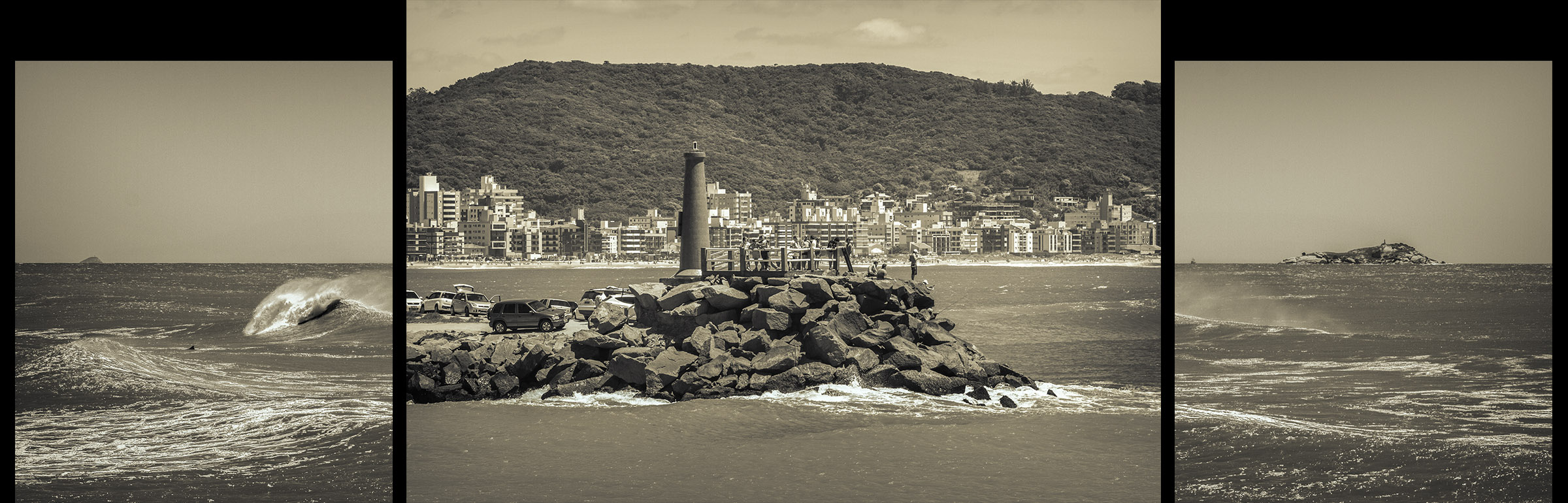
Title: Laguna inlet Description: The small vessels that brought the Italian immigrants to Laguna port had to cross the channel Laguna inlet, an area with low depth, great current and agitated sea. The small lighthouse located at the end part of the North jetties was inaugurated on June 11, 1891 and has the following characteristics: height of 13 meters, geographic reach of 11 nautical miles, luminous range of 5 nautical miles, light intensity of 45 candelas. Local: Laguna, Brazil Date of Registration: 07/02/2015
Nº 013-031
Title: Laguna inlet Description: The small vessels that brought the Italian immigrants to Laguna port had to cross the channel Laguna inlet, an area with low depth, great current and rough sea. Local: Laguna, Brazil Date of Registration: 07/02/2015
Nº 013-032
Title: Laguna port entrance Description: The old port is located in the Historic Center of the city. In this place the Italian immigrants disembarked to exchange boats to Morrinhos port on Tubarão river. As in Desterro port, this one did not have an infrastructure to accommodate the passengers in transit. Only from the beginning of the 1880s with the construction of Tereza Cristina Railroad the travels to Pedras Grandes began to be made by train. Currently the wharf of Laguna port is used only by small boats. Local: Laguna, Brazil Date of Registration: 15/01/2017
Nº 013-033
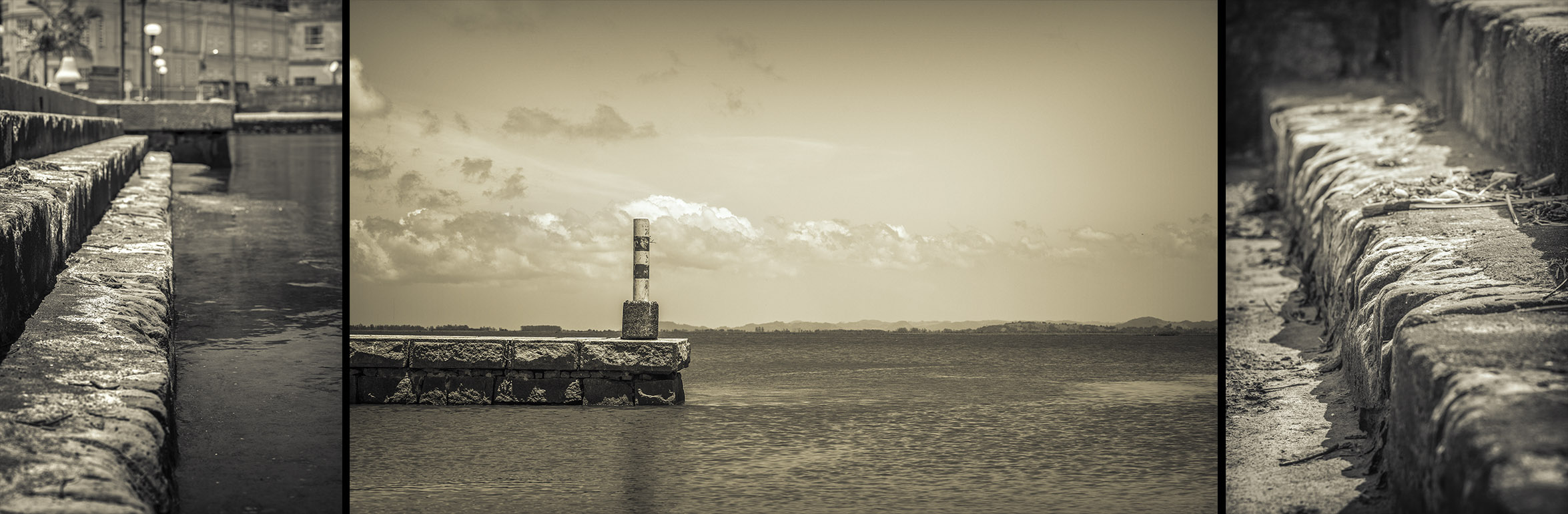
Title: Laguna port Description: The old port is located in the Historic Center of the city. In this place the Italian immigrants disembarked to exchange boats to Morrinhos port on Tubarão river. As in Desterro port, this one did not have an infrastructure to accommodate the passengers in transit. Only from the beginning of the 1880s with the construction of Tereza Cristina Railroad the travels to Pedras Grandes began to be made by train. Currently the wharf of Laguna port is used only by small boats. Photographs: centre one of the pier and laterals details of the port steps. Research Source: TONETTO, E. P.; GHIZZO, I.; PIROLA, L. "Colônia Azambuja: a imigração italiana no sul de Santa Catarina". Florianópolis: EPAGRI, 2015, 211p. Local: Laguna, Brazil Date of Registration: 15/01/2017
Nº 013-034
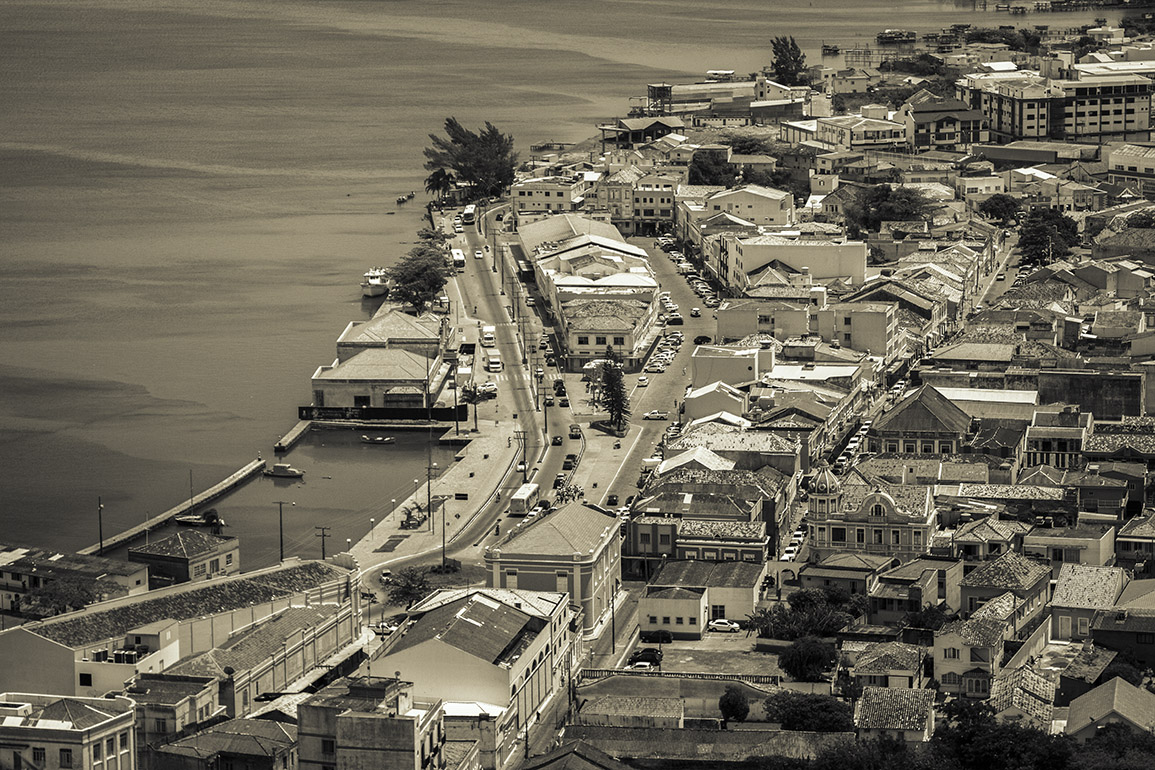
Title: Old port of Laguna and the Historic Centre Description: The old port is located in the Historic Center of the city. In this place the Italian immigrants disembarked to exchange boats to Morrinhos port on Tubarão river. As in Desterro port, this one did not have an infrastructure to accommodate the passengers in transit. Only from the beginning of the 1880s with the construction of Tereza Cristina Railroad the travels to Pedras Grandes began to be made by train. Currently the wharf of Laguna port is used only by small boats. Research Source: TONETTO, E. P.; GHIZZO, I.; PIROLA, L. "Colônia Azambuja: a imigração italiana no sul de Santa Catarina". Florianópolis: EPAGRI, 2015, 211p. Local: Laguna, Brazil Date of Registration: 15/01/2017
Nº 013-035
Title: Old port of Laguna and a partial view of Historic Centre Description: The old port is located in the Historic Center of the city. In this place the Italian immigrants disembarked to exchange boats to Morrinhos port on Tubarão river. As in Desterro port, this one did not have an infrastructure to accommodate the passengers in transit. Only from the beginning of the 1880s with the construction of Tereza Cristina Railroad the travels to Pedras Grandes began to be made by train. Currently the wharf of Laguna port is used only by small boats. Research Source: TONETTO, E. P.; GHIZZO, I.; PIROLA, L. "Colônia Azambuja: a imigração italiana no sul de Santa Catarina". Florianópolis: EPAGRI, 2015, 211p. Local: Laguna, Brazil Date of Registration: 11/11/2014
Nº 013-036
Title: Tubarão river valley Description: From Laguna port the Italian immigrants followed the travel in small sailboats in direction of the Tubarão river. Photograph shows Lagoa do Imaruí place where the Tubarão river flows. Local: Laguna, Brazil Date of Registration: 15/01/2017
Nº 013-037
Title: Original channel of Tubarão river Description: From Laguna port sailboats boats with the Italian immigrants followed the Tubarão river to Morrinhos port, from where the land route began. After the flood of 03/24/1974, when level of the river rose around 10 meters high, a great work was done to rectify its original channel. Currently there is only a "dry river" on that site. In some parts of Madre general road it is possible to see the old course of Tubarão river, which for some time was the only access used by the immigrants who colonized the south of Santa Catarina. Location of this image was made under guidance of Mr. Eusébio Pasini Tonetto, Turismologist and Writer. Research Source: TONETTO, E. P.; GHIZZO, I.; PIROLA, L. "Colônia Azambuja: a imigração italiana no sul de Santa Catarina". Florianópolis: EPAGRI, 2015, 211p. Local: Tubarão, Brazil Date of Registration: 09/01/2017
Nº 013-040
Title: Morrinhos hill Description: From Laguna port sailboats boats with the Italian immigrants followed the Tubarão river to Morrinhos port, from where the land route began. Morrinhos hill was the visual reference for anchorage the boats at the port that was located in the right margin of the original Tubarão river. After the flood of 03/24/1974, when level of the river rose around 10 meters high, a great work was done to rectify its original channel. Currently there is only a "dry river" on that site. In some parts of Madre general road it is possible to see the old course of Tubarão river, which for some time was the only access used by the immigrants who colonized the south of Santa Catarina. Location of this image was made under guidance of Mr. Eusébio Pasini Tonetto, Turismologist and Writer. Research Source: TONETTO, E. P.; GHIZZO, I.; PIROLA, L. "Colônia Azambuja: a imigração italiana no sul de Santa Catarina". Florianópolis: EPAGRI, 2015, 211p. Local: Tubarão, Brazil Date of Registration: 09/01/2017
Nº 013-041
Title: Original channel of Tubarão river Description: From Laguna port sailboats boats with the Italian immigrants followed the Tubarão river to Morrinhos port, from where the land route began. After the flood of 03/24/1974, when level of the river rose around 10 meters high, a great work was done to rectify its original channel. Currently there is only a "dry river" on that site. In some parts of Madre general road it is possible to see the old course of Tubarão river, which for some time was the only access used by the immigrants who colonized the south of Santa Catarina. Location of this image was made under guidance of Mr. Eusébio Pasini Tonetto, Turismologist and Writer. Research Source: TONETTO, E. P.; GHIZZO, I.; PIROLA, L. "Colônia Azambuja: a imigração italiana no sul de Santa Catarina". Florianópolis: EPAGRI, 2015, 211p. Local: Tubarão, Brazil Date of Registration: 09/01/2017
Nº 013-042
Title: Morrinhos port Description: After 31 days of travel by sea and river from the port of Havre in Normandy, north of France, the 1st group of families of Italian immigrants arrived on 04/16/1877 at Morrinhos port. From this place the displacement was done by land. The group was led by engineer Joaquim Vieira Ferreira until the muleteers ranch, which is located on the right side of Tubarão river, located at a distance of approximately 7 km. The route was made on foot, and as it is said the immigrants did not pass through the city centre. Morrinhos port was located on the right side of the original Tubarão river, near Morrinhos hill, and for some time was used by the immigrants that came to Brazil to colonize the south of Santa Catarina. This port has been deactivated and is currently covered by the natural vegetation of the place, but it is still possible to find some remaining stones on the edge of the old river. After the flood that occurred on 03/24/1974, when the level of the river rose around 10 meters high, work was done to rectify its original channel. Currently on the site there is only one "dry river." *Crossing of Madre general road with the street that interconnects it to Congonhas neighborhood, Geo Code: 28° 30` 31.51" S 48° 58` 43.35" W. Location of this image was made by personal orientation of Mr. Eusébio Pasini Tonetto, Turismologist and Writer. Research Source: TONETTO, E. P.; GHIZZO, I.; PIROLA, L. "Colônia Azambuja: a imigração italiana no sul de Santa Catarina". Florianópolis: EPAGRI, 2015, 211p. Local: Tubarão, Brazil Date of Registration: 09/01/2017
Nº 013-043
Title: Region of Congonhas and Santa Luzia neighborhoods Description: In this plain located in the city of Tubarão is the probable route that Italian immigrants walked, from Morrinhos port to the muleteers ranch: a distance of approximately 7 km. It is said that they did not pass through the city centre. From there they would continue the travel to Pedras Grandes passing by the existing pathway used by the muleteers that traveled between the mountains and Tubarão. Location of this image was made under guidance of Mr. Eusébio Pasini Tonetto, Turismologist and Writer. Local: Tubarão, Brazil Date of Registration: 09/01/2017
Nº 013-044
Title: Poço Grande of Tubarão river or stop São João Description: Approximately in this place near SC 390 highway was located the muleteers ranch that traveled between the mountains and Tubarão. In April 1877 the first group of Italian immigrants remained in this place for a few days awaiting the necessary arrangements for the journey to the colonies. Location of this image was made by personal orientation of Mr. Eusébio Pasini Tonetto, Turismologist and Writer. Research Source: TONETTO, E. P.; GHIZZO, I.; PIROLA, L. "Colônia Azambuja: a imigração italiana no sul de Santa Catarina". Florianópolis: EPAGRI, 2015, 211p. Local: Tubarão, Brazil Date of Registration: 09/01/2017
Nº 013-045
Title: Poço Grande of Tubarão river or stop São João Description: Approximately in this place near SC 390 highway was located the muleteers ranch that traveled between the mountains and Tubarão. In April 1877 the first group of Italian immigrants remained in this place for a few days awaiting the necessary arrangements for the journey to the colonies. Location of this image was made by personal orientation of Mr. Eusébio Pasini Tonetto, Turismologist and Writer. Research Source: TONETTO, E. P.; GHIZZO, I.; PIROLA, L. "Colônia Azambuja: a imigração italiana no sul de Santa Catarina". Florianópolis: EPAGRI, 2015, 211p. Note: painting is work of unidentified author and was available at the link: http://www.notisul.com.br/n/colunas/o_poco_grande_ou_paragem_sao_joao-29341, on May 28, 2011 at 12:10, which was deactivated . Local: Tubarão, Brazil Date of Registration: 11/01/2017
Nº 013-046
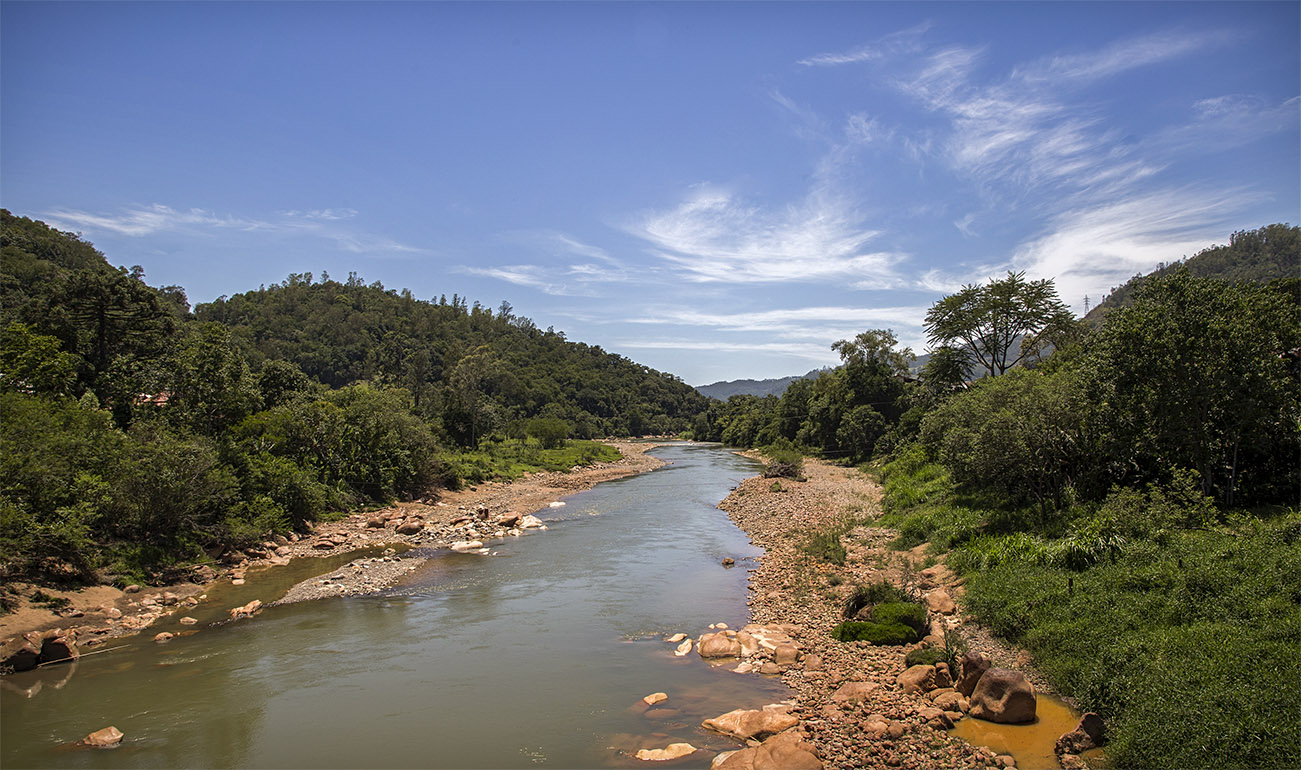
Title: Tubarão river Description: The pathway taken by the Italian immigrants towards the colonies bordered Tubarão river and was carried out on foot or on horses, mules, carts, ox cars, etc. It was already an existing route used by the muleteers who traveled between the mountains and Tubarão. Currently this route coincides with SC 390 highway in the extension between the cities of Tubarão and Pedras Grandes. Local: Pedras Grandes, Brazil Date of Registration: 26/12/2016
Nº 013-050
Title: Tubarão river near Pedras Grandes Description: The pathway taken by the Italian immigrants towards the colonies bordered Tubarão river and was carried out on foot or on horses, mules, carts, ox cars, etc. It was already an existing route used by the muleteers who traveled between the mountains and Tubarão. Currently this route coincides with SC 390 highway in the extension between the cities of Tubarão and Pedras Grandes. Photograph with a detail of Zaboti arches house an important legacy of the existing Italian architecture of the city. Local: Pedras Grandes, Brazil Date of Registration: 22/12/2016
Nº 013-051
Title: Big stones hill Description: Embedded on a hill at the entrance of the city there is a huge stone, which according to the oldest inhabitants, extends itself under the river. It is said that this big stone served as reference point for muleteers and Italian immigrants during the period of colonization of the south of Santa Catarina, and for this reason ended up giving its name to the city of Pedras Grandes (in Portuguese: big stones). Research Source: Carneiro, Márcio Matos; Origem dos Nomes dos Municípios de Santa Catarina" - Blumenau : Nova letra, 2006. Local: Pedras Grandes, Brazil Date of Registration: 26/12/2016
Nº 013-052
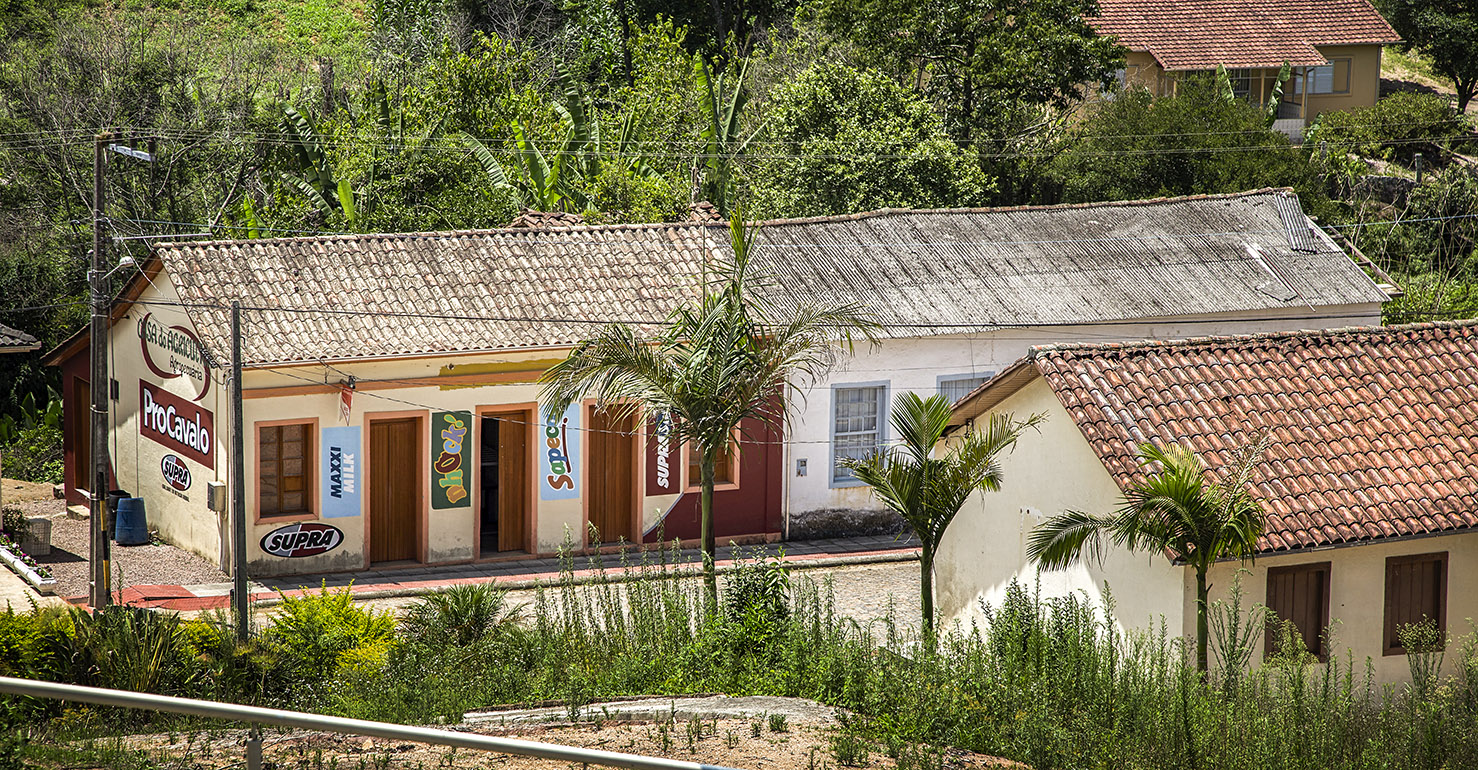
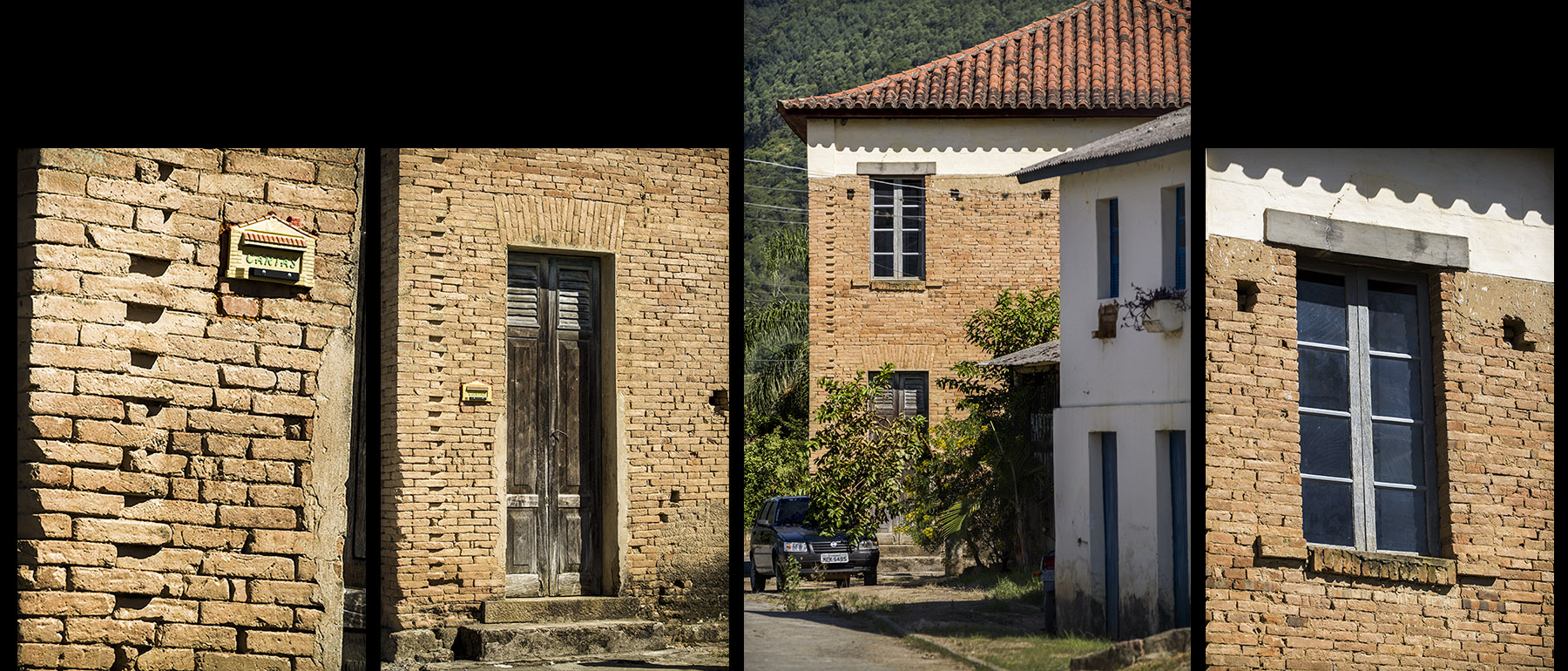
Title: Historic Centre Description: Images with details of city centre: architecture brought by Italian immigrants and Pedras Grandes river. Location of these images were made with the participation of Mr. Eusébio Pasini Tonetto, Turismologist and Writer. Local: Pedras Grandes, Brazil Date of Registration: 10/01/2017
Nº 013-053
Title: Azambuja general road Description: The route taken by the Italian immigrants who colonized the south of Santa Catarina to Colony of Azambuja is 10 km long from the city centre of Pedras Grandes. Today it is an unpaved road but in very good conservation. In the past it was only a sting open nearby Pedras Grandes river by the engineer Joaquim Vieira Ferreira. This route was walked by those immigrants. Source: TONETTO, E. P.; GHIZZO, I.; PIROLA, L. "Azambuja colony: Italian immigration in the south of Santa Catarina". Florianópolis: EPAGRI, 2015, 211p. Local: Pedras Grandes, Brazil Date of Registration: 24/11/2016
Nº 013-054
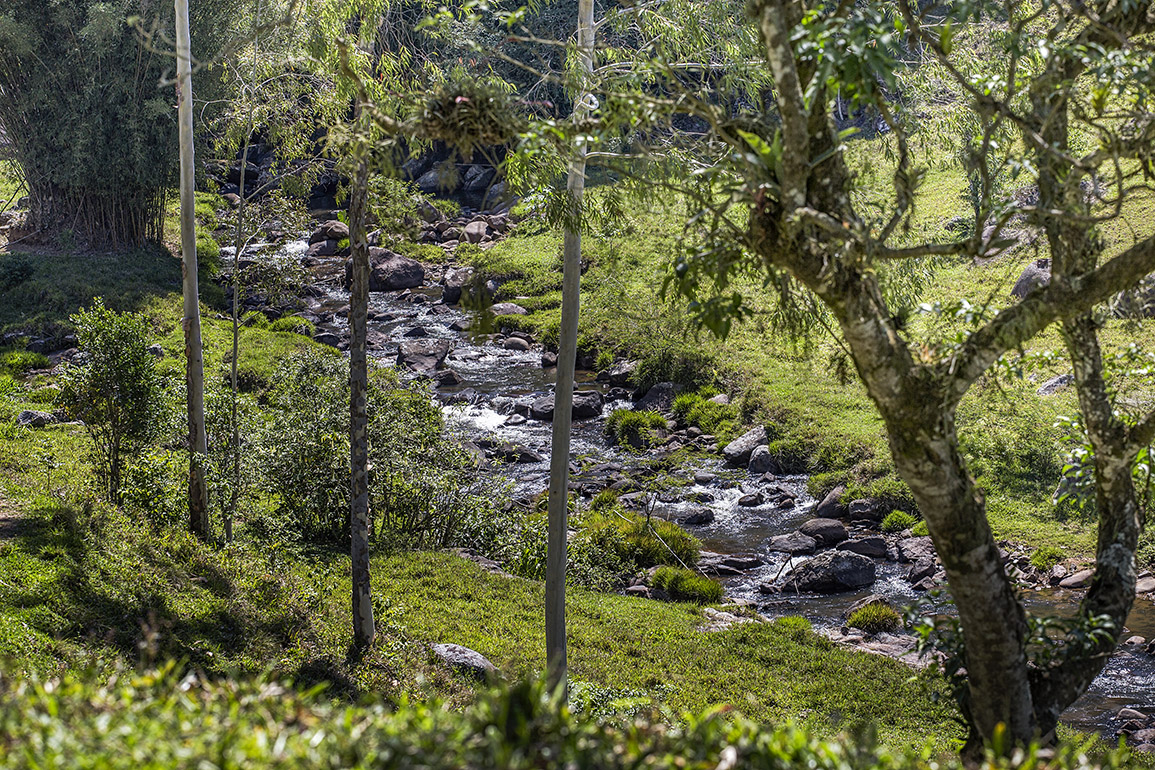
Title: Azambuja river Description: Azambuja river crosses the district with the same name. Location of these images were made with participation of Mr. Eusébio Pasini Tonetto, Turismologist and Writer. Local: Azambuja, Pedras Grandes, Brazil Date of Registration: 10/01/2017
Nº 013-054
Title: First settlement of Italian immigrants Description: At this exact place there was the first settlement of Italian immigrants who arrived at the Colony of Azambuja. Location of this image was made by personal orientation of Mr. Eusébio Pasini Tonetto, Turismologist and Writer. Research Source: TONETTO, E. P.; GHIZZO, I.; PIROLA, L. "Colônia Azambuja: a imigração italiana no sul de Santa Catarina". Florianópolis: EPAGRI, 2015, 211p. Note: historical photograph belongs to the collection of Amadio Vettoretti Public and Historical Archive from Tubarão, Brazil. Local: Azambuja, Pedras Grandes, Brazil Date of Registration: 10/01/2017
Nº 013-055
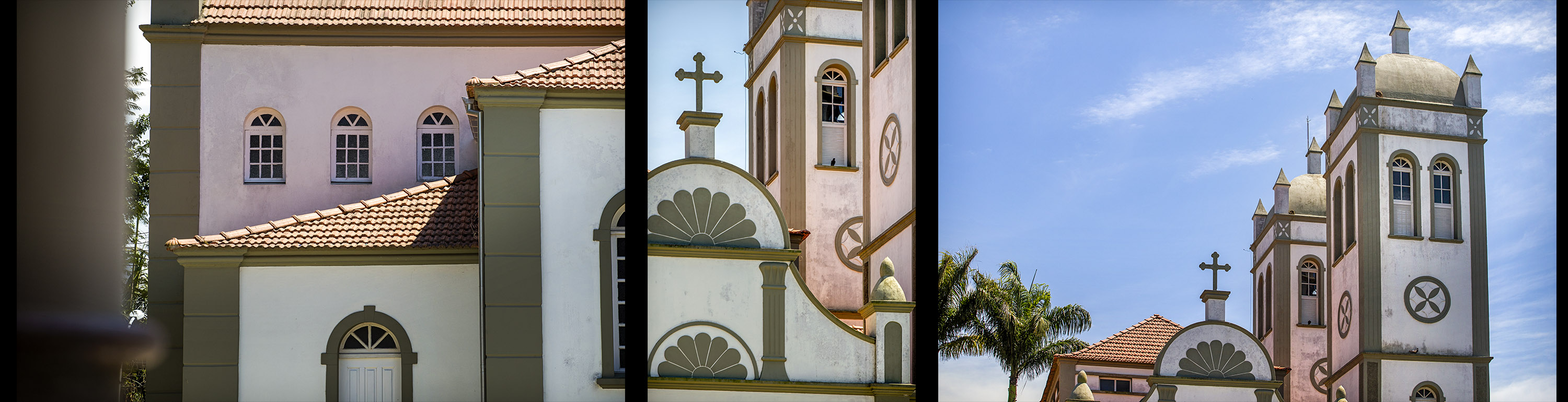
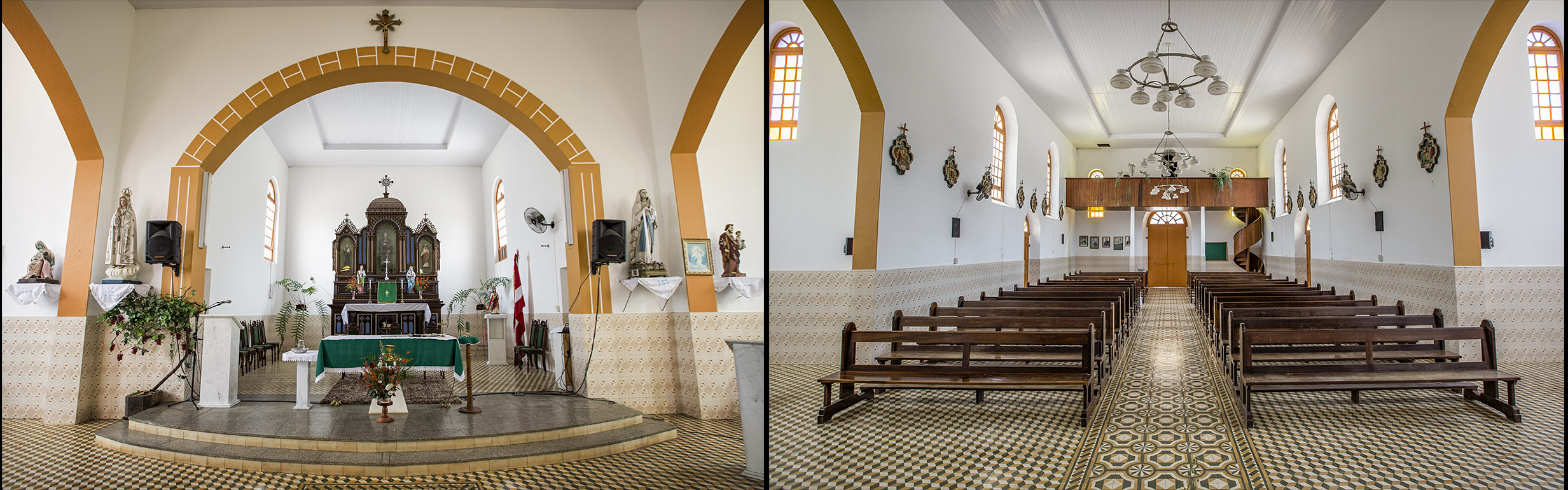
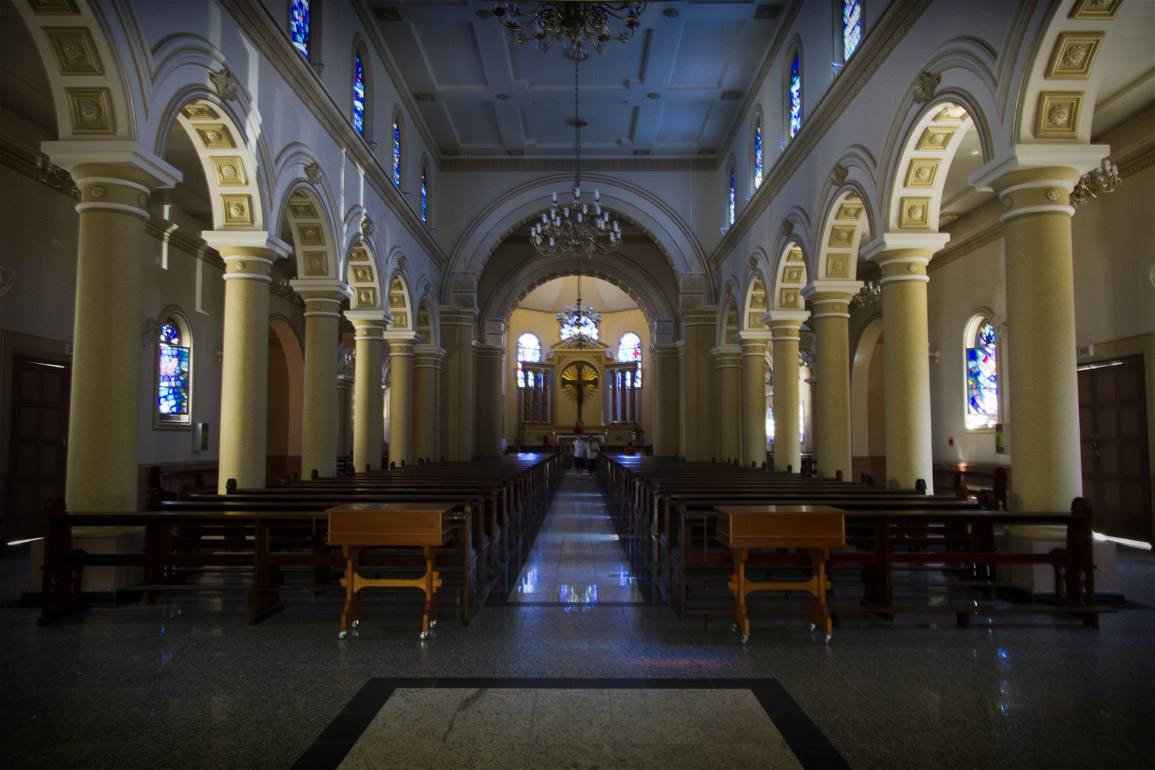
Title: Church of St. Mark and House of Young Catholic Sisters Description: They are located on a hill in the centre of Azambuja district. They have an architectural style of great historical-cultural value and are part of the municipal public patrimony. Local: Azambuja, Pedras Grandes, Brazil Date of Registration: 21/11/2016
Nº 013-056
Title: Partial view of the centre of the district of Azambuja Description: From the top of the hill located in the centre of Azambuja is St. Mark Church, place of great religiosity and where the faithful meet eachother, express their faith and pilgrimage. Note: historical photograph belongs to the collection of Amadio Vettoretti Public and Historical Archive from Tubarão, Brazil. Local: Azambuja, Pedras Grandes, Brazil Date of Registration: 22/12/2016
Nº 013-057
Title: Magnolia Description: Magnolia is considered the flower symbol of the Italian immigration to remember the founder Joaquim Vieira Ferreira and the saga of colonizers until Azambuja. The few trees of this flower that we find in the region of Azambuja District are of the species Magnolia grandiflora. They are white flowers with approximately 10 petals and about 20 cm in diameter. They have a waxy texture and a distinctive sweet aroma with some citrus notes. Photographs: left, a natural magnolia from a tree located in front of the House of Young Catholic Sisters; right, monument of a concrete sculpture of a magnolia, situated in the central square of the district and with a plaque with the following words in Portuguese: "Aos Heroicos Pioneiros Italianos a Gratidão do Nosso Povo - Centenário de Azambuja, Pedras Grandes, Santa Catarina, 1877 - 1977" (English: "To the Italian Pioneers Heroes the Gratitude of Our People - Centennial of Azambuja, Pedras Grandes, Santa Catarina, 1877 - 1977"). Local: Azambuja, Pedras Grandes, Brazil Date of Registration: 10/01/2017
Nº 013-058
Title: Lamps Description: Beauty and style of the staircase lamps of Our Lady Of The Fields Church. Local: Arroio Trinta, Brazil Date of Registration: 29/10/2016
Nº 013-209
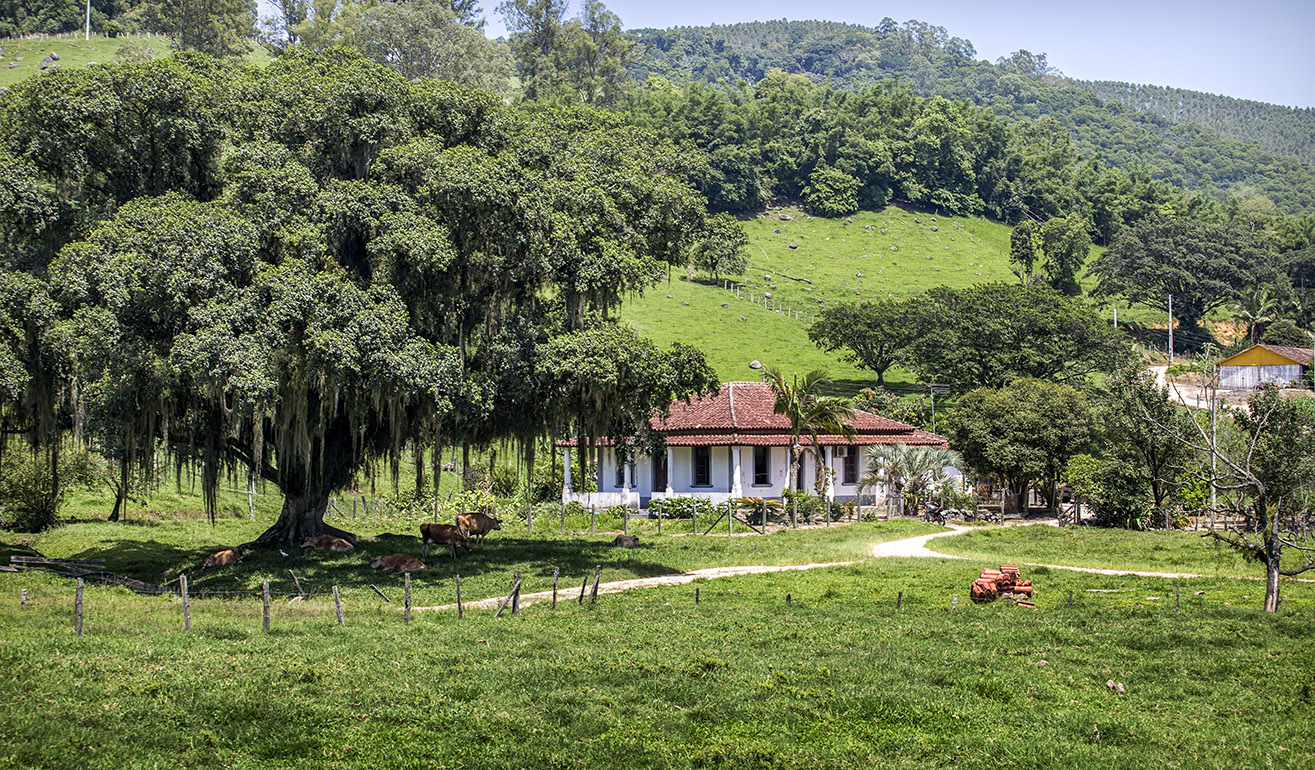
Title: Cassava plantation Description: Located at the rural area of the city. Local: Sangão, SC Date of Registration: 15/01/2017
Nº 013-2109
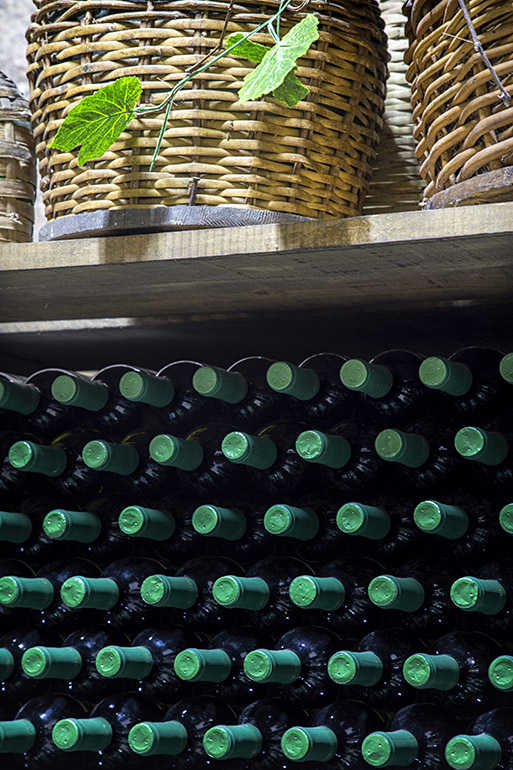
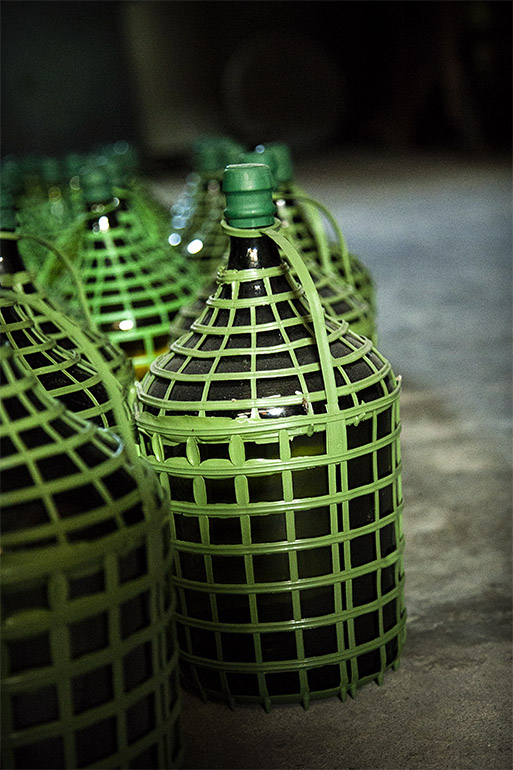
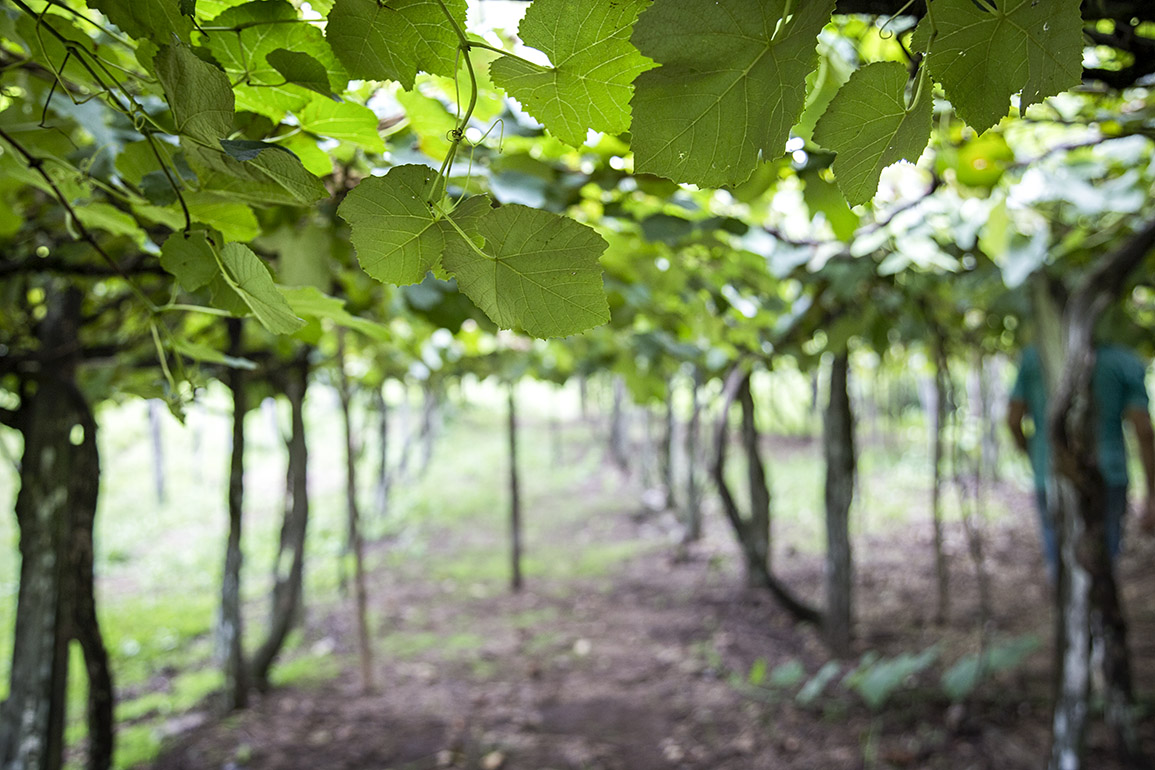
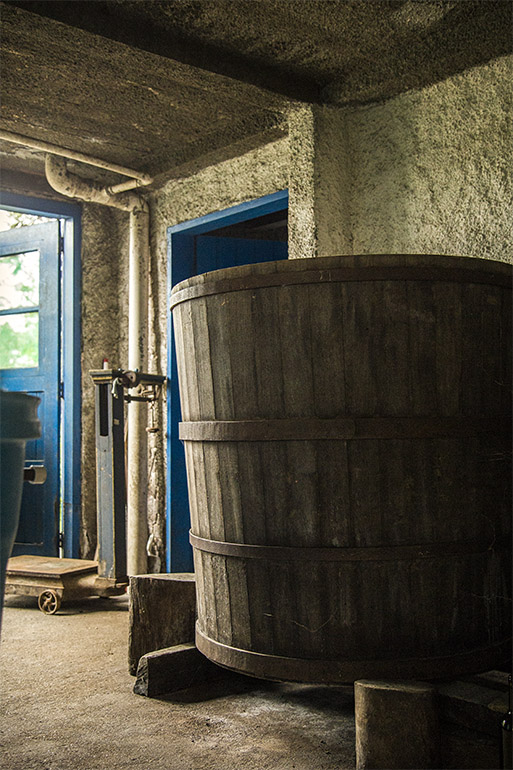
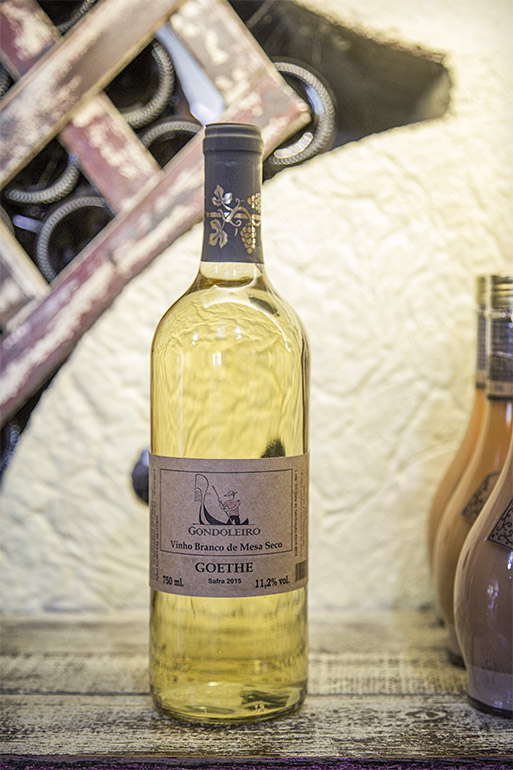
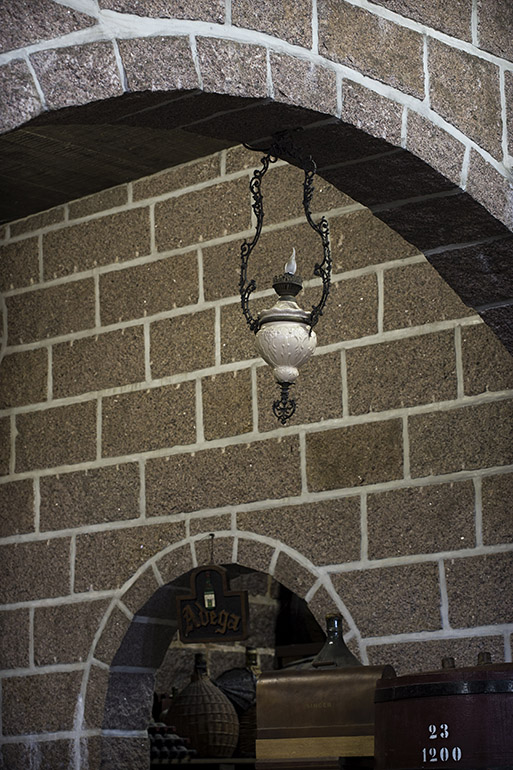
Title: Wine storage in bottles Description: One of the traditions brought by the Italian immigrants to the south of Santa Catarina was the cultivation of grapes and the manufacture of wine. This culture was developed and preserved by its descendants. The Goethe grape is a specialty of the region. Images taken at La Vinícola Quarezemin. This winery was founded by Haroldo Quarezemin in 2002 and is located in a magnificent stone building situated at km 8 of SC 445 highway in Içara. It uses in the process of vinification grapes originating in Azambuja, Pedras Grandes. Reference: http://www.valesdauvagoethe.com.br/associados.php?id_P=5 Local: Içara, Brazil Date of Registration: 13/01/2017
Nº 013-1105
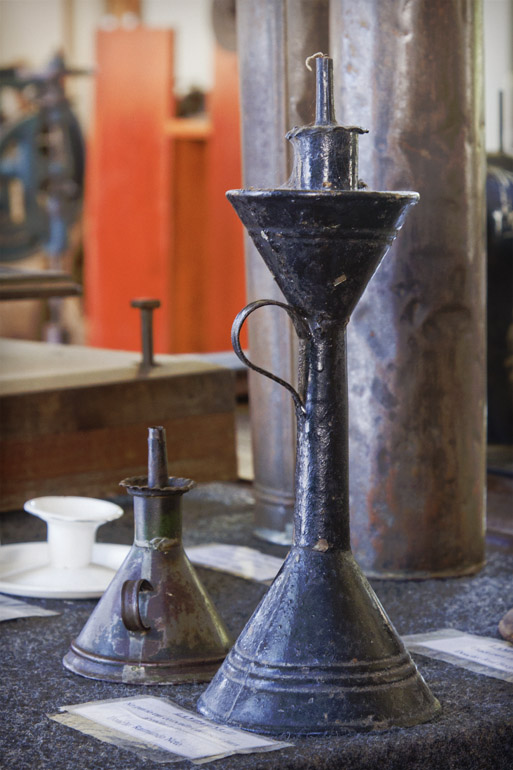
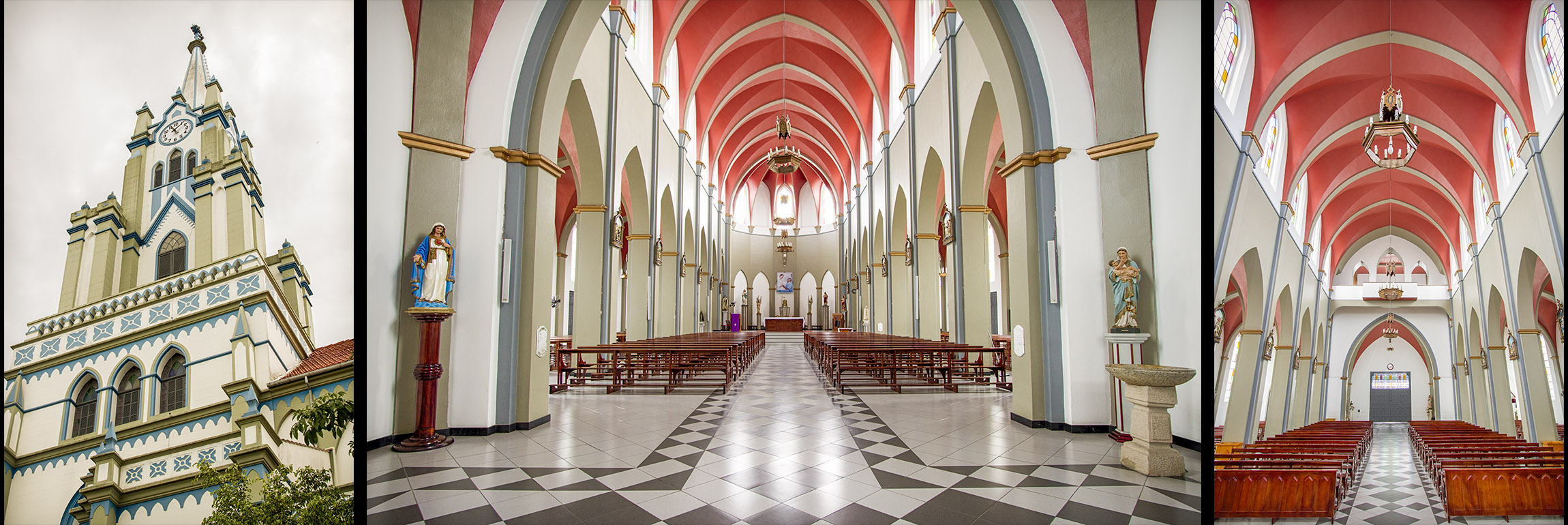
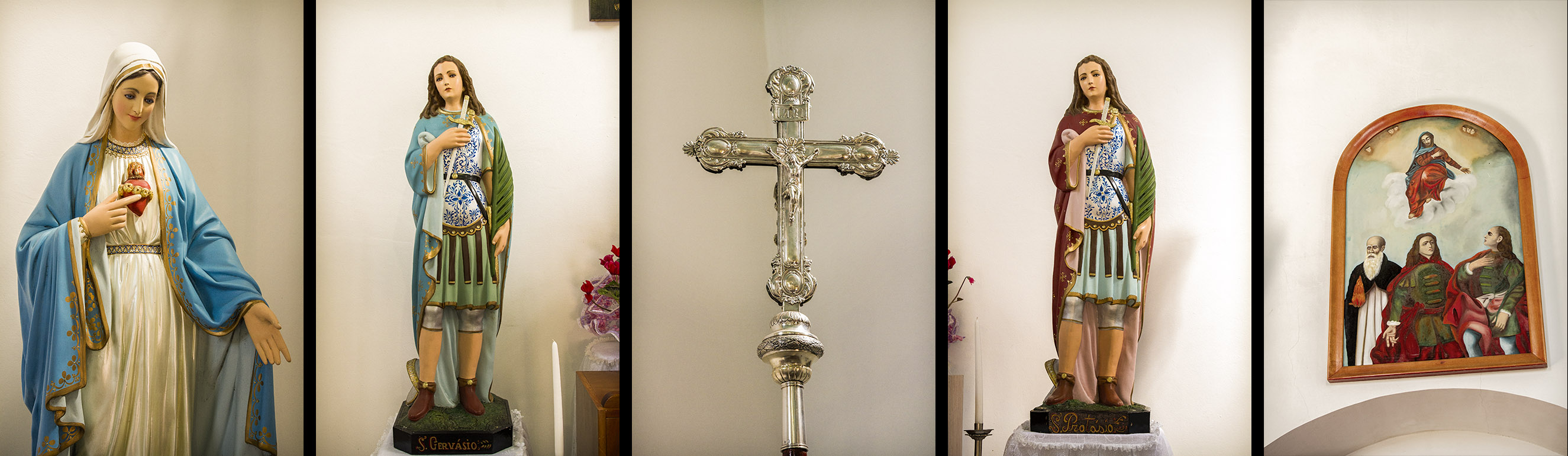
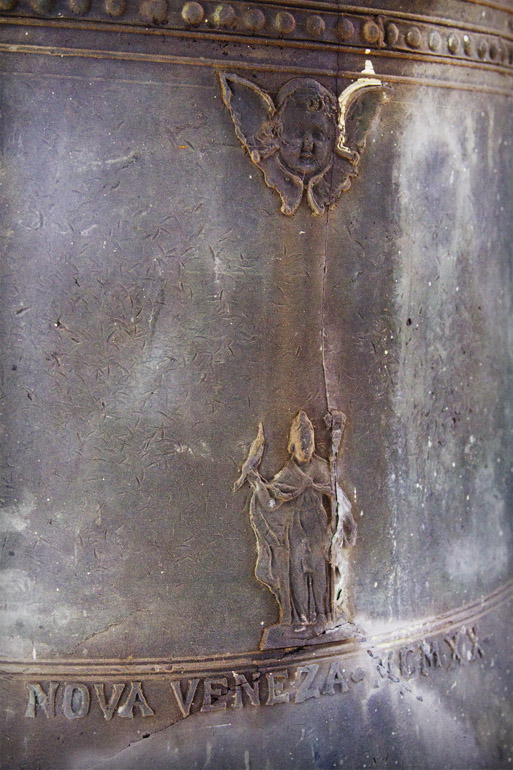
Title: Processional torch Description: Collection of Saint Gervasius and Saint Protasius Church. This Church was erected by the first Italian colonizers and their children who settled in the locality. After more than thirty years of their arrival in Brazil, with their lands already paid and their children almost all married, those colonizers who had arrived in Rio Maior in the years 1878 thought that the time had come to fulfill the promise of erecting a chapel in honor of St. Gervasius and St. Protasius. On February 25, 1911, the first meeting took place where they decided that the church should be of stone similar to that of Casso, Italy. Francesco De Lorenzi Cancellier directed the works and the land was donated by Antonio De Lorenzi Frol. All families participated in the construction working hard: men and women. The stones were taken from nearby. In 1912 the work was completed. The present tower corresponds to the second tower and was erected in the middle of 1940s in replacement of the tower of wood. Their bells are very valued to the community because they believe to ward off storms. The church is Historic Heritage of the Municipality of Urussanga and for the State of Santa Catarina. It is also listed as a Historic Patrimony recognized by National Institute of Historic and Artistic Heritage (IPHAN). It is located next to SC 446 highway in Rio Maior neighborhood. Local: Urussanga, Brazil Date of Registration: 08/03/2013
Nº 013-2947
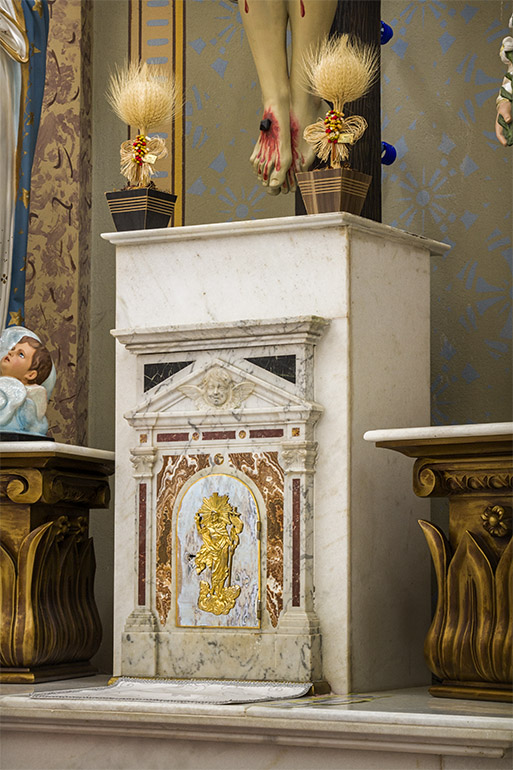
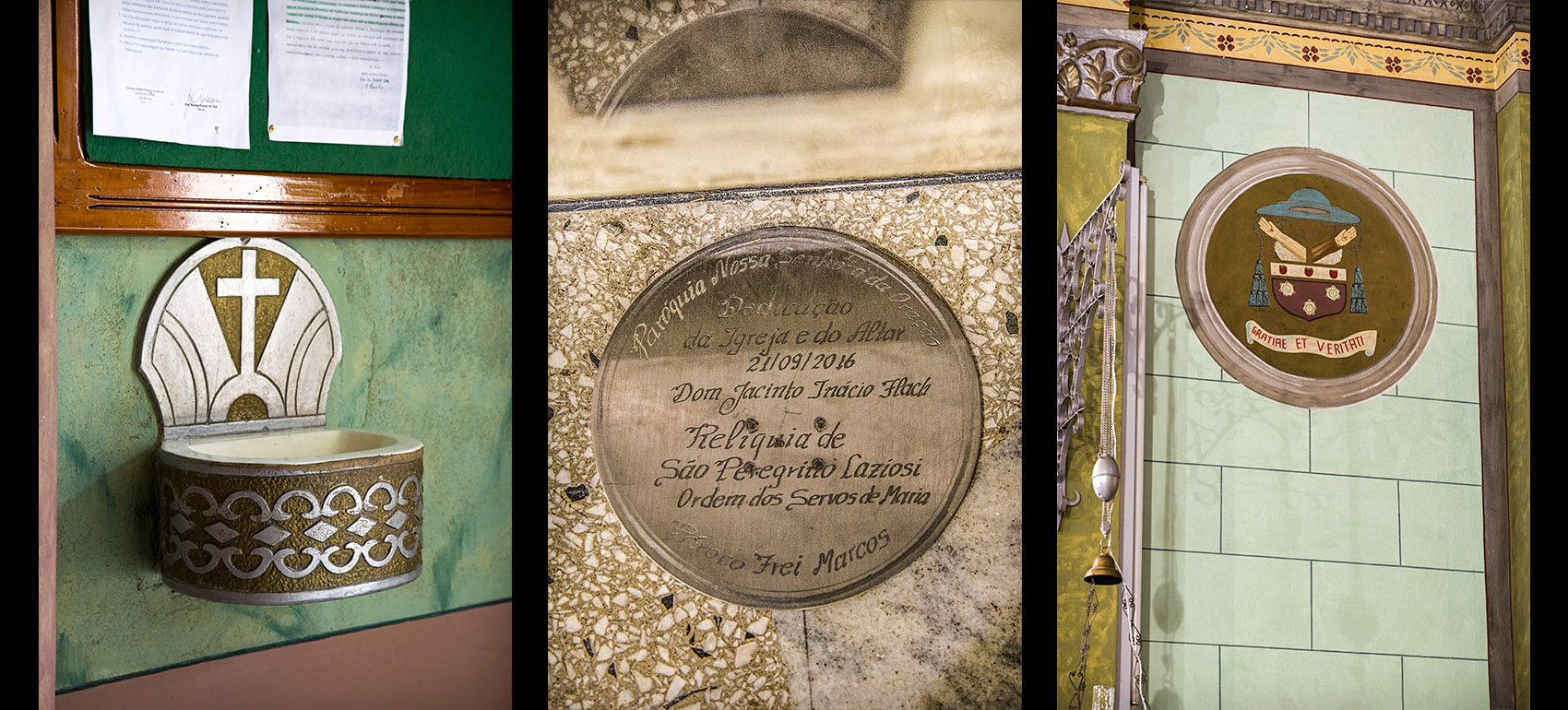
Title: Small Sink of holy water Description: Sink of holy water from 1920s used in the couple`s Augusto Casagrande and Cecília Darós Casagrande room. Collection of Augusto Casagrande Historic and Geographic Museum. Local: Criciúma, Brazil Date of Registration: 06/03/2013
Nº 013-634
Title: Baptismal font Description: Made of granite stone and carved by the Italian immigrant Pedro Bez in 1909 is a featured piece in the church for its beauty and tradition. Collection of Our Lady of the Conception Parish located in the city centre. Local: Urussanga, Brazil Date of Registration: 13/01/2012
Nº 013-2911
Title: Ceramic floor of the Hostel of Imigrantes Description: From 1877, at the beginning of the immigration to the south of Santa Catarina, until 1890, there was not an infrastructure to receive the passengers who passed through Desterro port. During the period that they were waiting for the boats to Laguna they remained in the vicinity of the docks. It was only at the end of 1889 that negotiations began for the construction of a place to house these immigrants: a house was acquired, reformed and adapted for that purpose. It was known as Immigrant Hostel of `Sacco do Padre`. The building called "Domingos Fossari" was used since 1890 as Hostel of Imigrantes and since 1990 as Tourist Portal of Florianópolis. It is currently used by the Municipal Guard of Florianópolis. Research Source: TONETTO, E. P.; GHIZZO, I.; PIROLA, L. "Colônia Azambuja: a imigração italiana no sul de Santa Catarina". Florianópolis: EPAGRI, 2015, 211p. Local: Florianópolis, Brazil Date of Registration: 05/01/2017
Nº 013-801
Title: Old cast iron candle holders Description: Collection of Saint Gervasius and Saint Protasius Church. This Church was erected by the first Italian colonizers and their children who settled in the locality. After more than thirty years of their arrival in Brazil, with their lands already paid and their children almost all married, those colonizers who had arrived in Rio Maior in the years 1878 thought that the time had come to fulfill the promise of erecting a chapel in honor of St. Gervasius and St. Protasius. On February 25, 1911, the first meeting took place where they decided that the church should be of stone similar to that of Casso, Italy. Francesco De Lorenzi Cancellier directed the works and the land was donated by Antonio De Lorenzi Frol. All families participated in the construction working hard: men and women. The stones were taken from nearby. In 1912 the work was completed. The present tower corresponds to the second tower and was erected in the middle of 1940s in replacement of the tower of wood. Their bells are very valued to the community because they believe to ward off storms. The church is Historic Heritage of the Municipality of Urussanga and for the State of Santa Catarina. It is also listed as a Historic Patrimony recognized by National Institute of Historic and Artistic Heritage (IPHAN). It is located next to SC 446 highway in Rio Maior neighborhood. Local: Urussanga, Brazil Date of Registration: 08/03/2013
Nº 013-2946
Title: Saint Gervasius and Saint Protasius Church Description: This Church was erected by the first Italian colonizers and their children who settled in the locality. After more than thirty years of their arrival in Brazil, with their lands already paid and their children almost all married, those colonizers who had arrived in Rio Maior in the years 1878 thought that the time had come to fulfill the promise of erecting a chapel in honor of St. Gervasius and St. Protasius. On February 25, 1911, the first meeting took place where they decided that the church should be of stone similar to that of Casso, Italy. Francesco De Lorenzi Cancellier directed the works and the land was donated by Antonio De Lorenzi Frol. All families participated in the construction working hard: men and women. The stones were taken from nearby. In 1912 the work was completed. The present tower corresponds to the second tower and was erected in the middle of 1940s in replacement of the tower of wood. Their bells are very valued to the community because they believe to ward off storms. The church is Historic Heritage of the Municipality of Urussanga and for the State of Santa Catarina. It is also listed as a Historic Patrimony recognized by National Institute of Historic and Artistic Heritage (IPHAN). It is located next to SC 446 highway inRio Maior neighborhood. Local: Urussanga, Brazil Date of Registration: 13/03/2012
Nº 013-2938
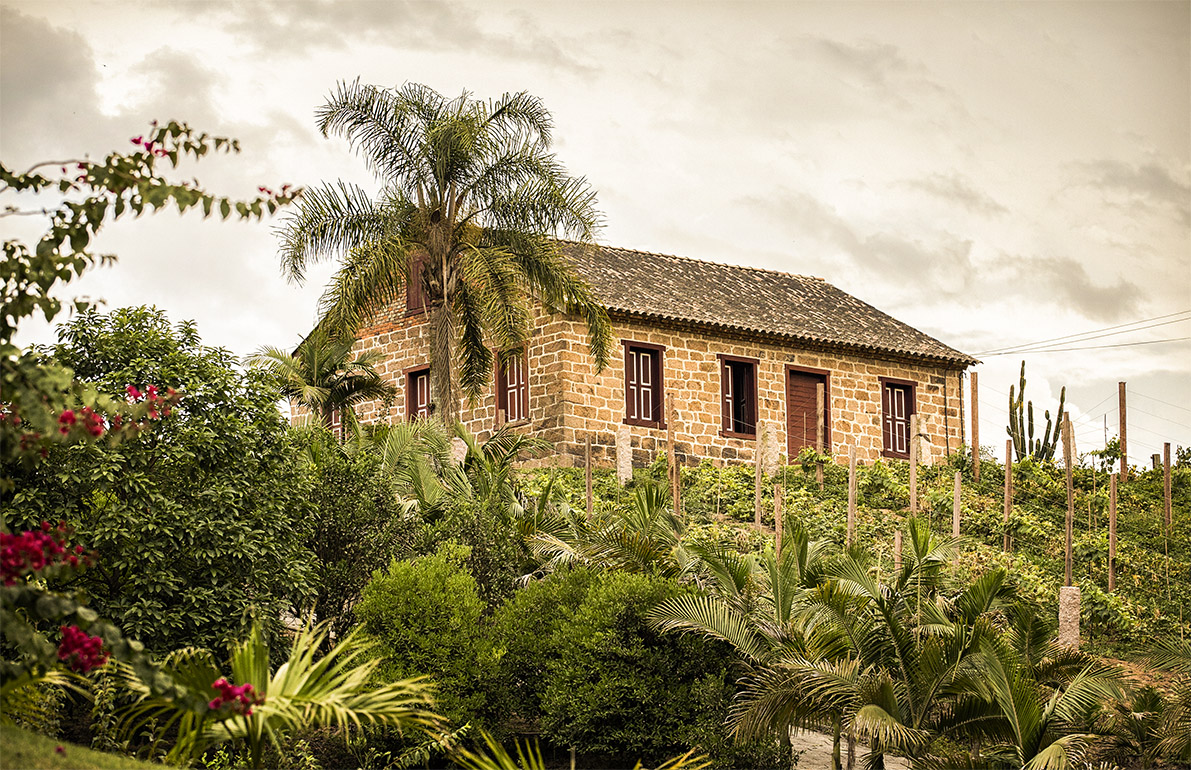
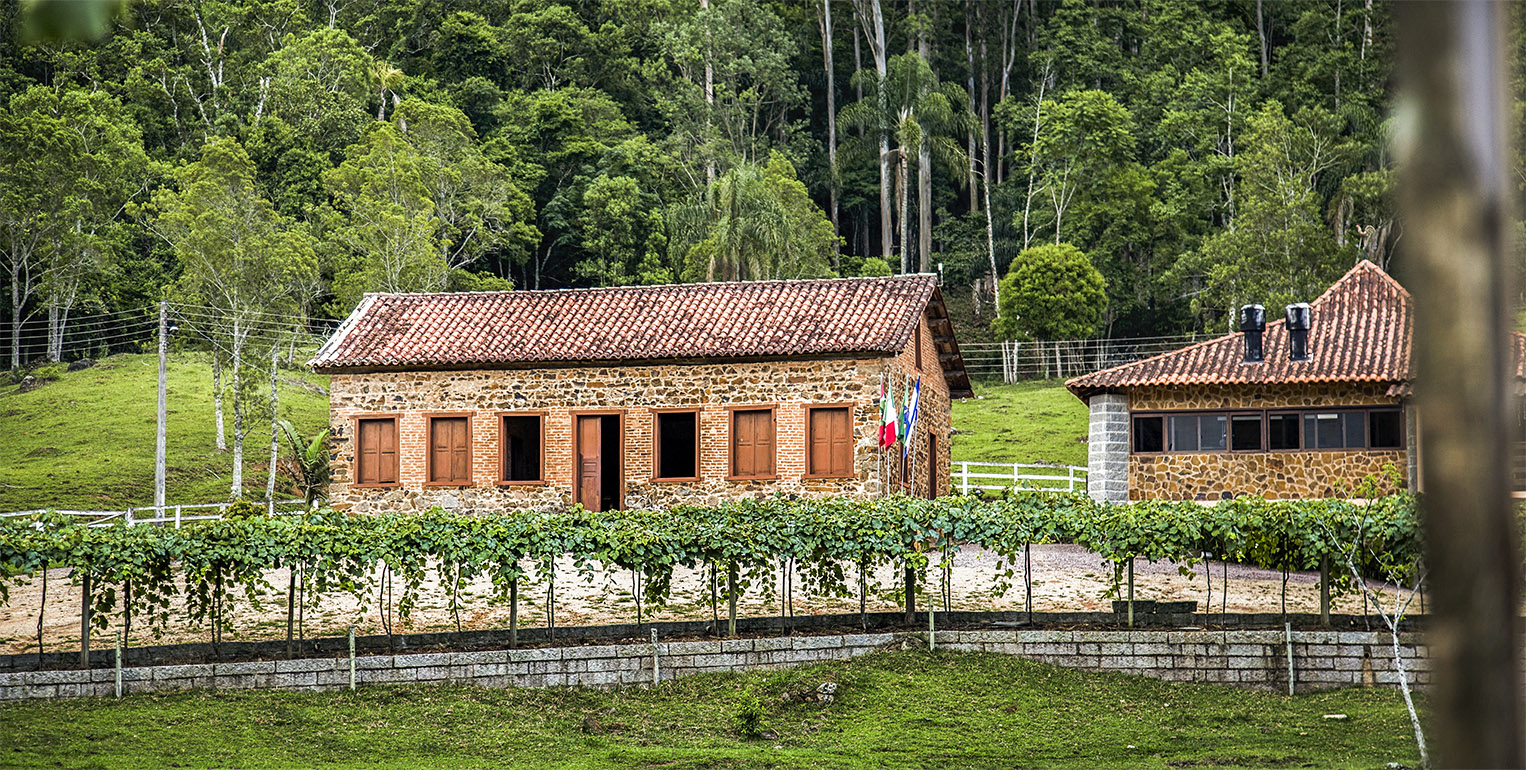
Title: Cancellier stone house Description: It was built around 1899 and 1907. It is located next to SC 446 highway in Rio Maior neighborhood and it is a Historic Patrimony recognized by National Institute of Historic and Artistic Heritage (IPHAN). Local: Urussanga, Brazil Date of Registration: 11/07/2016
Nº 013-2919
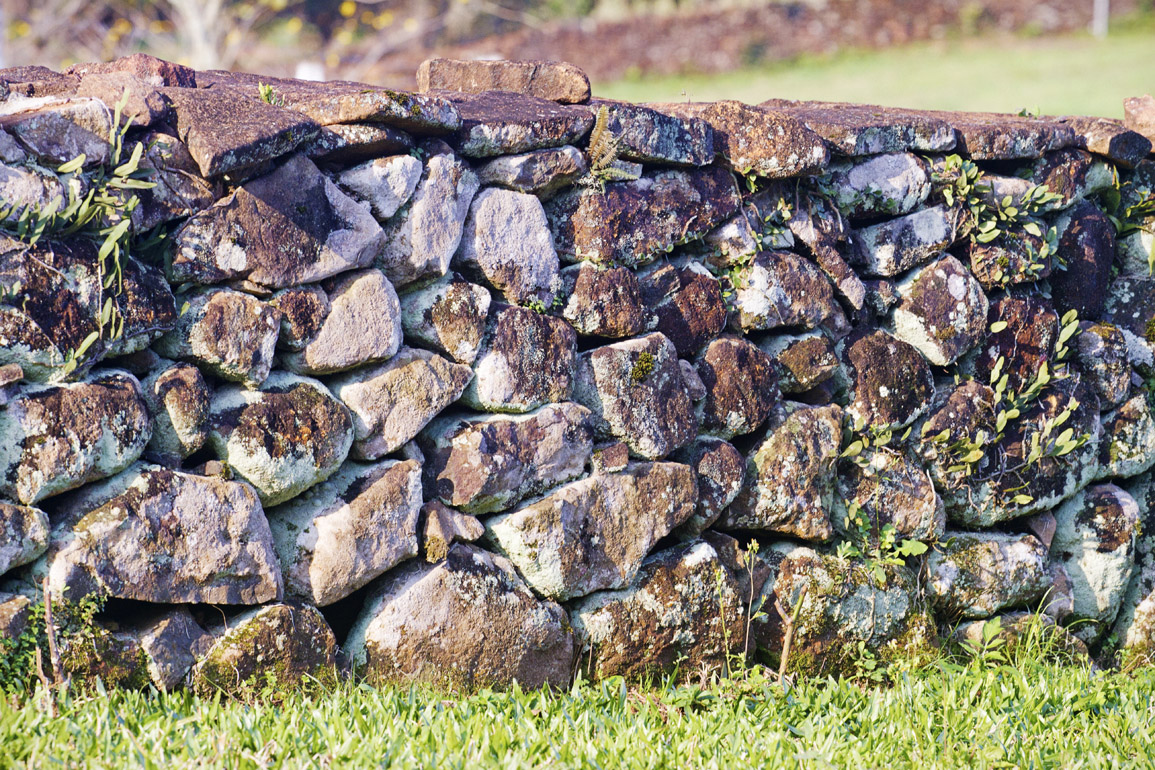
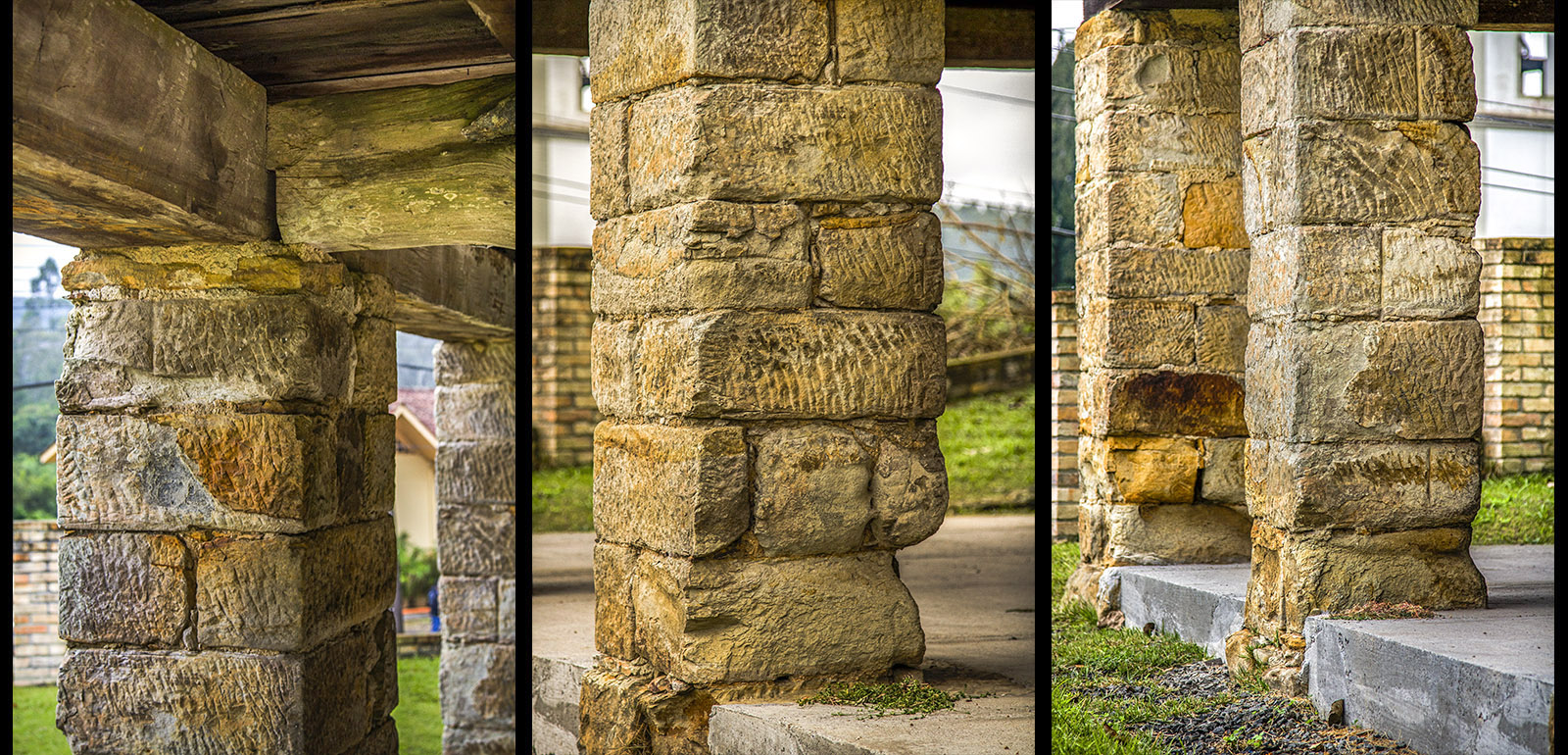
Title: Stone house Description: Stone house built by Bratti family, 1891. Local: Nova Veneza, Brazil Date of Registration: 13/08/2011
Nº 013-4023
Title: Goethe grape vine Description: One of the traditions brought by Italian immigrants to the south of Santa Catarina was the cultivation of grapes and the manufacture of wine. This culture was developed and preserved by their descendants. This is the case of Vigna Mazon where this photograph was taken. Founded in the 1970s by brothers Genésio and Jayme Mazon, Mazon Winery came to follow the tradition of the maternal line of the family, the Debiasi, and thus stimulate fruit production in the region. Idealists, these brothers implanted the grapevines and the process of industrialization of grapes to produce quality wines. Currently it is managed by the couple Patrícia Mazon and Antonio Carlos Freitas, second generation of the family, who idealized and implemented since 1992 the winery inn where consumers can stay and enjoy pleasant moments including wine tasting. The profile of this enterprise maintains the history of occupation of the region using raw materials and local human resources. Goethe grape is one of the specialties of the winery. Vigna Mazon is located at km 5 of Genésio Mazon highway in the São Pedro neighborhood. Reference: www.mazon.com.br Local: Urussanga, Brazil Date of Registration: 10/01/2017
Nº 013-2978
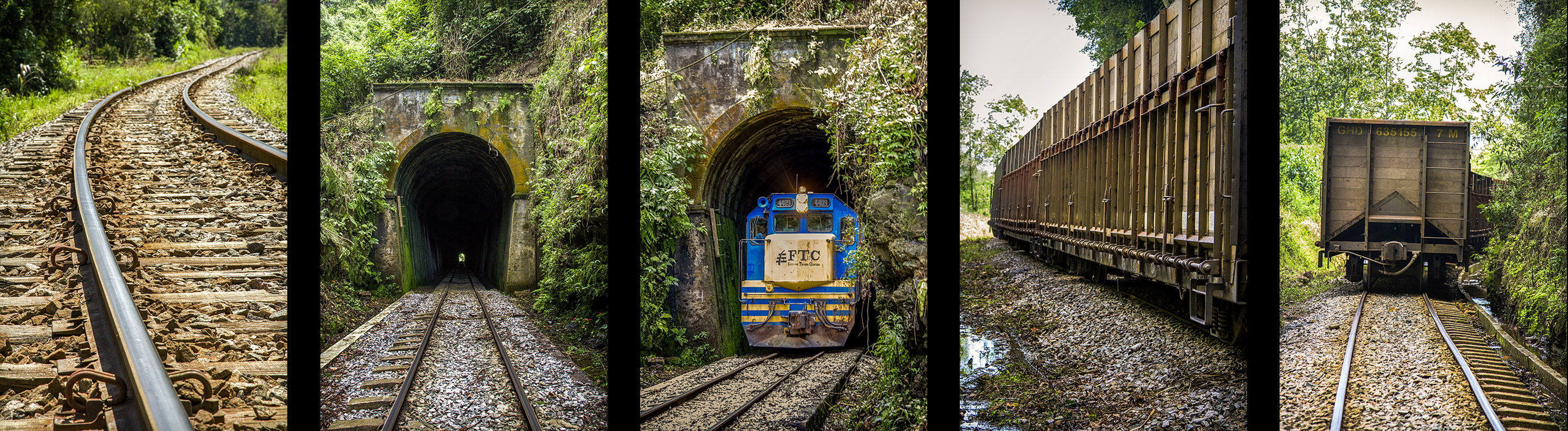
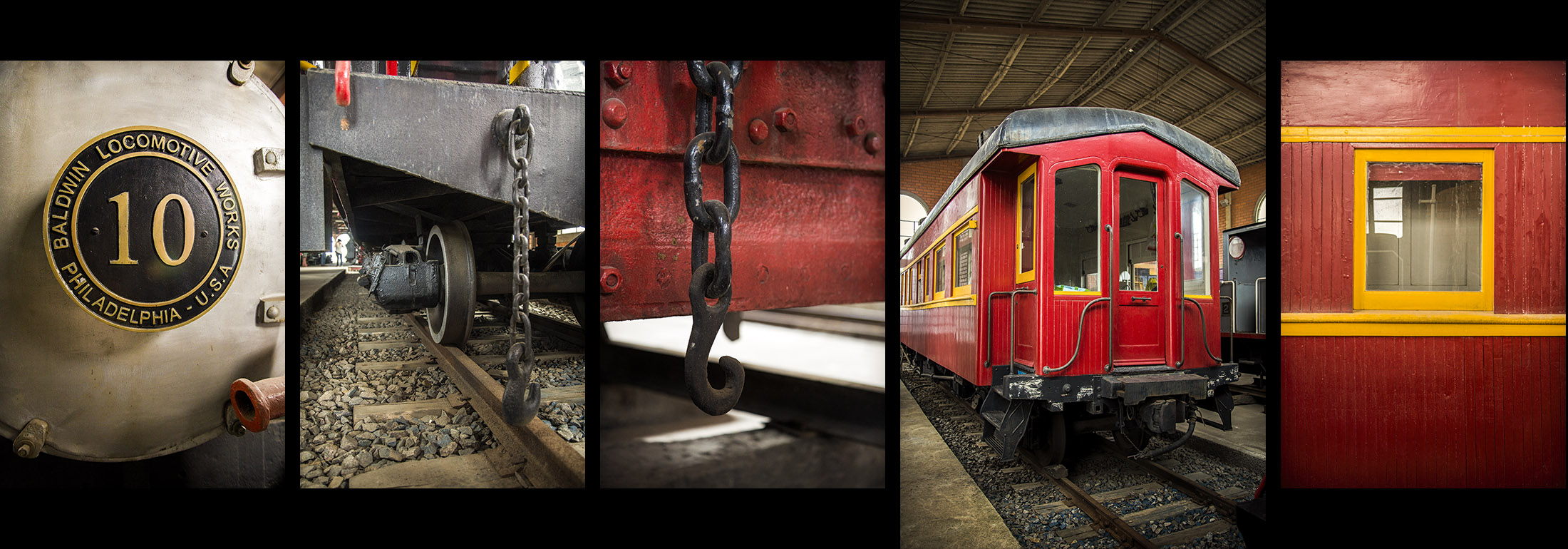
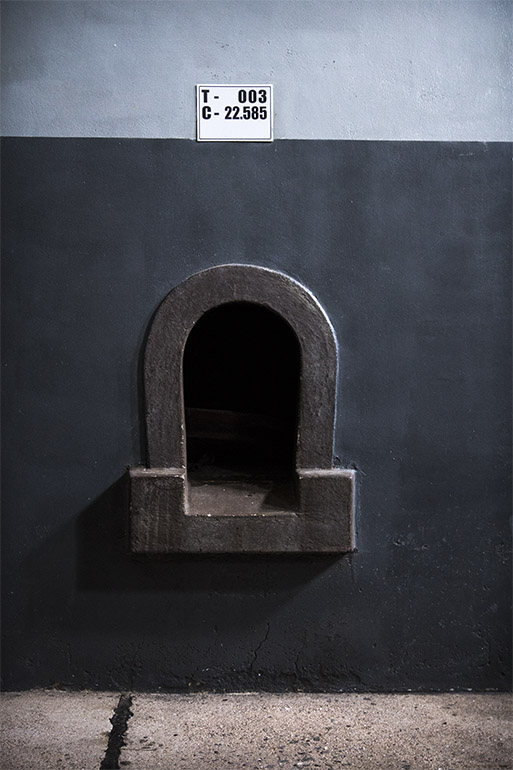
Title: Tunnel Description: It has 388,45 meters of extension and its construction took two years. It was inaugurated in 1944 to make possible the route of the trains of the Railroad Tereza Cristina. It is located under a hill between the neighborhoods of Santa Luzia and Ex-Patrimônio. It is currently still used for coal rail transport. Local: Siderópolis, Brazil Date of Registration: 07/03/2013
Nº 013-2202
Title: Immigrant Museum Description: This museum has a rich museum collection. It is located in one of the most important historical buildings of the city centre. Local: Nova Veneza, Brazil Date of Registration: 17/05/2014
Nº 013-4108
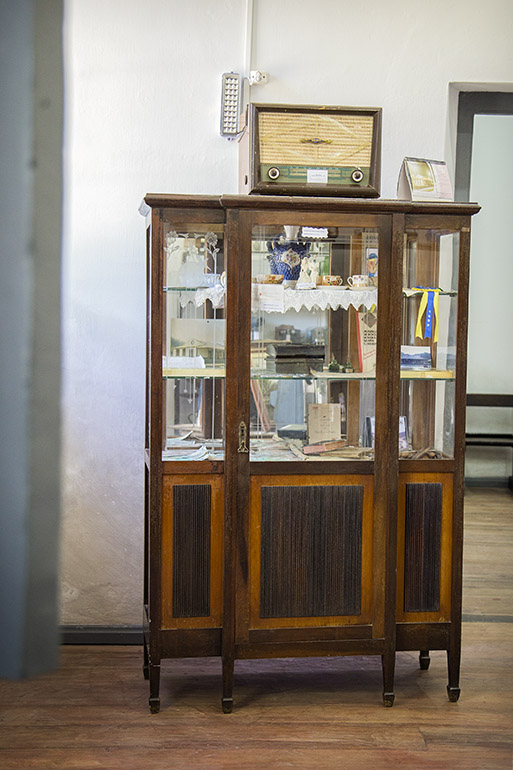
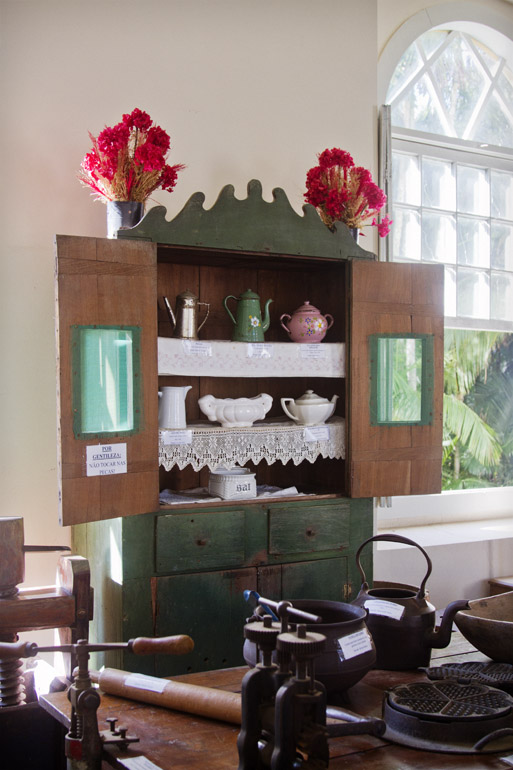
Title: Old cupboards Description: Collection of the House of Culture and Colonizer Museum. Local: Arroio Trinta, Brazil Date of Registration: 29/10/2016
Nº 013-231
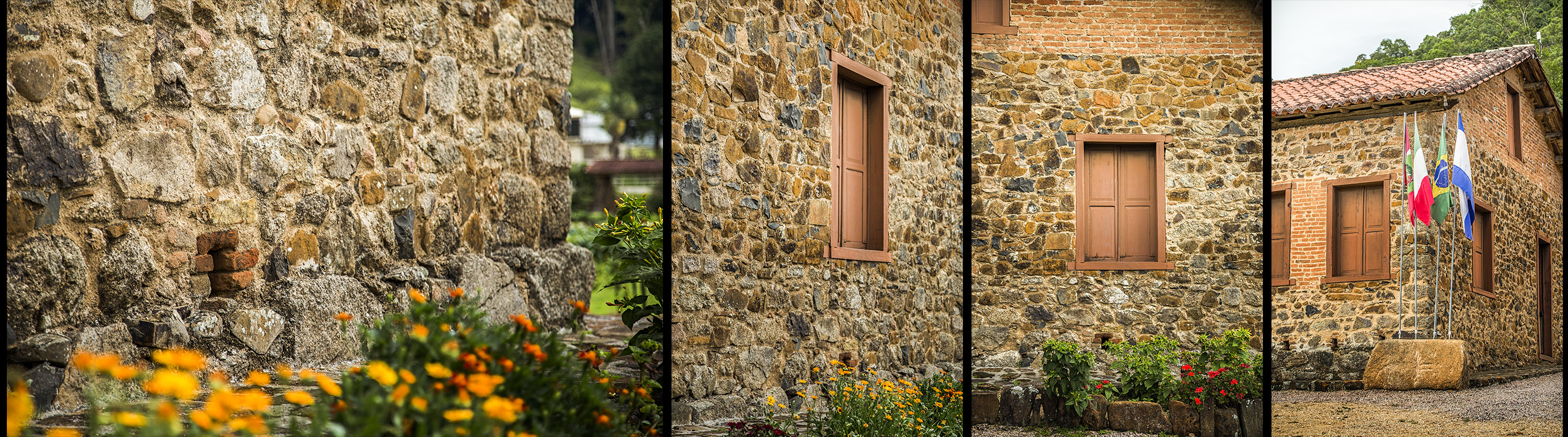
Title: Stones House Description: This photograph was taken at a Stone House built in 1902 by Italian immigrants from the Marcon family. This special place is a Historical Heritage of Santa Catarina. It is currently part of the Restaurant and Immigration Inn which is located in the Historic Centre of Azambuja District. This company started in 2004 idealized by the brothers Isaias, Paulo e Izaltino Masiero and was concluded in 2008. In addition to the traditional Goethe grape cultivation it serves the public interested in gastronomy, events and rural tourism. Reference: www.pousadadaimigracao.com.br Local: Azambuja, Pedras Grandes, Brazil Date of Registration: 22/12/2016
Nº 013-5038
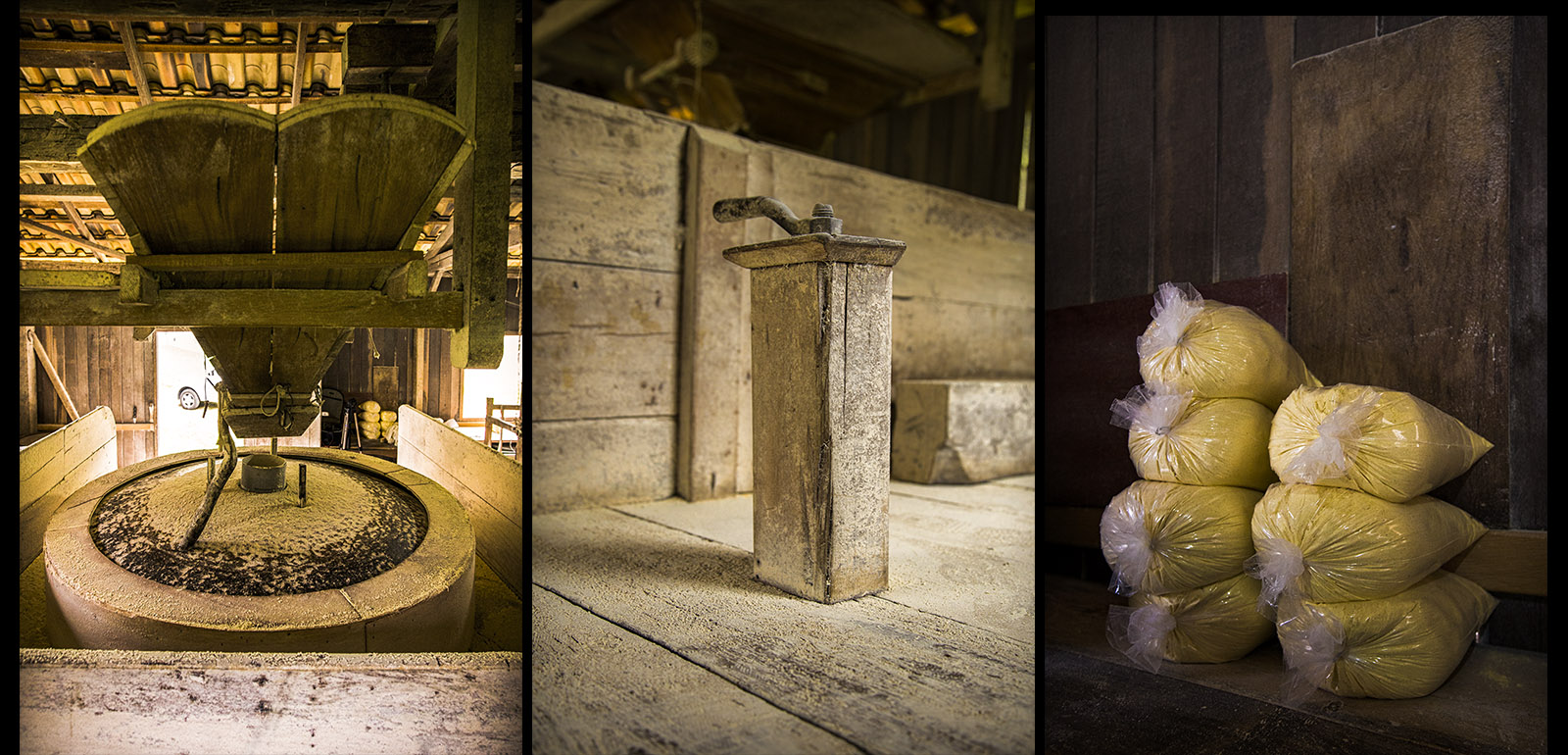
Title: Corn Milling Description: Rural activity on the property of Pieri family. This mill was built on 08/28/1934. Local: Treze de Maio, Brazil Date of Registration: 11/01/2017
Nº 013-2626
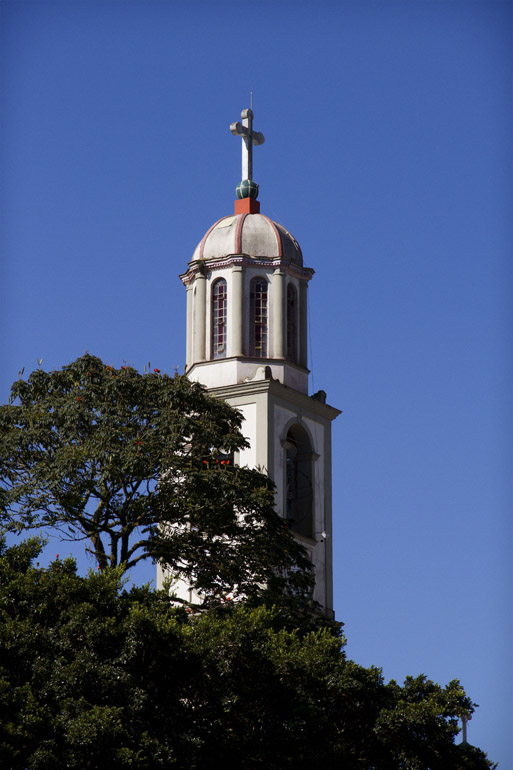
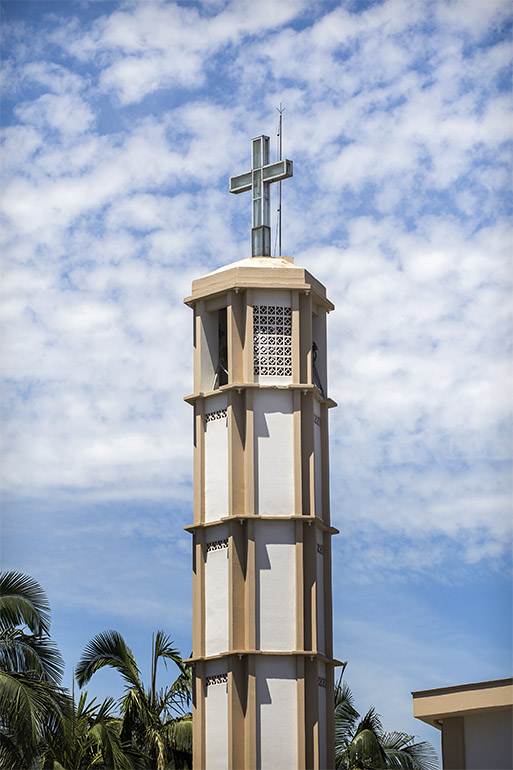
Title: Tower of St. Mark`s Parish Description: Located in the city centre. Local: Nova Veneza, Brazil Date of Registration: 12/03/2012
Nº 013-4047
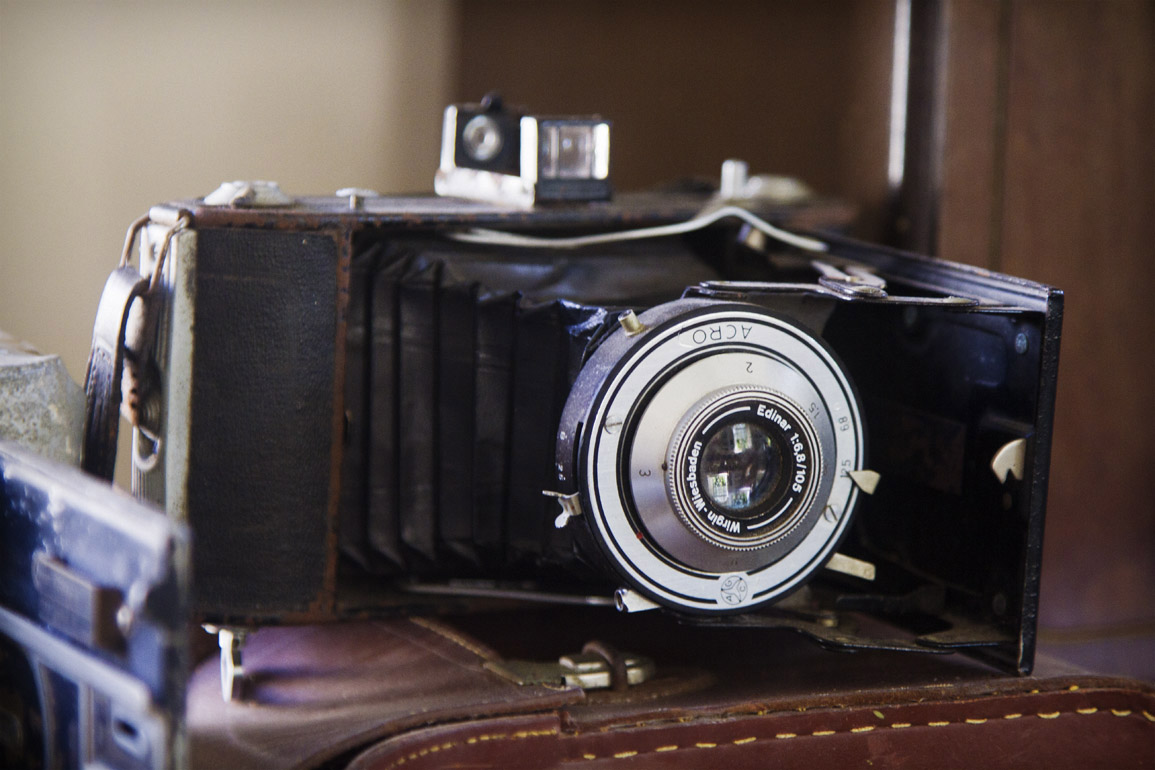
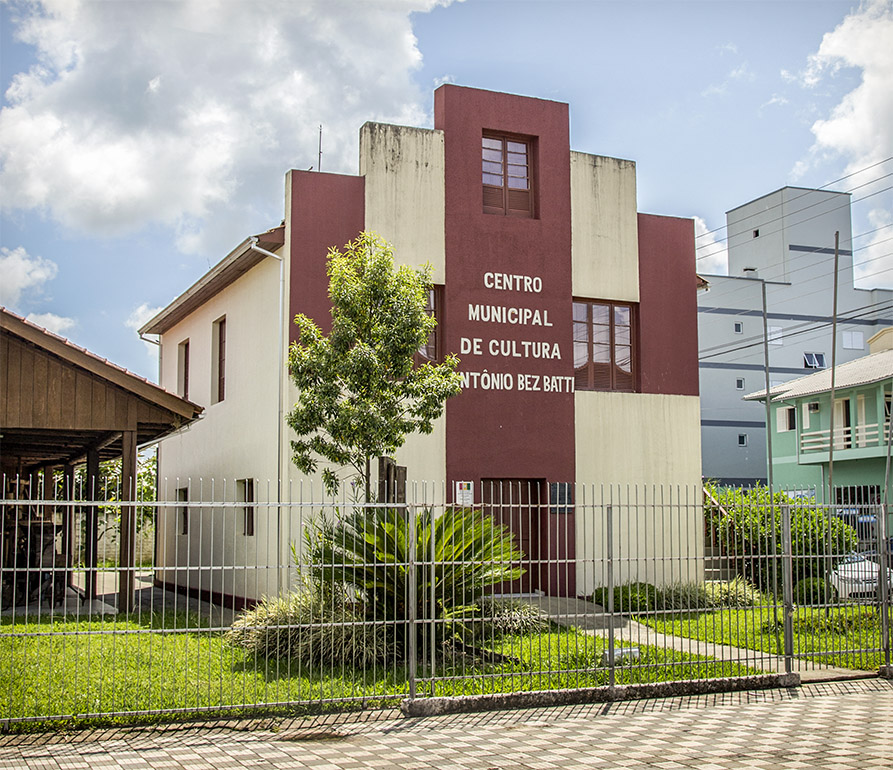
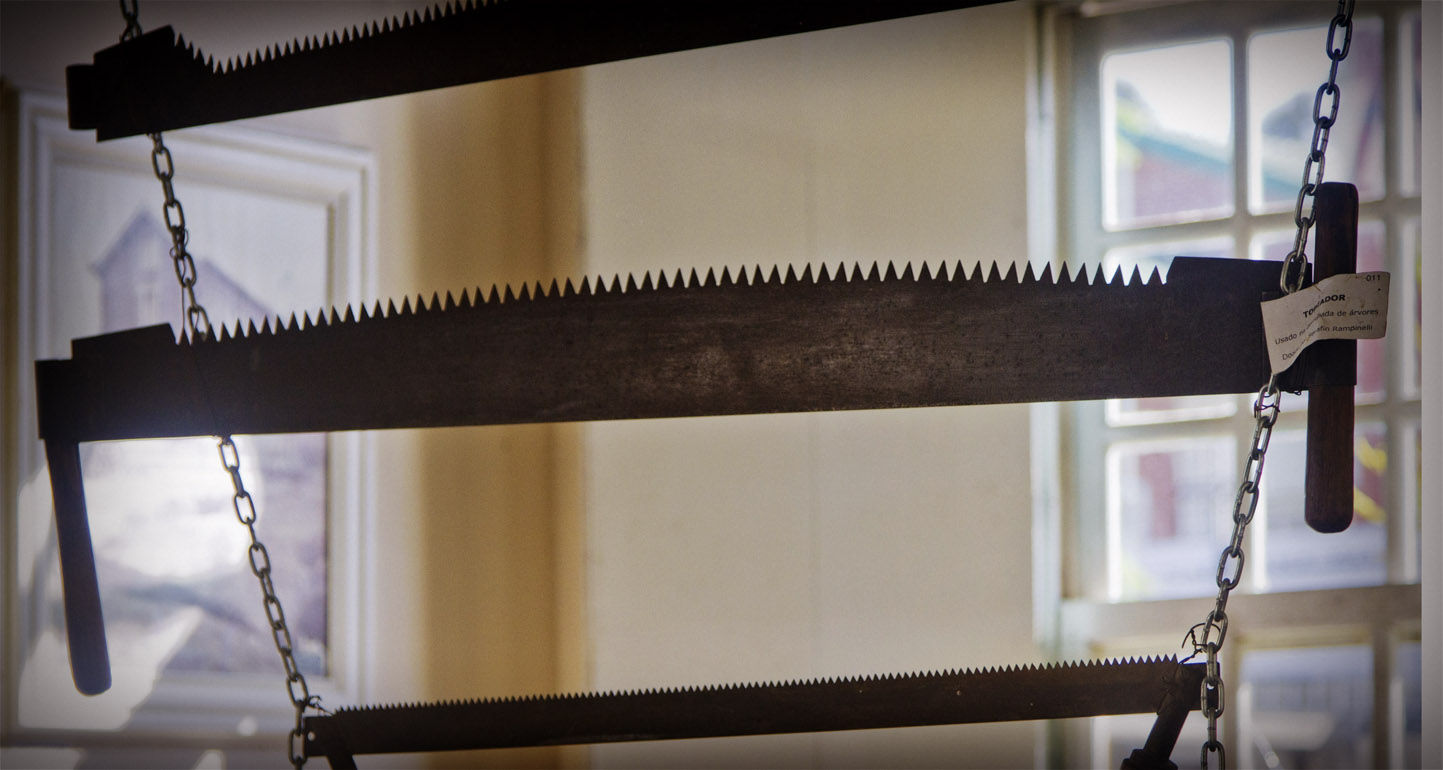
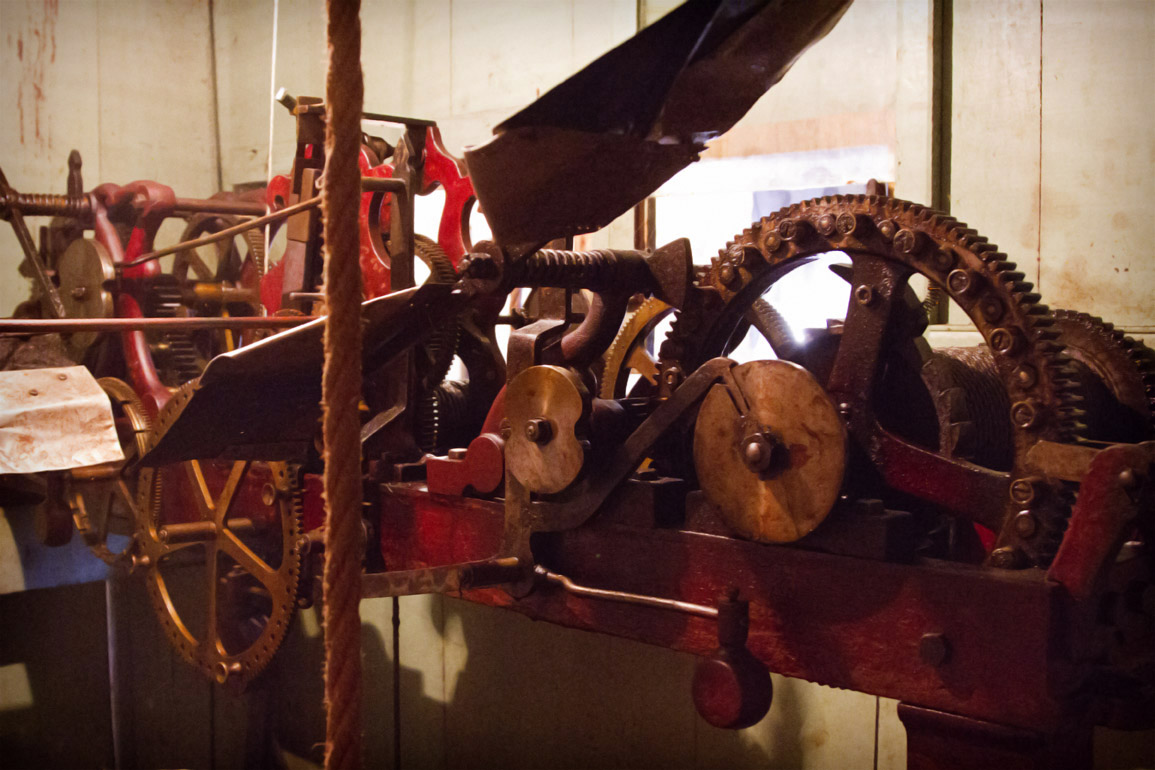
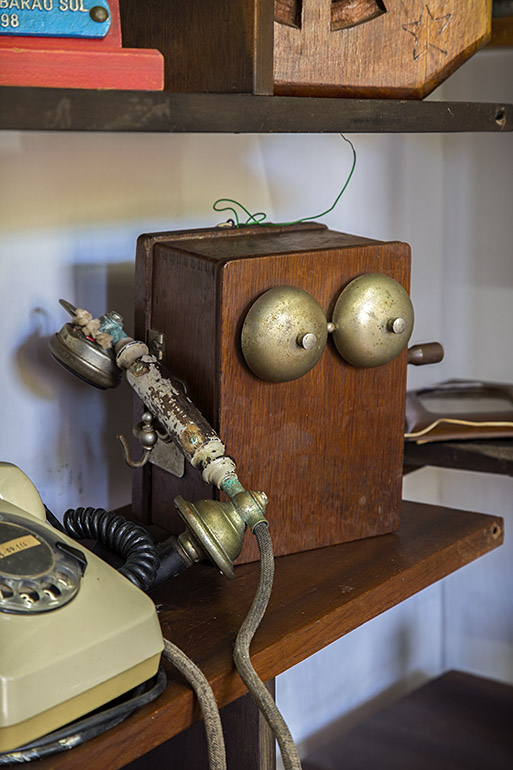
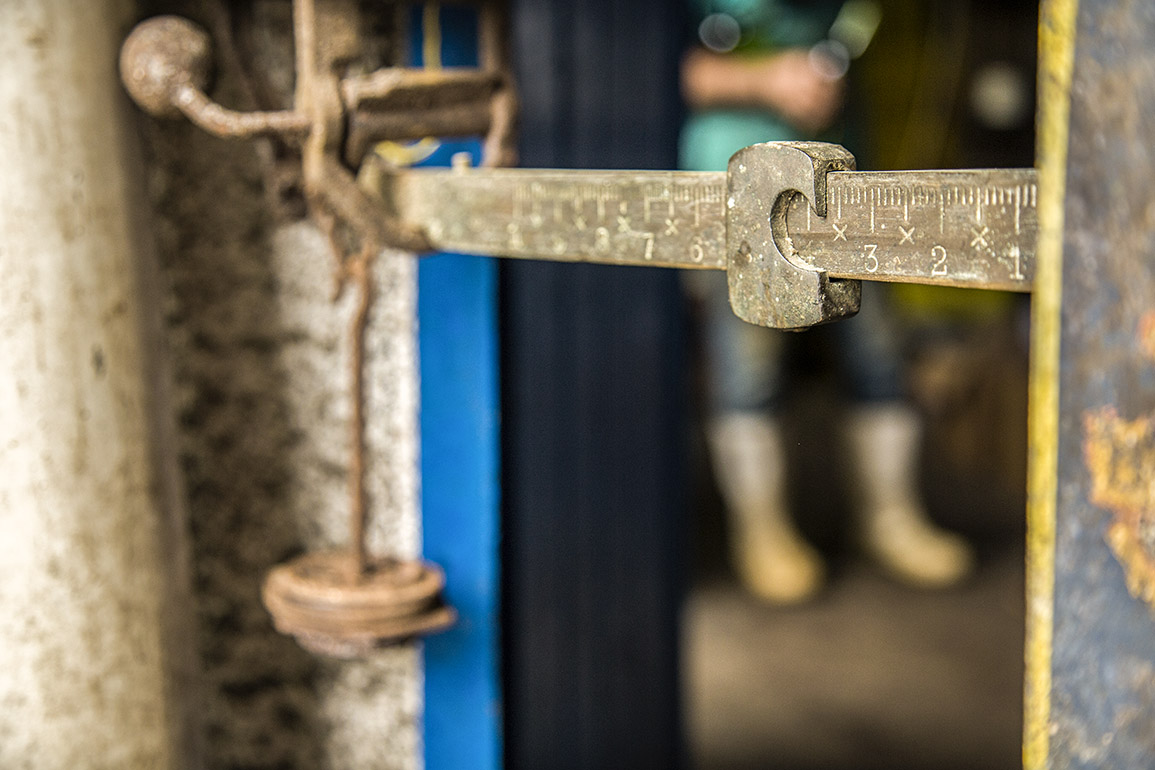
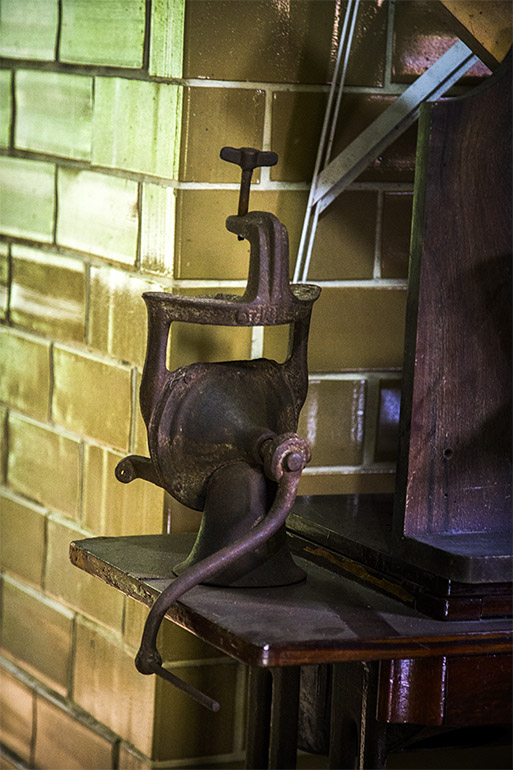
Title: Apparatus used in the colony Description: Collection of Antônio Bez Batti Municipal Culture Centre located in the city centre. Local: Turvo, Brazil Date of Registration: 12/01/2017
Nº 013-2827
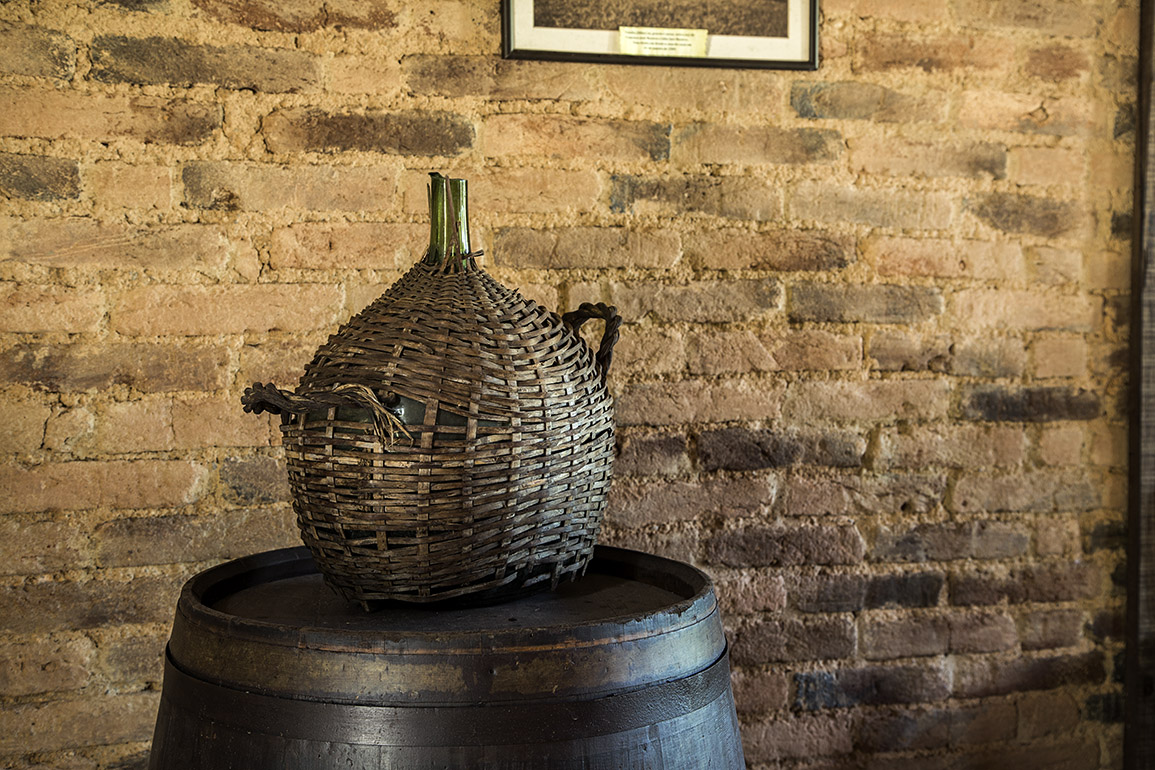
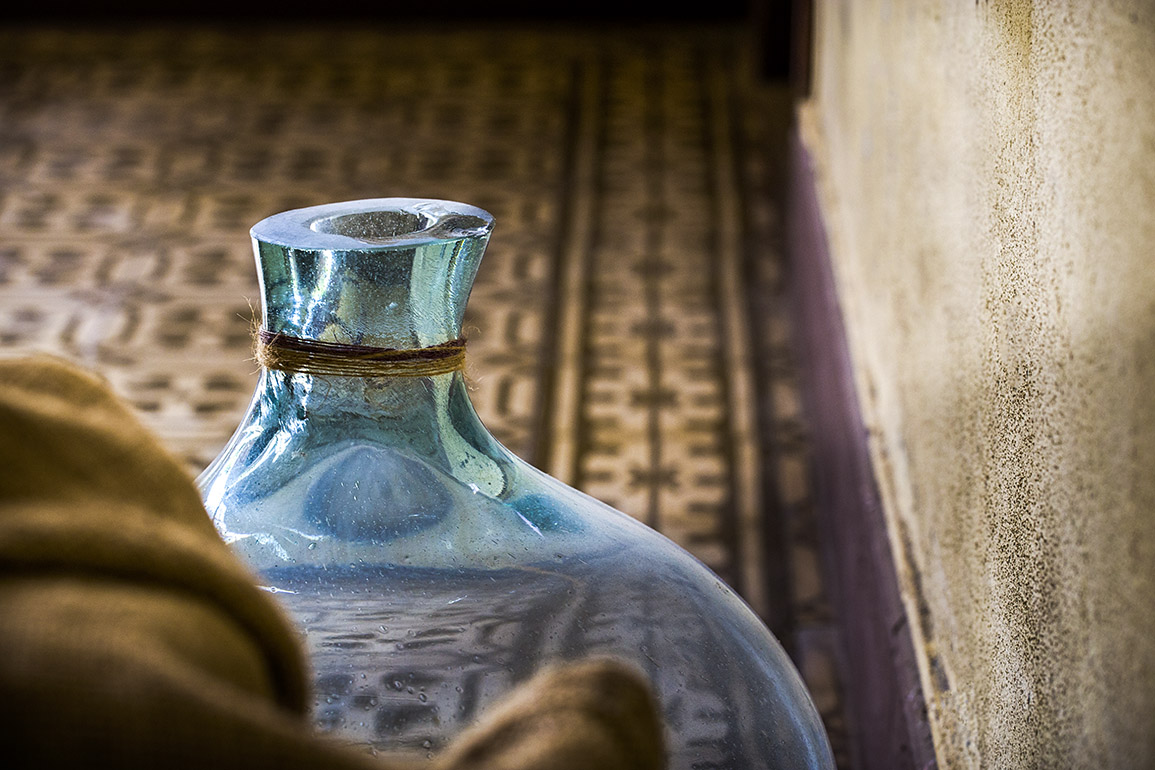
Title: Old bottle for wine packaging Description: This photograph was taken at a Stone House built in 1902 by Italian immigrants from the Marcon family. This special place is a Historical Heritage of Santa Catarina. It is currently part of the Restaurant and Immigration Inn which is located in the Historic Centre of Azambuja District. This company started in 2004 idealized by the brothers Isaias, Paulo e Izaltino Masiero and was concluded in 2008. In addition to the traditional Goethe grape cultivation it serves the public interested in gastronomy, events and rural tourism. Reference: www.pousadadaimigracao.com.br Local: Azambuja, Pedras Grandes, Brazil Date of Registration: 22/12/2016
Nº 013-5040
Title: Accounting Book of Bortoluzzi Irmãos store Description: Enterprise in which were sold dry goods,1946. Immigrant Museum collection. Local: Nova Veneza, Brazil Date of Registration: 17/05/2014
Nº 013-4126
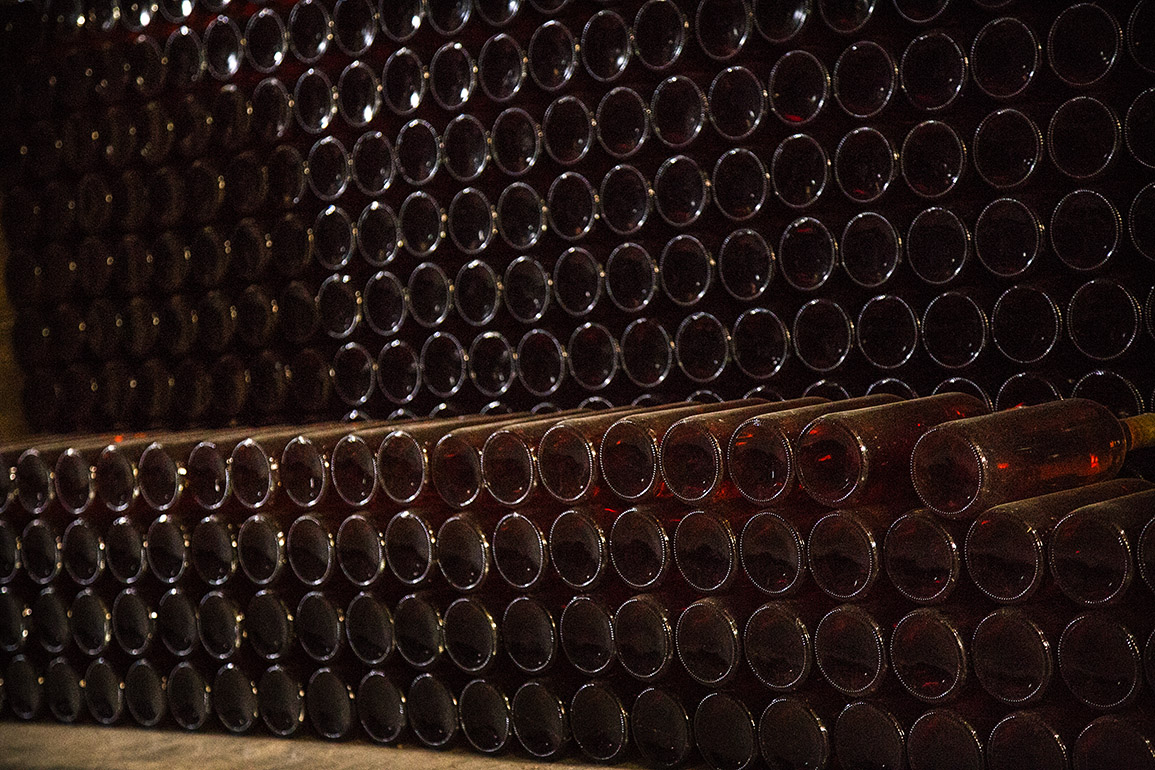
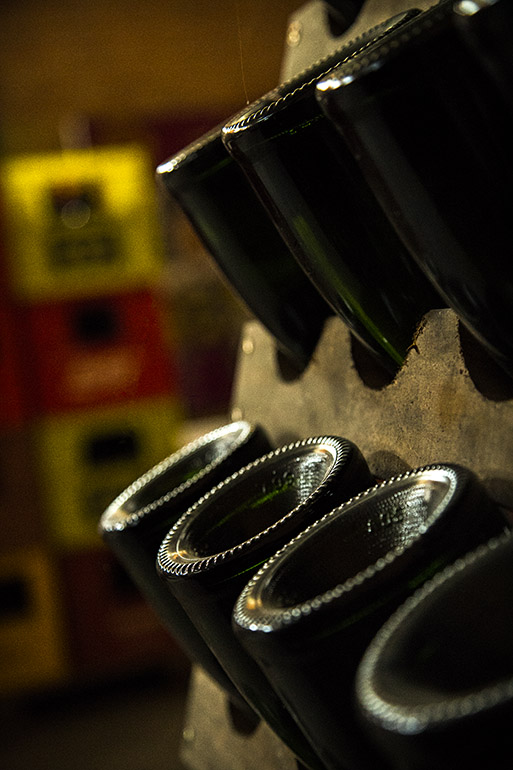
Title: Wine bottles in the cellar Description: One of the traditions brought by Italian immigrants to the south of Santa Catarina was the cultivation of grapes and the manufacture of wine. This culture was developed and preserved by its descendants. This is the case of Casa Del Nonno Winery where this photograph was made. Originating from Longarone in Veneto region, Belluno province, Italy, Damian and Mariot families settled in Urussanga as pioneers at the end of the 19th century bringing with them a passion for vine and winemaking. The immigrant Pietro Damian who was one of the pioneers of that work had the collaboration of the immigrant Lúcia Olivier Mariot who worked on winemaking in Italy. In 1975 their descendants Hedi Damian and Flávio Antonio Mariot founded Vitivinícola Urussanga Ltda aiming to present to the market a variation of wines and sparkling wines with high quality. The family tradition is maintained by Renato Mariot Damian, son of Hedi, who manages the winery with the advice of his son Matheus Damian, thus forming three generations of wine love. Goethe grape is one of the specialties of the Winery. Casa Del Nonno Winery is located at 79 Olivio Gialdini Mariot street in the city centre. Reference: www.casadelnonno.com.br Local: Urussanga, Brazil Date of Registration: 10/01/2017
Nº 013-2999
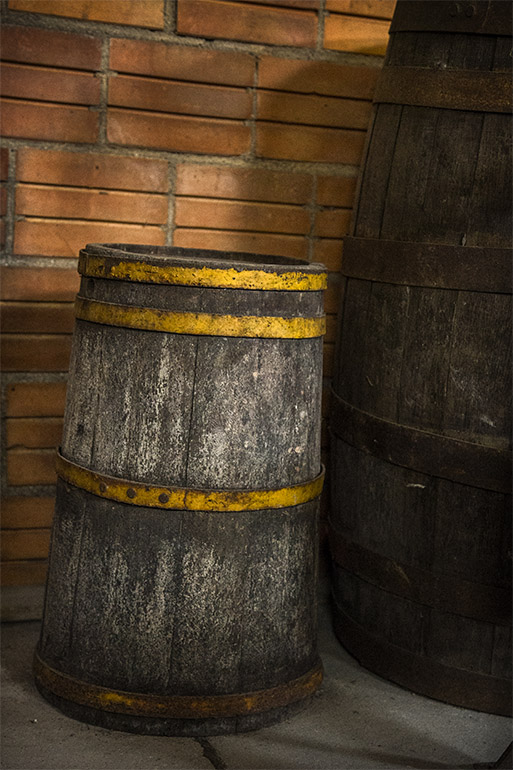
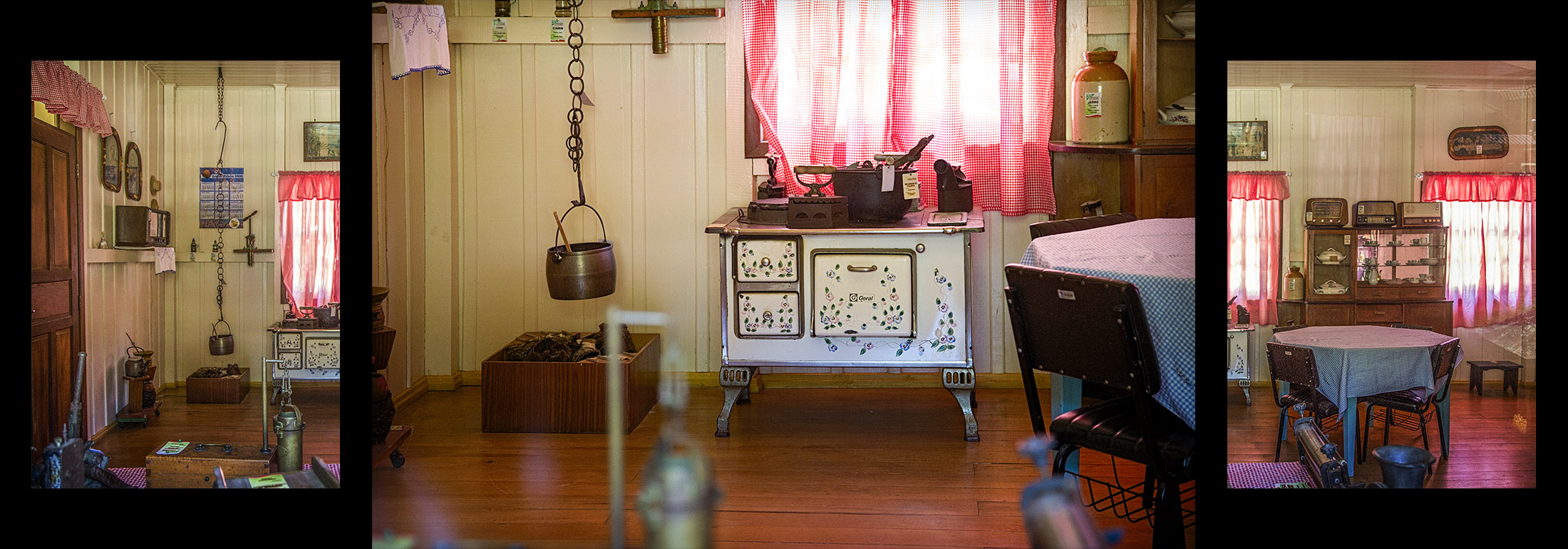
Title: Irons and small barrel Description: Largest iron is from year 1906 and was donated by Cancellier family. Collection of Italian Culture Museum located in the old Railway Station of Pedras Grandes in the city centre. This station was inaugurated in 1884 along with the Railroad Tereza Cristina and had as objective to serve to the Colony of Azambuja. Local: Pedras Grandes, Brazil Date of Registration: 22/12/2016
Nº 013-6022
Title: Wine bottles in the cellar Description: One of the traditions brought by Italian immigrants to the south of Santa Catarina was the cultivation of grapes and the manufacture of wine. This culture was developed and preserved by its descendants. This is the case of Casa Del Nonno Winery where this photograph was made. Originating from Longarone in Veneto region, Belluno province, Italy, Damian and Mariot families settled in Urussanga as pioneers at the end of the 19th century bringing with them a passion for vine and winemaking. The immigrant Pietro Damian who was one of the pioneers of that work had the collaboration of the immigrant Lúcia Olivier Mariot who worked on winemaking in Italy. In 1975 their descendants Hedi Damian and Flávio Antonio Mariot founded Vitivinícola Urussanga Ltda aiming to present to the market a variation of wines and sparkling wines with high quality. The family tradition is maintained by Renato Mariot Damian, son of Hedi, who manages the winery with the advice of his son Matheus Damian, thus forming three generations of wine love. Goethe grape is one of the specialties of the Winery. Casa Del Nonno Winery is located at 79 Olivio Gialdini Mariot street in the city centre. Reference: www.casadelnonno.com.br Local: Urussanga, Brazil Date of Registration: 10/01/2017
Nº 013-3000
Title: Monument to the Prince of Grão Pará Description: Located in the central square of the city. Local: Grão Pará, Brazil Date of Registration: 14/01/2017
Nº 013-904
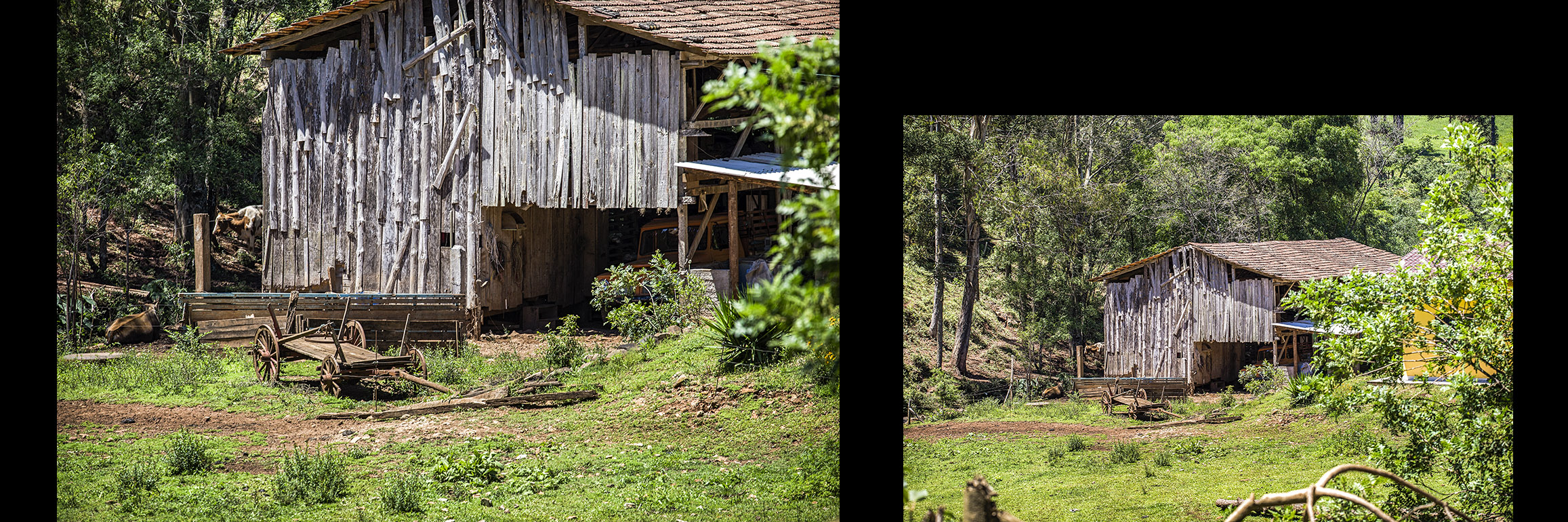
Title: Detail of an old house built using wood Description: Located in the city centre. Local: Turvo, Brazil Date of Registration: 12/01/2017
Nº 013-2812
Title: Old house with traces of architecture brought by immigrants Description: Located in the city centre. Local: Treviso, Brazil Date of Registration: 13/01/2017
Nº 013-2505
Title: Details of old graves Description: Traces and forms of tomb art. Graves located in the Municipal Cemetery. Local: Cocal do Sul, Brazil Date of Registration: 14/01/2017
Nº 013-510
Title: Pedras Grandes river and the old Tereza Cristina Railroad bridge Description: City centre. Local: Pedras Grandes, Brazil Date of Registration: 10/01/2017
Nº 013-6015
Title: Old tombs Description: Municipal Cemetery. Local: Nova Veneza, Brazil Date of Registration: 12/03/2012
Nº 013-4163
Title: Detail of wine storage tanks walls Description: One of the traditions brought by Italian immigrants to the south of Santa Catarina was the cultivation of grapes and the manufacture of wine. This culture was developed and preserved by its descendants. This is the case of Casa Del Nonno Winery where this photograph was made. Originating from Longarone in Veneto region, Belluno province, Italy, Damian and Mariot families settled in Urussanga as pioneers at the end of the 19th century bringing with them a passion for vine and winemaking. The immigrant Pietro Damian who was one of the pioneers of that work had the collaboration of the immigrant Lúcia Olivier Mariot who worked on winemaking in Italy. In 1975 their descendants Hedi Damian and Flávio Antonio Mariot founded Vitivinícola Urussanga Ltda aiming to present to the market a variation of wines and sparkling wines with high quality. The family tradition is maintained by Renato Mariot Damian, son of Hedi, who manages the winery with the advice of his son Matheus Damian, thus forming three generations of wine love. Goethe grape is one of the specialties of the Winery. Casa Del Nonno Winery is located at 79 Olivio Gialdini Mariot street in the city centre. Reference: www.casadelnonno.com.br Local: Urussanga, Brazil Date of Registration: 10/01/2017
Nº 013-2998
Title: Old clothes iron Description: Used ember or coal. Donated by Marcos Spillere. Immigrant Museum collection. Local: Nova Veneza, Brazil Date of Registration: 17/05/2014
Nº 013-4137
Title: Hexagonal concertina Description: Donation of Irineu Ghisi. Collection of Italian Culture Museum located in the old Railway Station of Pedras Grandes in the city centre. This station was inaugurated in 1884 along with the Railroad Tereza Cristina and had as objective to serve to the Colony of Azambuja. Local: Pedras Grandes, Brazil Date of Registration: 22/12/2016
Nº 013-6030
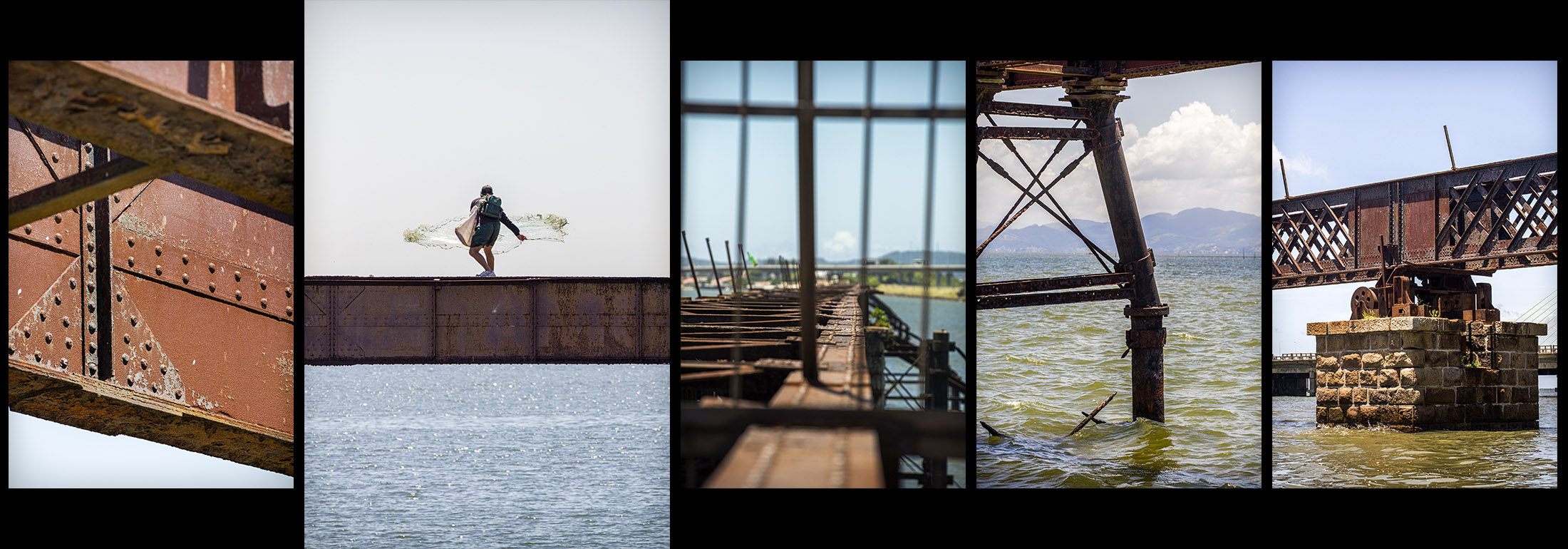
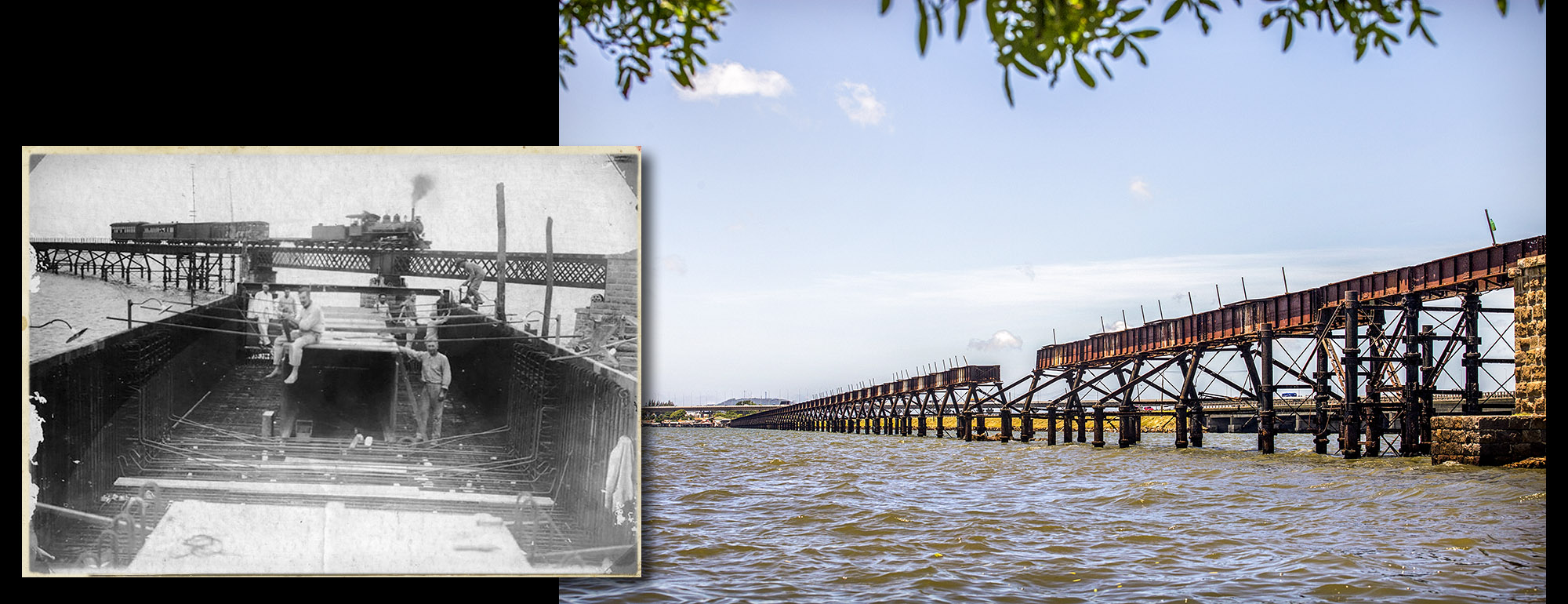
Title: Details of Dona Tereza Cristina Railroad Bridge Description: It was built by English and is also known as Laranjeiras Bridge or Cabeçudas Bridge. It has 1480 meters of extension and has a movable span that allows the passage of small vessels. On July 18, 1882, the first train crossed that bridge definitively establishing a terrestrial interconnection between Imbituba and Laguna, which brought a great development to the region. It allowed the transport of coal and passengers, including immigrants who colonized southern Santa Catarina. It was deactivated in 1934 when Henrique Lage Bridge was inaugurated on September 1st and is still used. Research Source: TONETTO, E. P.; GHIZZO, I.; PIROLA, L. "Colônia Azambuja: a imigração italiana no sul de Santa Catarina". Florianópolis: EPAGRI, 2015, 211p. Local: Laguna, Brazil Date of Registration: 15/01/2017
Nº 013-1302
Title: Tombstones Description: Old cemetery of the immigrants located near the centre of Azambuja District. Local: Azambuja, Pedras Grandes, Brazil Date of Registration: 24/11/2016
Nº 013-5002
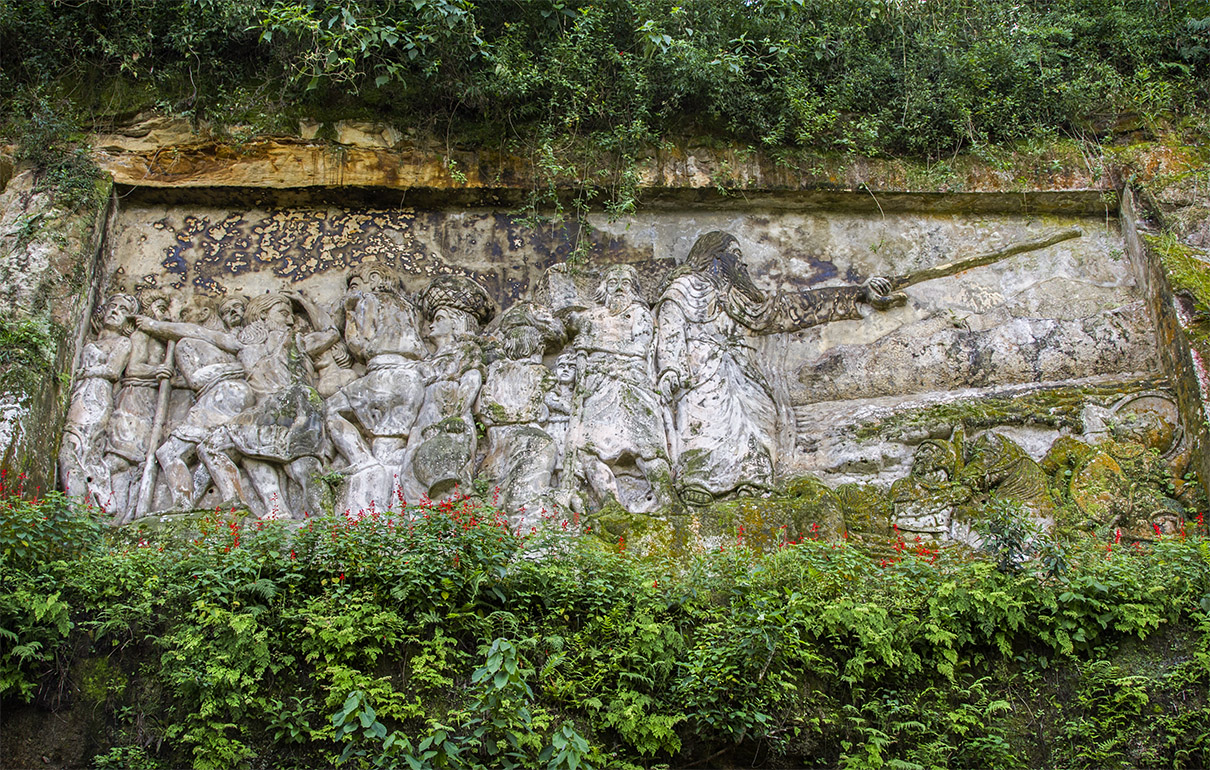
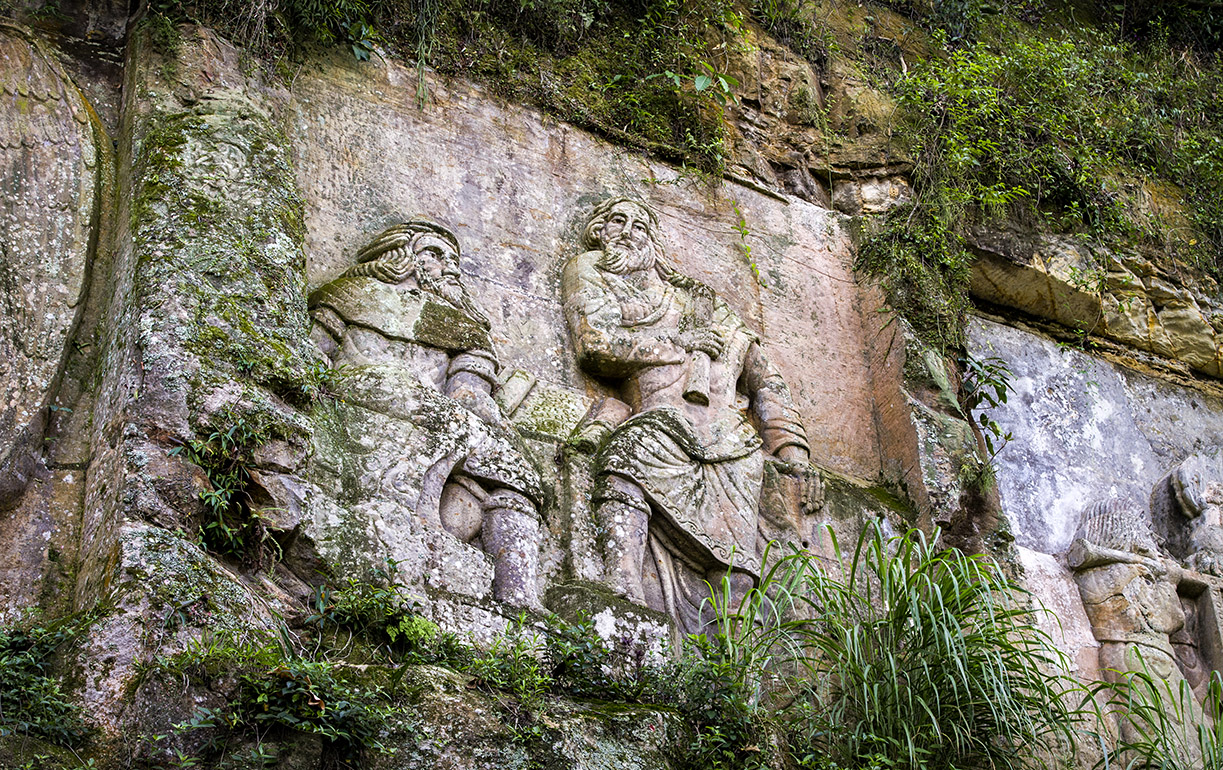
Title: Zé Diabo wall Description: This wall contains panels representing biblical passages. Sculptures of the mason and artist José Fernandes, the "Zé Diabo", born in Orleans on March 19, 1930. This work made in solid stone in the central area of the city started on June 6, 1980 took 15 years of work and occupies 170 square meters. It contains this biblical passages: "The Creation of Man", "The Sacrifice of Abraham", "The Passage of the Red Sea", "The Temple of King Solomon" and "The Prophets". Local: Orleans, Brazil Date of Registration: 01/03/2012
Nº 013-1910
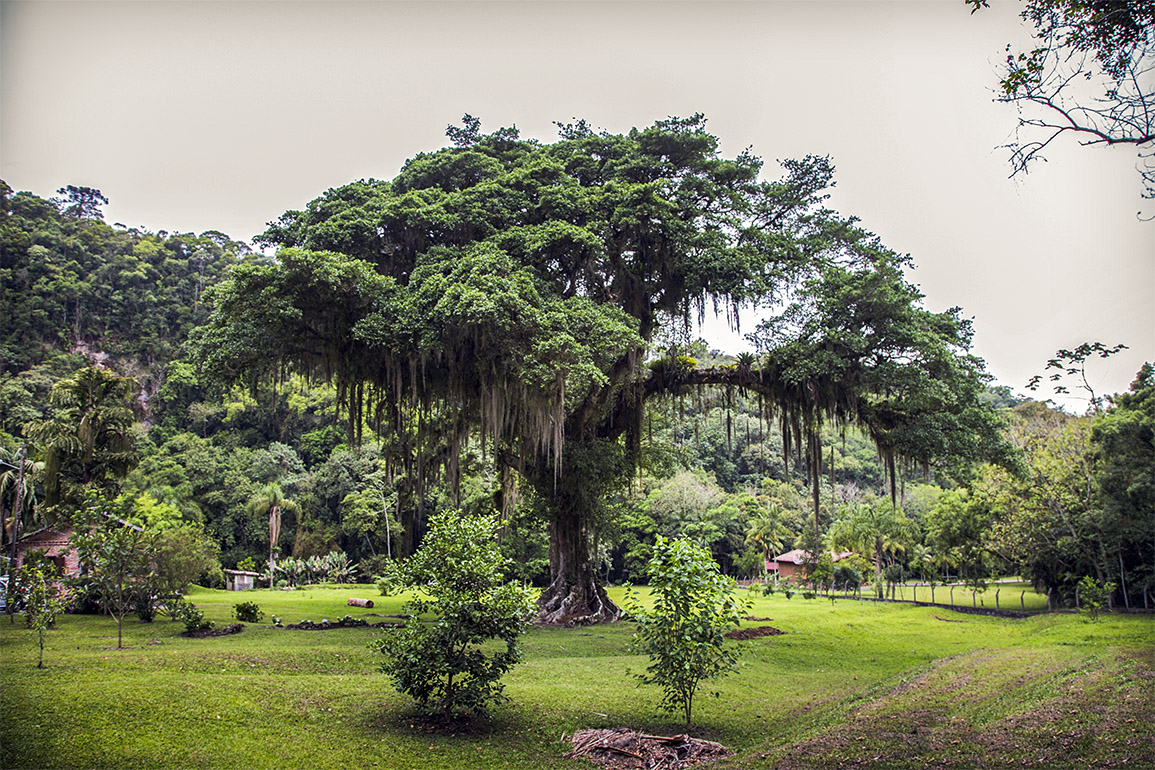
Title: Hydrangeas Description: These hydrangeas are planted next to the aerial roots of a secular fig tree. This fig tree is regarded as a symbol by the locals, because it would have been planted by immigrant colonists and served as a place of rest and shelter during extreme weather conditions. It is located in private property of Iris Cancelier family in Rio Maior neighborhood, next to an old road that was used by the Italian immigrants in the route until their colonies during the colonization of south of Santa Catarina period. Local: Urussanga, Brazil Date of Registration: 25/11/2016
Nº 013-2969
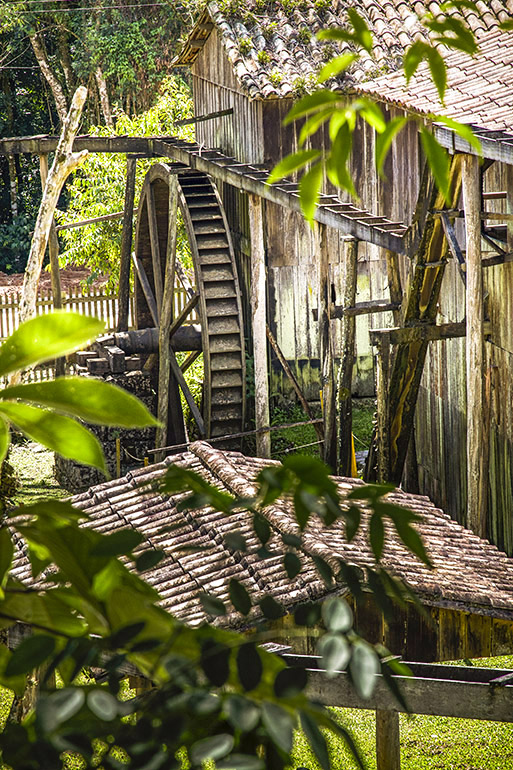
Title: Old manufactory using driving force of water wheels Description: Collection of the Princess Isabel Open-Air Museum. This museum is the first of its kind in Latin America. It was inaugurated on August 30, 1980 in an area of 20 thousand square meters. It has collections and environments that refer to the way of life of the Italian immigrants who colonized the south of Santa Catarina at the end of the 19th century. Local: Orleans, Brazil Date of Registration: 01/03/2012
Nº 013-1964
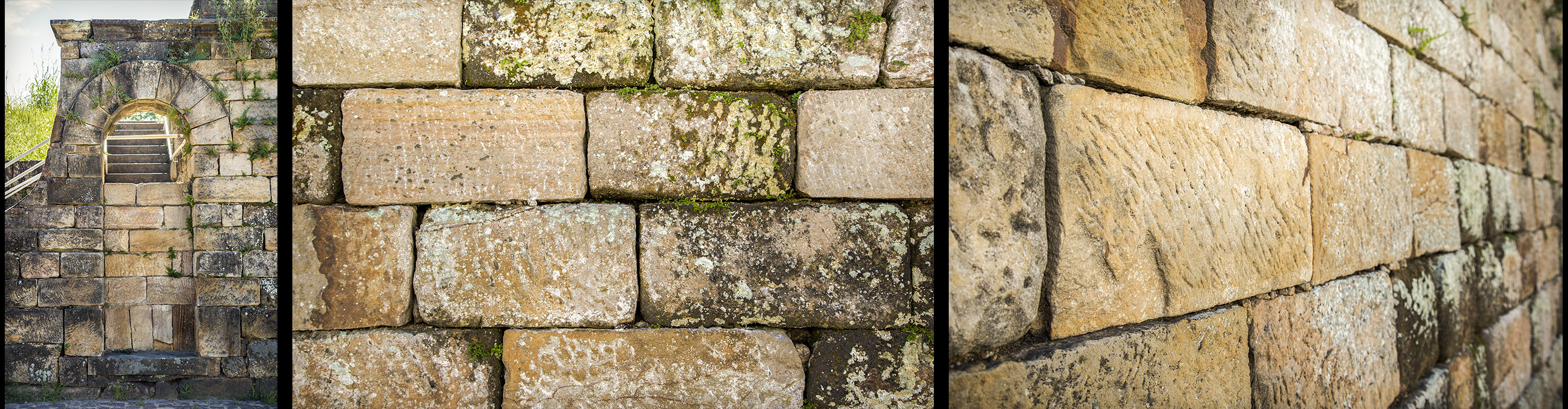
Title: Stone wall Description: Stone house built by Bratti family, 1891. Local: Nova Veneza, Brazil Date of Registration: 13/08/2011
Nº 013-4029
Title: Macela (Achyrocline satureioides) Description: Brazilian flora herb very common in several areas of the city. Local: Arroio Trinta, Brazil Date of Registration: 29/10/2016
Nº 013-204
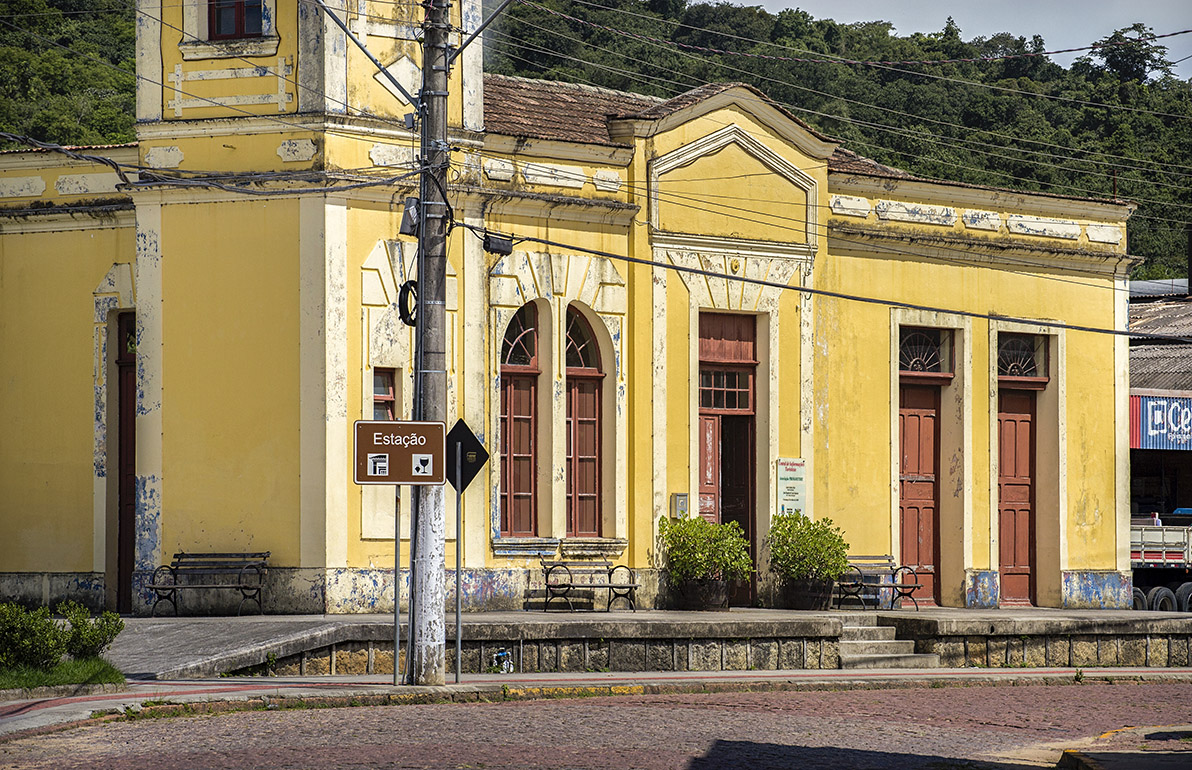
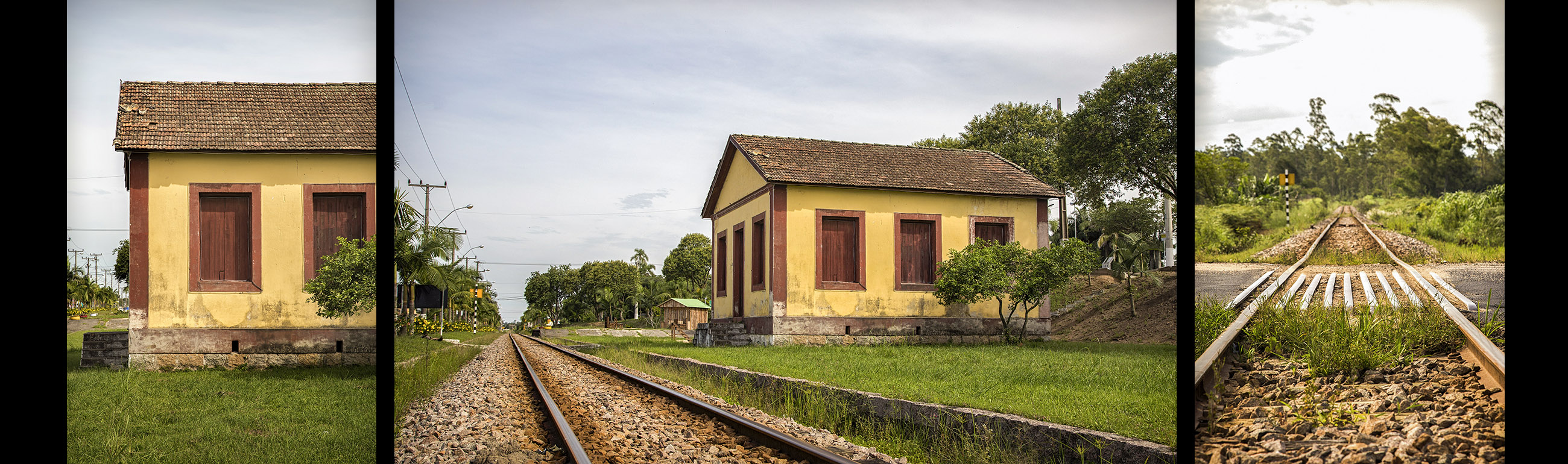
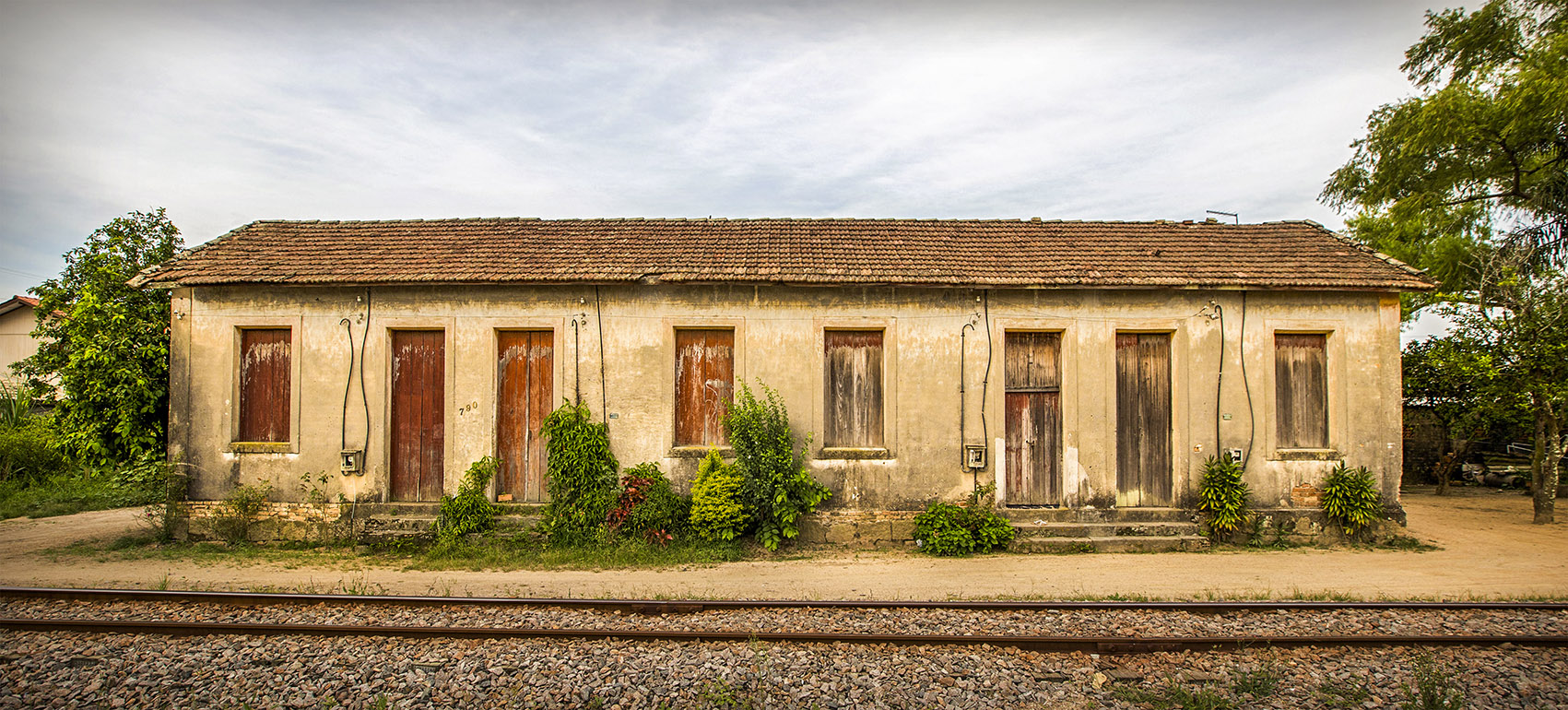
Title: Old Railway Station Description: It was built in the first half of the twentieth century and inaugurated in 1922. A few times a year is the stopping point for a tour that happens with a train that leaves from Tubarão or Jaguaruna. It is currently the headquarters of Associação dos Produtores da Uva e do Vinho Goethe (Goethe Grape Growers and Wine Association) - PROGOETHE and the Tourist Information Centre. It is located at Estação neighborhood. Local: Urussanga, Brazil Date of Registration: 10/01/2017
Nº 013-2937
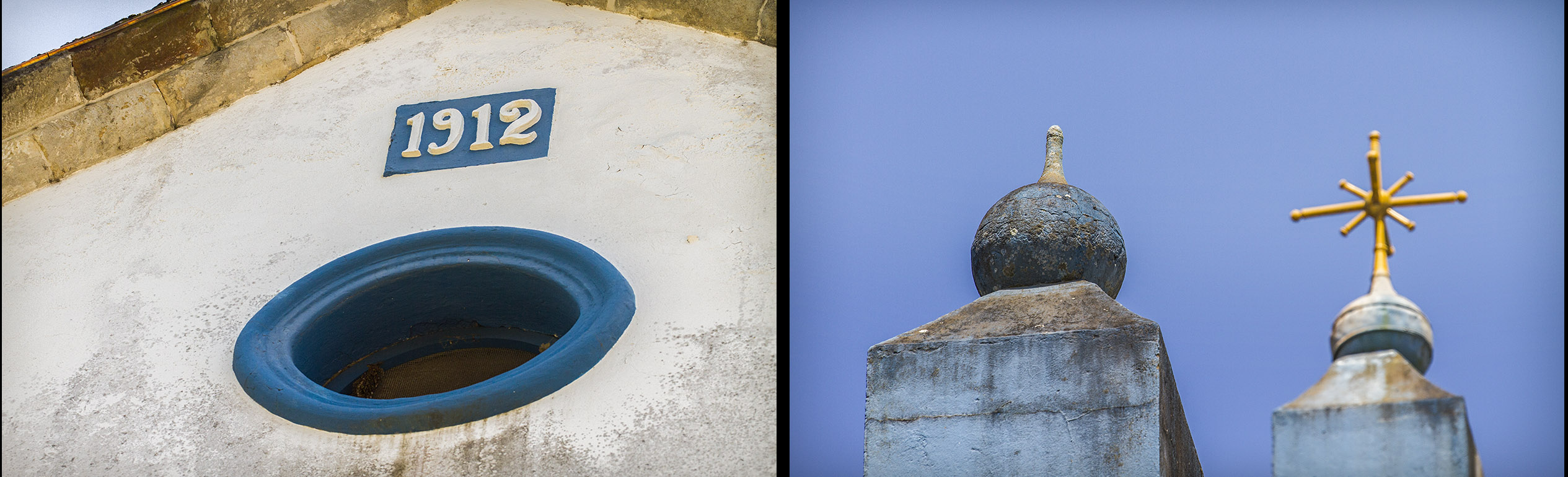
Title: Rear facade of Mazzuco mansion Description: Sobrado Mazzuco has two floors with austere style. It was built in two stages: 1st with raw stones with clay mortar and lime and 2nd with solid brick and clay mortar. Its entirety was made of rough stones up to one meter in length. It has already served as a residence, warehouse, lard factory and drugstore. Year of construction: 1912. It is located next to SC 446 highway in Rio Maior neighborhood. Local: Urussanga, Brazil Date of Registration: 11/07/2016
Nº 013-2927
Title: Old cutlery Description: Used in meals, 1920. Belonged to Gava family Donated by Aurélia Gava Destro. Immigrant Museum collection. Local: Nova Veneza, Brazil Date of Registration: 17/05/2014
Nº 013-4119
Title: Princess Isabel Open-Air Museum Description: This museum is the first of its kind in Latin America. It was inaugurated on August 30, 1980 in an area of 20 thousand square meters. It has collections and environments that refer to the way of life of the Italian immigrants who colonized the south of Santa Catarina at the end of the 19th century. Local: Orleans, Brazil Date of Registration: 01/03/2012
Nº 013-1925
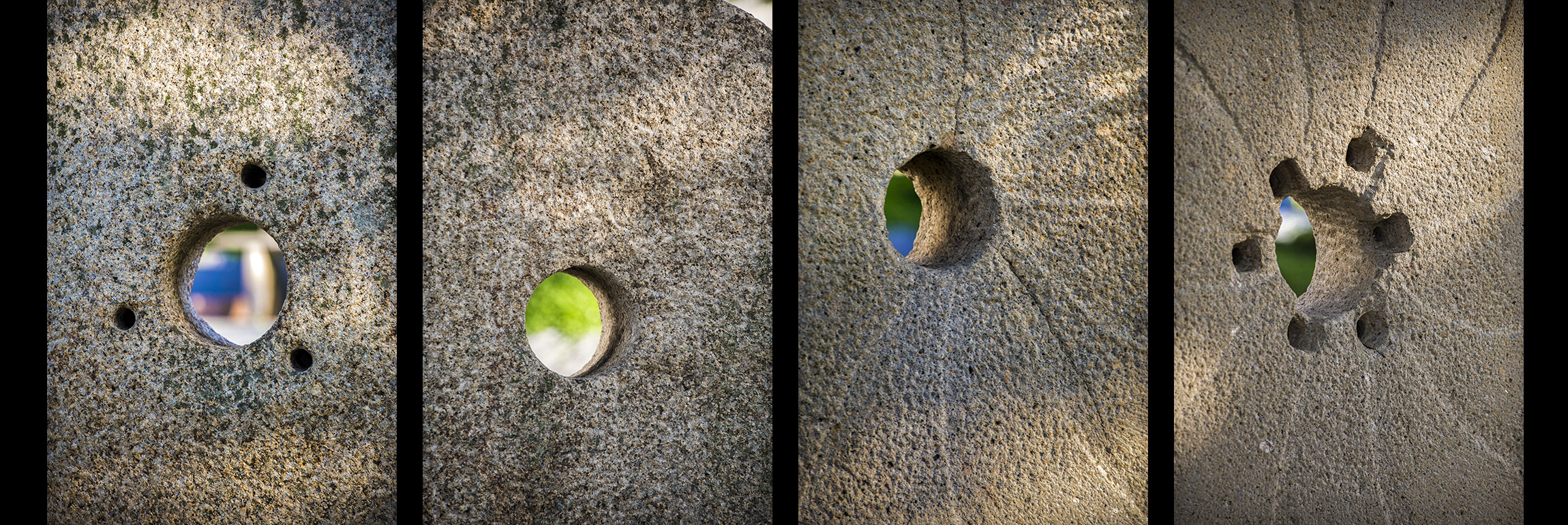
Title:Piazza San Polo Di Piave Description: Revitalization of this square occurred on 07/28/2012 when the gemellaggio was celebrated between the cities of Arroio Trinta in Brazil and San Polo Di Piave in Italy. From left to right: Millstone; Fountain; Detail of the fountain. Local: Arroio Trinta, Brazil Date of Registration: 29/10/2016
Nº 013-215
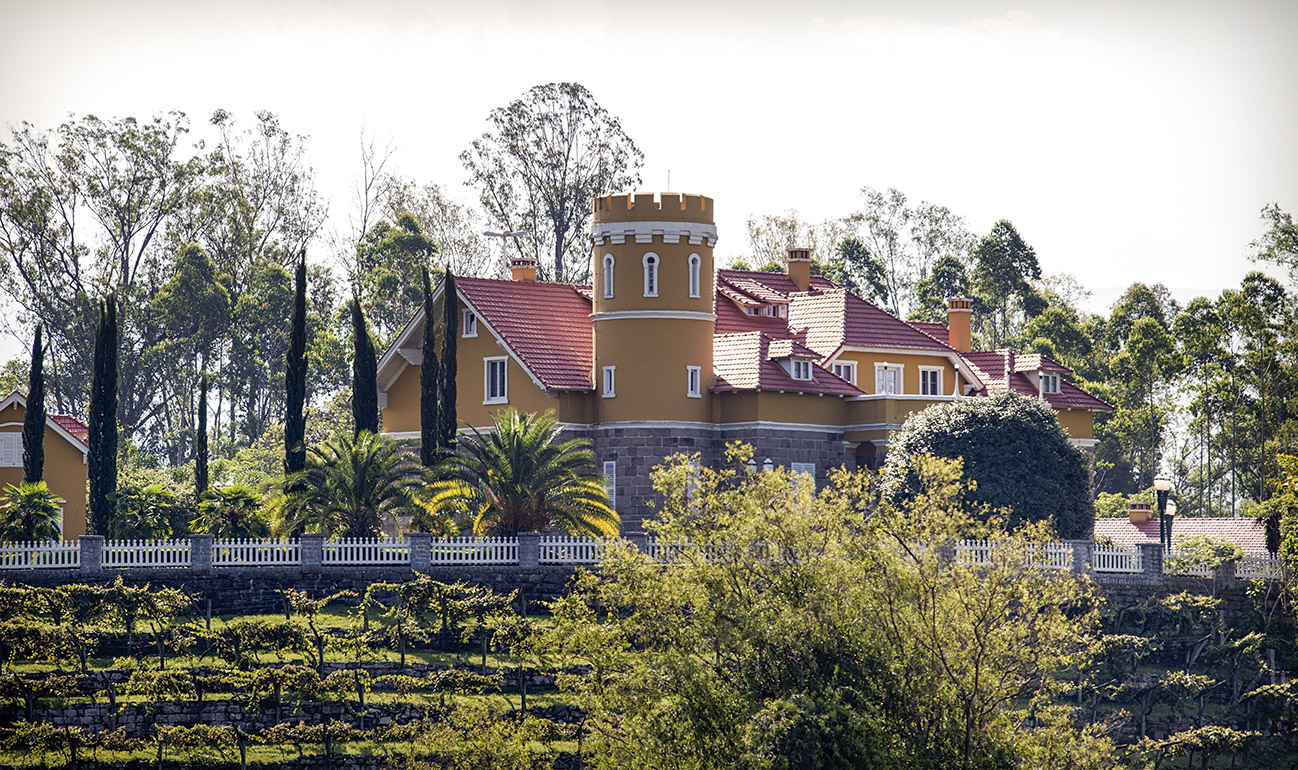
Title: Belvedere Castle details Description: This castle belongs to Caron family. It began to be built in 1999 and its work lasted 11 years. The project was made by Father Nivaldo Caron and the work was done by his father. Decorated with sacred paintings this building has an area of 1200 square meters which includes Santa Rita de Cassia Chapel. In this chapel every month, on the last Sunday at 3 pm, a Mass is held in the Tridentine rite, which is the Mass celebrated in Latin. Research Source: TONETTO, E. P.; GHIZZO, I.; PIROLA, L. "Colônia Azambuja: a imigração italiana no sul de Santa Catarina". Florianópolis: EPAGRI, 2015, 211p. Informations: http://castelobelvedere.blogspot.com.br/ Local: Treze de Maio, Brazil Date of Registration: 11/01/2017
Nº 013-2616
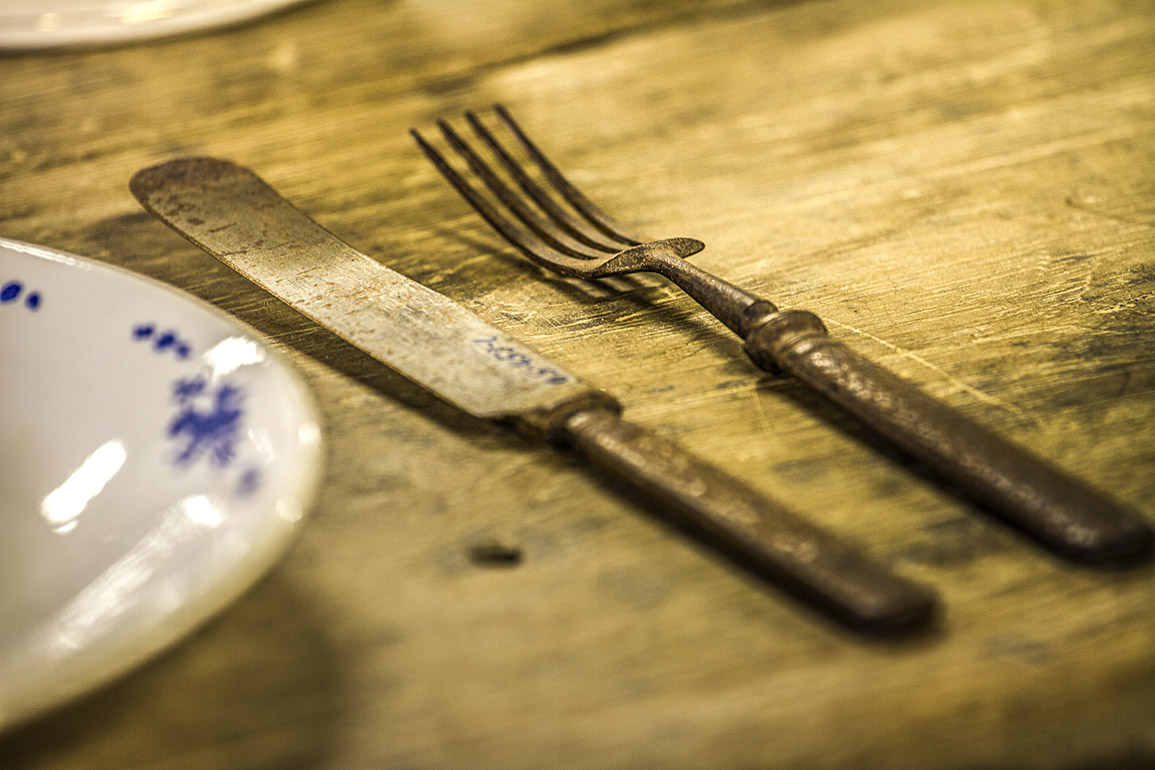
Title: Knife and fork Description: Collection of Earl D`Eu Immigration Museum. Installed in the Stone House of Princess Isabel Open-Air Museum, this museum was inaugurated on August 30, 1970. It began to be formed in 1967 through a work realized by Saint Joseph Seminary and coordinated by the Father João Leonir Dall`Alba. Its collection consists of historical material: work tools, household utensils, sacred images, objects of adornment, comfort and personal assistance, furniture, numismatics, archaeological collection, clothing, collection of regional ores, etc. Local: Orleans, Brazil Date of Registration: 1970
Nº 013-1970
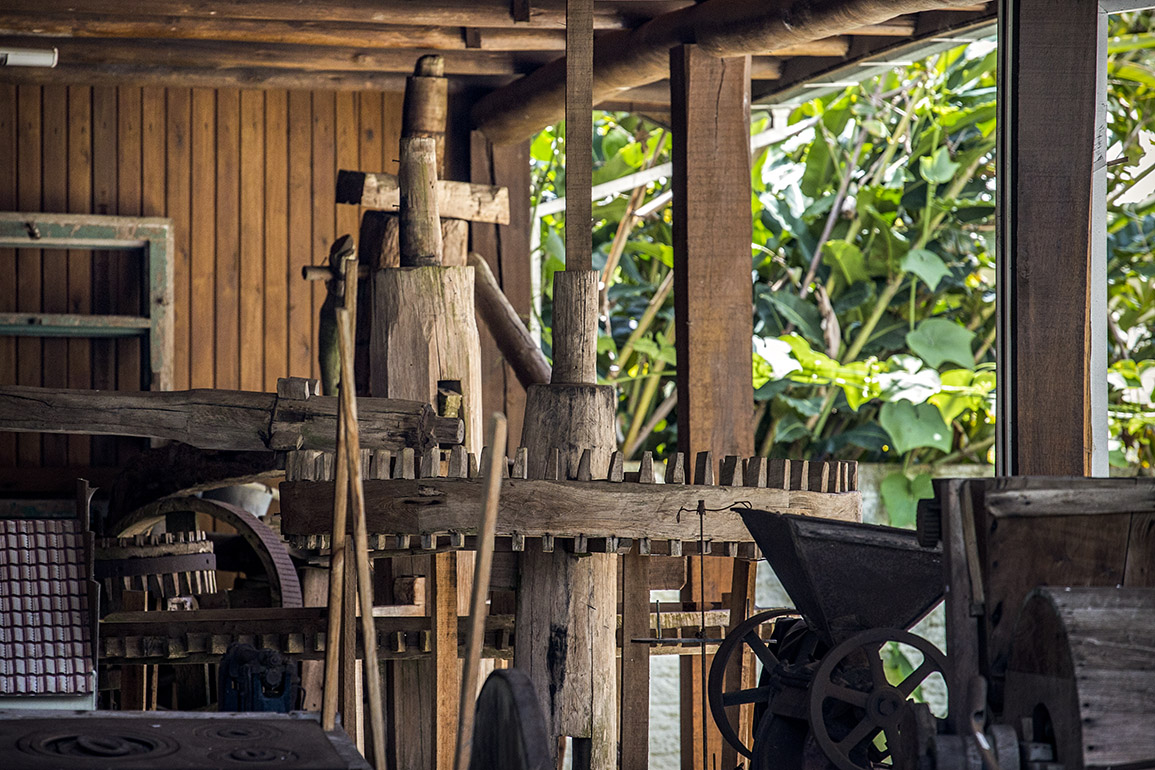
Title: Old mill Description: Collection of Antônio Bez Batti Municipal Culture Centre located in the city centre. Local: Turvo, Brazil Date of Registration: 12/01/2017
Nº 013-2826
Title: Wine bottles in the cellar Description: One of the traditions brought by Italian immigrants to the south of Santa Catarina was the cultivation of grapes and the manufacture of wine. This culture was developed and preserved by its descendants. This is the case of Casa Del Nonno Winery where this photograph was made. Originating from Longarone in Veneto region, Belluno province, Italy, Damian and Mariot families settled in Urussanga as pioneers at the end of the 19th century bringing with them a passion for vine and winemaking. The immigrant Pietro Damian who was one of the pioneers of that work had the collaboration of the immigrant Lúcia Olivier Mariot who worked on winemaking in Italy. In 1975 their descendants Hedi Damian and Flávio Antonio Mariot founded Vitivinícola Urussanga Ltda aiming to present to the market a variation of wines and sparkling wines with high quality. The family tradition is maintained by Renato Mariot Damian, son of Hedi, who manages the winery with the advice of his son Matheus Damian, thus forming three generations of wine love. Goethe grape is one of the specialties of the Winery. Casa Del Nonno Winery is located at 79 Olivio Gialdini Mariot street in the city centre. Reference: www.casadelnonno.com.br Local: Urussanga, Brazil Date of Registration: 10/01/2017
Nº 013-3001
Title: Garden fork Description: Tool used for planting, and also to gather leaves and straw blocks. Donated by Gerônimo Destro. Immigrant Museum collection. Local: Nova Veneza, Brazil Date of Registration: 17/05/2014
Nº 013-4120
Title: Old wine barrels Description: One of the traditions brought by Italian immigrants to the south of Santa Catarina was the cultivation of grapes and the manufacture of wine. This culture was developed and preserved by their descendants. This is the case of Vigna Mazon where this photograph was taken. Founded in the 1970s by brothers Genésio and Jayme Mazon, Mazon Winery came to follow the tradition of the maternal line of the family, the Debiasi, and thus stimulate fruit production in the region. Idealists, these brothers implanted the grapevines and the process of industrialization of grapes to produce quality wines. Currently it is managed by the couple Patrícia Mazon and Antonio Carlos Freitas, second generation of the family, who idealized and implemented since 1992 the winery inn where consumers can stay and enjoy pleasant moments including wine tasting. The profile of this enterprise maintains the history of occupation of the region using raw materials and local human resources. Goethe grape is one of the specialties of the winery. Vigna Mazon is located at km 5 of Genésio Mazon highway in the São Pedro neighborhood. Reference: www.mazon.com.br Local: Urussanga, Brazil Date of Registration: 10/01/2017
Nº 013-2993
Title: Old buildings erected by immigrant colonizers Description: Historic Center of the Azambuja District. Local: Azambuja, Pedras Grandes, Brazil Date of Registration: 22/12/2016
Nº 013-5008
Title: Oratory Description: Located near SC 390 highway on Rio do Rastro mountain range. Local: Lauro Müller, Brazil Date of Registration: 08/03/2013
Nº 013-1408
Title: Old sewing machine Description: This photograph was taken at a Stone House built in 1902 by Italian immigrants from the Marcon family. This special place is a Historical Heritage of Santa Catarina. It is currently part of the Restaurant and Immigration Inn which is located in the Historic Centre of Azambuja District. This company started in 2004 idealized by the brothers Isaias, Paulo e Izaltino Masiero and was concluded in 2008. In addition to the traditional Goethe grape cultivation it serves the public interested in gastronomy, events and rural tourism. Reference: www.pousadadaimigracao.com.br Local: Azambuja, Pedras Grandes, Brazil Date of Registration: 22/12/2016
Nº 013-5051
Title: Cellar of Casa Del Nonno Winery with old wine-making objects Description: One of the traditions brought by Italian immigrants to the south of Santa Catarina was the cultivation of grapes and the manufacture of wine. This culture was developed and preserved by its descendants. This is the case of Casa Del Nonno Winery where this photograph was made. Originating from Longarone in Veneto region, Belluno province, Italy, Damian and Mariot families settled in Urussanga as pioneers at the end of the 19th century bringing with them a passion for vine and winemaking. The immigrant Pietro Damian who was one of the pioneers of that work had the collaboration of the immigrant Lúcia Olivier Mariot who worked on winemaking in Italy. In 1975 their descendants Hedi Damian and Flávio Antonio Mariot founded Vitivinícola Urussanga Ltda aiming to present to the market a variation of wines and sparkling wines with high quality. The family tradition is maintained by Renato Mariot Damian, son of Hedi, who manages the winery with the advice of his son Matheus Damian, thus forming three generations of wine love. Goethe grape is one of the specialties of the Winery. Casa Del Nonno Winery is located at 79 Olivio Gialdini Mariot street in the city centre. Reference: www.casadelnonno.com.br Local: Urussanga, Brazil Date of Registration: 10/01/2017
Nº 013-3007
Title: Detail of an old house with traces of architecture brought by immigrants Description: It is located in the city centre and its construction was completed in 03/27/1938. Local: Jacinto Machado, Brazil Date of Registration: 12/01/2017
Nº 013-1205
Title: Chapel Description: Located in the central part of the city. Local: Orleans, Brazil Date of Registration: 01/03/2012
Nº 013-1900
Title: Detail of painting on the inside wall of the Church Description: Collection of St. Mark`s Parish. Local: Nova Veneza, Brazil Date of Registration: 13/08/2011
Nº 013-4082
Title: Wine bottles in the cellar Description: One of the traditions brought by Italian immigrants to the south of Santa Catarina was the cultivation of grapes and the manufacture of wine. This culture was developed and preserved by its descendants. This is the case of Casa Del Nonno Winery where this photograph was made. Originating from Longarone in Veneto region, Belluno province, Italy, Damian and Mariot families settled in Urussanga as pioneers at the end of the 19th century bringing with them a passion for vine and winemaking. The immigrant Pietro Damian who was one of the pioneers of that work had the collaboration of the immigrant Lúcia Olivier Mariot who worked on winemaking in Italy. In 1975 their descendants Hedi Damian and Flávio Antonio Mariot founded Vitivinícola Urussanga Ltda aiming to present to the market a variation of wines and sparkling wines with high quality. The family tradition is maintained by Renato Mariot Damian, son of Hedi, who manages the winery with the advice of his son Matheus Damian, thus forming three generations of wine love. Goethe grape is one of the specialties of the Winery. Casa Del Nonno Winery is located at 79 Olivio Gialdini Mariot street in the city centre. Reference: www.casadelnonno.com.br Local: Urussanga, Brazil Date of Registration: 10/01/2017
Nº 013-3004
Title: Residential oratory Description: Collection of the Princess Isabel Open-Air Museum. This museum is the first of its kind in Latin America. It was inaugurated on August 30, 1980 in an area of 20 thousand square meters. It has collections and environments that refer to the way of life of the Italian immigrants who colonized the south of Santa Catarina at the end of the 19th century. Local: Orleans, Brazil Date of Registration: 01/03/2012
Nº 013-1952
Title: Rice field Description: Landscape of a rice field in the rural area of the city. Local: Meleiro, Brazil Date of Registration: 12/01/2017
Nº 013-1510
Title: Partial view of the city from the St. Mark Hospital Description: View of Sagrada Família Institute of the Benedictine Sisters of Divine Providence and behind mountains called Serra Geral. Local: Nova Veneza, Brazil Date of Registration: 12/03/2012
Nº 013-4064
Title: Water well cover Description: Original water well built in 1895 inside the building that currently is the Immigrant Museum. Local: Nova Veneza, Brazil Date of Registration: 17/05/2014
Nº 013-4147
Title: Tombstones Description: Old cemetery of the immigrants located near the centre of Azambuja District. Local: Azambuja, Pedras Grandes, Brazil Date of Registration: 24/11/2016
Nº 013-5003
Title:La Pietà Description: In 1978 Urussanga completed 100 years of foundation and Italian immigration. For such important celebration the parish priest, Monsignor Agenor Neves Marques suggests to Pope Paul VI to send a gift to mark such a relevant date. Despite the official invitation to the festivities the Pontiff was unable to attend, but he replied sending this great gift La Pietà to mark the centenary of Italian immigration in southern Santa Catarina. This image is faithful copy in plaster, perfect replica, full size and natural features of the original scuplated by Michelangelo di Lodovico Buonarroti Simoni conserved in St. Peter Basilica in the Vatican. This valuable gift was executed by specialists of the "Gipsoteca Vaticana". It represents Mary welcoming in her arms the Son descended from the cross already without life. Local: Urussanga, Brazil Date of Registration: 13/01/2017
Nº 013-2907
Title: Celing paintings of the Church Description: Our Lady of Prayer Parish. Local: Turvo, Brazil Date of Registration: 12/01/2017
Nº 013-2804
Title: Bricks of old chimney Description: This chimney was part of a power plant owned by a company of coal extraction called Carbonífera Próspera S. A., which was inaugurated on 1st May, 1943. The energy produced by that plant was used for maintenance on weekends. Observe that the bricks still retains the marks of the hands of the workers who made them. It is located in Próspera neighborhood at Chimney Square. Local: Criciúma, Brazil Date of Registration: 10/11/2013
Nº 013-660
Title: Stone wall Description: Stone house built by Bratti family, 1891. Local: Nova Veneza, Brazil Date of Registration: 13/08/2011
Nº 013-4024
Title: Mãe Luzia river in city centre (upstream) Description: This river belongs to the watershed of the Araranguá river, and has its name referenced to a lady named (mother) Luzia, who washed clothes in the waters near the city of Nova Veneza. Unfortunately the river still suffers from pollution problems due to releases of tailings from coal mining in the region. Local: Nova Veneza, Brazil Date of Registration: 17/05/2014
Nº 013-4060
Title: Winemaking Description: One of the traditions brought by Italian immigrants to the south of Santa Catarina was the cultivation of grapes and the manufacture of wine. This culture was developed and preserved by their descendants. This is the case of Borgo Winery where this photograph was taken. Coming from the mountainous regions of northern Italy, the immigrant family arrived in Brazil at the end of the 19th century bringing to Nova Venza a love of winemaking. From generation to generation this tradition has become the livelihood of their descendants. Managed by the couple Onévio J. Colombo and Maria Lúcia Gava Colombo, Borgo Winery is situated in a cozy castle inside the city. Between mountains and river has an ideal environment for manufacturing and tasting its products done carefully on a small scale. Winery is located on 500 Giovanni Gava bystreet in São Bento Alto neighborhood. Reference: www.vinicolaborgo.com.br Local: Nova Veneza, Brazil Date of Registration: 13/01/2017
Nº 013-4176
Title: Brickyard chimney Description: According to the history muleteers who came from the mountainous region with their cattle, destined to the Port of Laguna, stayed overnight in a brickyard of Sangão where they made their food and used the fires to warm themselves. Nowadays ceramics are the basis of the city`s economy. Most of them are located on the BR101 highway and the annual production of bricks and tiles reaches 100 million units. Soil rich in clay favors such economic activity. Local: Sangão, SC Date of Registration: 15/01/2017
Nº 013-2104
Title: Zé Diabo wall Description: This wall contains panels representing biblical passages. Sculptures of the mason and artist José Fernandes, the "Zé Diabo", born in Orleans on March 19, 1930. This work made in solid stone in the central area of the city started on June 6, 1980 took 15 years of work and occupies 170 square meters. It contains this biblical passages: "The Creation of Man", "The Sacrifice of Abraham", "The Passage of the Red Sea", "The Temple of King Solomon" and "The Prophets". Local: Orleans, Brazil Date of Registration: 01/03/2012
Nº 013-1913
Title: Lamp Description: Collection of Italian Culture Museum located in the old Railway Station of Pedras Grandes in the city centre. This station was inaugurated in 1884 along with the Railroad Tereza Cristina and had as objective to serve to the Colony of Azambuja. Local: Pedras Grandes, Brazil Date of Registration: 22/12/2016
Nº 013-6025
Title: Tubarão river Description: During the colonization period south of Santa Catarina, the pathway near the Tubarão river that was already used by the muleteers that traveled between Laguna and mountains, also began to be used by the Italian immigrants for the travel towards the colonies. Currently this route coincides largely with parts of the SC 390 highway. Local: Orleans, Brazil Date of Registration: 26/12/2016
Nº 013-1905
Title: Details of a corn mill Description: Property of Pieri`s family in a rural area of the city. Local: Treze de Maio, Brazil Date of Registration: 11/01/2017
Nº 013-2627
Title: Corn Milling Description: Rural activity on the property of Pieri family. This mill was built on 08/28/1934. Local: Treze de Maio, Brazil Date of Registration: 11/01/2017
Nº 013-2624
Title: Old stone house with traces of architecture brought by immigrants Description: Residence that preserves the buildings erected by immigrant colonizers. Located on the road between Azambuja District and Urussanga. Local: Azambuja, Pedras Grandes, Brazil Date of Registration: 22/12/2016
Nº 013-5006
Title: Camera Description: Camera and leather bag used by Brigitte J. F. Gorini, 1949. Immigrant Museum collection. Local: Nova Veneza, Brazil Date of Registration: 17/05/2014
Nº 013-4134
Title: Train station bench Description: Old wooden bench with iron structure of the old Pedras Grandes Railway Station. This station was inaugurated in 1884 along with the Tereza Cristina Railroad. It was aimed at serving the Colony of Azambuja. This building is currently used as Italian Culture Museum. Local: Pedras Grandes, Brazil Date of Registration: 11/03/2012
Nº 013-6017
Title: Lampion Description: This photograph was taken at a Stone House built in 1902 by Italian immigrants from the Marcon family. This special place is a Historical Heritage of Santa Catarina. It is currently part of the Restaurant and Immigration Inn which is located in the Historic Centre of Azambuja District. This company started in 2004 idealized by the brothers Isaias, Paulo e Izaltino Masiero and was concluded in 2008. In addition to the traditional Goethe grape cultivation it serves the public interested in gastronomy, events and rural tourism. Reference: www.pousadadaimigracao.com.br Local: Azambuja, Pedras Grandes, Brazil Date of Registration: 22/12/2016
Nº 013-5044
Title: Monument dedicated to Our Lady Aparecida Patron of Brazil Description: It is located at 1350 meters above sea level, on the highest mountain in the region. Construction of the belvedere was completed on 04/24/2009 and the sculpture of Our Lady Aparecida was inaugurated on 10/12/2010. Local: Arroio Trinta, Brazil Date of Registration: 29/10/2016
Nº 013-201
Title: Genovez mansion Description: Built in 1898 it is located in Pedrinhas neighborhood near the SC 390. Local: Pedras Grandes, Brazil Date of Registration: 11/03/2012
Nº 013-6006
Title: Old telephone Description: Belonged to former Mayor Alfredo Bortoluzzi. Donated by César Bortoluzzi. Immigrant Museum collection. Local: Nova Veneza, Brazil Date of Registration: 17/05/2014
Nº 013-4135
Title: Traces of architecture brought by immigrants Description: Centennial building of the family of Miguel Damiani located in Santo Antônio neighborhood. Local: Nova Veneza, Brazil Date of Registration: 13/01/2017
Nº 013-4184
Title: SC 447 highway Description: Arriving to Treviso city. Local: Treviso, Brazil Date of Registration: 13/01/2017
Nº 013-2500
Title: Aspects of the Italian Culture Museum Description: This Museum is located in the old Railway Station of Pedras Grandes in the city centre. This station was inaugurated in 1884 along with the Railroad Tereza Cristina and had as objective to serve to the Colony of Azambuja. Local: Pedras Grandes, Brazil Date of Registration: 22/12/2016
Nº 013-6031
Title: Feline Description: Playing in the gardens of Piazza San Polo Di Piave at the city centre. Local: Arroio Trinta, Brazil Date of Registration: 29/10/2016
Nº 013-202
Title: Old boxes for transporting grapes Description: One of the traditions brought by Italian immigrants to the south of Santa Catarina was the cultivation of grapes and the manufacture of wine. This culture was developed and preserved by its descendants. This is the case of Casa Del Nonno Winery where this photograph was made. Originating from Longarone in Veneto region, Belluno province, Italy, Damian and Mariot families settled in Urussanga as pioneers at the end of the 19th century bringing with them a passion for vine and winemaking. The immigrant Pietro Damian who was one of the pioneers of that work had the collaboration of the immigrant Lúcia Olivier Mariot who worked on winemaking in Italy. In 1975 their descendants Hedi Damian and Flávio Antonio Mariot founded Vitivinícola Urussanga Ltda aiming to present to the market a variation of wines and sparkling wines with high quality. The family tradition is maintained by Renato Mariot Damian, son of Hedi, who manages the winery with the advice of his son Matheus Damian, thus forming three generations of wine love. Goethe grape is one of the specialties of the Winery. Casa Del Nonno Winery is located at 79 Olivio Gialdini Mariot street in the city centre. Reference: www.casadelnonno.com.br Local: Urussanga, Brazil Date of Registration: 10/01/2017
Nº 013-3011
Title: Interior of St. Mark`s Parish Description: Located in the city centre. Local: Nova Veneza, Brazil Date of Registration: 12/03/2012
Nº 013-4070
Title: Windows of an old house with traces of architecture brought by immigrants Description: It is located in the city centre and its construction was completed in 03/27/1938. Local: Jacinto Machado, Brazil Date of Registration: 12/01/2017
Nº 013-1207
Title: Typical landscape of the region Description: Located next to SC 475 highway. Local: Grão Pará, Brazil Date of Registration: 14/01/2017
Nº 013-912
Title: Monument in honor to the colonizers of Treviso Description: This monument contains two metal plates with the names of the colonizing families that arrived at the city between the years of 1891 and 1897. Local: Treviso, Brazil Date of Registration: 13/01/2017
Nº 013-2507
Title: Small Sink of holy water Description: Sink of holy water from 1920s used in the couple`s Marcos Rovaris and Celestina Zilli Rovaris room. Collection of Augusto Casagrande Historic and Geographic Museum. Local: Criciúma, Brazil Date of Registration: 07/03/2013
Nº 013-650
Title: Old sewing machine Description: Collection of the House of Culture and Colonizer Museum. Local: Arroio Trinta, Brazil Date of Registration: 29/10/2016
Nº 013-232
Title: Vines Description: One of the traditions brought by Italian immigrants to the south of Santa Catarina was the cultivation of grapes and the manufacture of wine. This culture was developed and preserved by their descendants. This is the case of Vigna Mazon where this photograph was taken. Founded in the 1970s by brothers Genésio and Jayme Mazon, Mazon Winery came to follow the tradition of the maternal line of the family, the Debiasi, and thus stimulate fruit production in the region. Idealists, these brothers implanted the grapevines and the process of industrialization of grapes to produce quality wines. Currently it is managed by the couple Patrícia Mazon and Antonio Carlos Freitas, second generation of the family, who idealized and implemented since 1992 the winery inn where consumers can stay and enjoy pleasant moments including wine tasting. The profile of this enterprise maintains the history of occupation of the region using raw materials and local human resources. Goethe grape is one of the specialties of the winery. Vigna Mazon is located at km 5 of Genésio Mazon highway in the São Pedro neighborhood. Reference: www.mazon.com.br Local: Urussanga, Brazil Date of Registration: 10/01/2017
Nº 013-2984
Title: Old wooden house with support structure in stones Description: Wooden house of Cenilda Mazzuco family. It is located next to SC 446 highway in Rio Maior neighborhood. Local: Urussanga, Brazil Date of Registration: 11/07/2016
Nº 013-2823
Title: Ostensory Description: Also called Custody is a generally gilded steel piece. There the Blessed Sacrament, the living Jesus, is consecrated in the host. It is used for exposing Jesus at the altar and during the processions. Collection of Earl D`Eu Immigration Museum. Installed in the Stone House of Princess Isabel Open-Air Museum, this museum was inaugurated on August 30, 1970. It began to be formed in 1967 through a work realized by Saint Joseph Seminary and coordinated by the Father João Leonir Dall`Alba. Its collection consists of historical material: work tools, household utensils, sacred images, objects of adornment, comfort and personal assistance, furniture, numismatics, archaeological collection, clothing, collection of regional ores, etc. Local: Orleans, Brazil Date of Registration: 01/03/2012
Nº 013-1971
Title: Hand harvesting grapes Description: One of the traditions brought by Italian immigrants to the south of Santa Catarina was the cultivation of grapes and the manufacture of wine. This culture was developed and preserved by their descendants. This is the case of Miguel Damiani family where this photograph was taken. Their production of grapes and wines is located in Santo Antônio neighborhood. Local: Nova Veneza, Brazil Date of Registration: 13/01/2017
Nº 013-4196
Title: Ivanir Cancelier`s family home Description: It was built in 1899 and is located next to SC 446 highway in Rio Maior neighborhood. It is a Historic Patrimony recognized by National Institute of Historic and Artistic Heritage (IPHAN). Local: Urussanga, Brazil Date of Registration: 11/07/2016
Nº 013-2916
Title: Sunset Description: Beauty of a sunset in the southern skies of Santa Catarina. Local: Sangão, SC Date of Registration: 28/01/2017
Nº 013-2100
Title: Kitchenware Description: Collection of the Princess Isabel Open-Air Museum. This museum is the first of its kind in Latin America. It was inaugurated on August 30, 1980 in an area of 20 thousand square meters. It has collections and environments that refer to the way of life of the Italian immigrants who colonized the south of Santa Catarina at the end of the 19th century. Local: Orleans, Brazil Date of Registration: 01/03/2012
Nº 013-1938
Title: Spoon Description: Collection of Earl D`Eu Immigration Museum. Installed in the Stone House of Princess Isabel Open-Air Museum, this museum was inaugurated on August 30, 1970. It began to be formed in 1967 through a work realized by Saint Joseph Seminary and coordinated by the Father João Leonir Dall`Alba. Its collection consists of historical material: work tools, household utensils, sacred images, objects of adornment, comfort and personal assistance, furniture, numismatics, archaeological collection, clothing, collection of regional ores, etc. Local: Orleans, Brazil Date of Registration: 01/03/2012
Nº 013-1969
Title: Fisher Description: Fishing in wier located in a place called São Bento Alto at the locality of Balneário Rio São Bento. Local: Nova Veneza, Brazil Date of Registration: 21/08/2010
Nº 013-4006
Title: Mazzuco mansion`s door Description: Sobrado Mazzuco has two floors with austere style. It was built in two stages: 1st with raw stones with clay mortar and lime and 2nd with solid brick and clay mortar. Its entirety was made of rough stones up to one meter in length. It has already served as a residence, warehouse, lard factory and drugstore. Year of construction: 1912. It is located next to SC 446 highway in Rio Maior neighborhood. Local: Urussanga, Brazil Date of Registration: 11/07/2016
Nº 013-2924
Title: Windows of an old house with traces of architecture brought by immigrants Description: Building that is part of the historical architectural buildings of the city centre. Local: Nova Veneza, Brazil Date of Registration: 17/05/2014
Nº 013-4062
Title: Architectural details of the House of Culture Description: The House of Culture was built with architecture similar to the first constructions of the city and region. Its purpose is to maintain the collection of the Colonizer Museum that currently has about 500 pieces. It is also a rehearsal space for cultural groups. Fonte: http://arroiotrinta.sc.gov.br/turismo/item/detalhe/2506 Local: Arroio Trinta, Brazil Date of Registration: 29/10/2016
Nº 013-227
Title: Old trunk brought by the Italian immigrants during the colonization period of the south of Santa Catarina Description: Collection of Earl D`Eu Immigration Museum. Installed in the Stone House of Princess Isabel Open-Air Museum, this museum was inaugurated on August 30, 1970. It began to be formed in 1967 through a work realized by Saint Joseph Seminary and coordinated by the Father João Leonir Dall`Alba. Its collection consists of historical material: work tools, household utensils, sacred images, objects of adornment, comfort and personal assistance, furniture, numismatics, archaeological collection, clothing, collection of regional ores, etc. Local: Orleans, Brazil Date of Registration: 01/03/2012
Nº 013-1966
Title: Rattle Description: It is a piece of wood driven manually around an axis that rubs wooden contacts producing great noise. It was used in to replace the bell in the Holy Week. Belongs to the collection of St. Mark`s Church located in the Historic Centre of Azambuja District. Local: Azambuja, Pedras Grandes, Brazil Date of Registration: 28/01/2017
Nº 013-5034
Title: Oratory with a image of Our Lady Aparecida Description: Located near SC 390 highway on Rio do Rastro mountain range. Local: Lauro Müller, Brazil Date of Registration: 08/03/2013
Nº 013-1407
Title: Old barrel of wine Description: One of the traditions brought by Italian immigrants to the south of Santa Catarina was the cultivation of grapes and the manufacture of wine. This culture was developed and preserved by its descendants. This is the case of Casa Del Nonno Winery where this photograph was made. Originating from Longarone in Veneto region, Belluno province, Italy, Damian and Mariot families settled in Urussanga as pioneers at the end of the 19th century bringing with them a passion for vine and winemaking. The immigrant Pietro Damian who was one of the pioneers of that work had the collaboration of the immigrant Lúcia Olivier Mariot who worked on winemaking in Italy. In 1975 their descendants Hedi Damian and Flávio Antonio Mariot founded Vitivinícola Urussanga Ltda aiming to present to the market a variation of wines and sparkling wines with high quality. The family tradition is maintained by Renato Mariot Damian, son of Hedi, who manages the winery with the advice of his son Matheus Damian, thus forming three generations of wine love. Goethe grape is one of the specialties of the Winery. Casa Del Nonno Winery is located at 79 Olivio Gialdini Mariot street in the city centre. Reference: www.casadelnonno.com.br Local: Urussanga, Brazil Date of Registration: 10/01/2017
Nº 013-3006
Title: Old house Description: District of Hercílio Luz. Local: Araranguá, Brazil Date of Registration: 12/01/2017
Nº 013-101
Title: Saint Gervasius and Saint Protasius Church Description: This Church was erected by the first Italian colonizers and their children who settled in the locality. After more than thirty years of their arrival in Brazil, with their lands already paid and their children almost all married, those colonizers who had arrived in Rio Maior in the years 1878 thought that the time had come to fulfill the promise of erecting a chapel in honor of St. Gervasius and St. Protasius. On February 25, 1911, the first meeting took place where they decided that the church should be of stone similar to that of Casso, Italy. Francesco De Lorenzi Cancellier directed the works and the land was donated by Antonio De Lorenzi Frol. All families participated in the construction working hard: men and women. The stones were taken from nearby. In 1912 the work was completed. The present tower corresponds to the second tower and was erected in the middle of 1940s in replacement of the tower of wood. Their bells are very valued to the community because they believe to ward off storms. The church is Historic Heritage of the Municipality of Urussanga and for the State of Santa Catarina. It is also listed as a Historic Patrimony recognized by National Institute of Historic and Artistic Heritage (IPHAN). It is located next to SC 446 highway in Rio Maior neighborhood. Local: Urussanga, Brazil Date of Registration: 08/03/2013
Nº 013-2945
Title: Trinta river Description: A scenario of great beauty. Local: Arroio Trinta, Brazil Date of Registration: 29/10/2016
Nº 013-221
Title: Monument to the Colonizer Description: Under this sculpture are the following words: "Honor and gratitude to the laborious immigrants who from 1912 formed the village of Turvo, erected in parish in 1938, created municipality in 1948, elevated to county in 1958." Located in the city centre in front of the Our Lady of the Prayer Parish. Local: Turvo, Brazil Date of Registration: 12/01/2017
Nº 013-2814
Title: Wedding dress Description: Collection of Italian Culture Museum located in the old Railway Station of Pedras Grandes in the city centre. This station was inaugurated in 1884 along with the Railroad Tereza Cristina and had as objective to serve to the Colony of Azambuja. Local: Pedras Grandes, Brazil Date of Registration: 22/12/2016
Nº 013-6046
Title: Image of Our Lady Aparecida Description: Small image of Our Lady Aparecida dating presumably 1920. It was from the chapel of Santa Augusta neighborhood that was demolished in 1934. Collection of Augusto Casagrande Historic and Geographic Museum. Local: Criciúma, Brazil Date of Registration: 07/03/2013
Nº 013-649
Title: Stone wall Description: Stone house built by Bratti family, 1891. Local: Nova Veneza, Brazil Date of Registration: 13/08/2011
Nº 013-4026
Title: Window of old kitchen Description: Kitchen of the house built by Augusto Casagrande in 1920. This building nowadays houses the Augusto Casagrande Historic and Geographic Museum. Local: Criciúma, Brazil Date of Registration: 07/03/2013
Nº 013-668
Title: Old sewing machine Description: Collection of Italian Culture Museum located in the old Railway Station of Pedras Grandes in the city centre. This station was inaugurated in 1884 along with the Railroad Tereza Cristina and had as objective to serve to the Colony of Azambuja. Local: Pedras Grandes, Brazil Date of Registration: 22/12/2016
Nº 013-6045
Title: Stone step Description: This house was built by Italian immigrants from Casso in the year 1878, a village situated in rocky mountains between the provinces of Belluno and Friuli-Venezia-Giulia northern Italy, ancestors of Iris Cancelier family owner of the building. Located in Rio Maior neighborhood. Local: Urussanga, Brazil Date of Registration: 25/11/2016
Nº 013-2963
Title: Detail of an old saw Description: This photograph was taken at a Stone House built in 1902 by Italian immigrants from the Marcon family. This special place is a Historical Heritage of Santa Catarina. It is currently part of the Restaurant and Immigration Inn which is located in the Historic Centre of Azambuja District. This company started in 2004 idealized by the brothers Isaias, Paulo e Izaltino Masiero and was concluded in 2008. In addition to the traditional Goethe grape cultivation it serves the public interested in gastronomy, events and rural tourism. Reference: www.pousadadaimigracao.com.br Local: Azambuja, Pedras Grandes, Brazil Date of Registration: 22/12/2016
Nº 013-5050
Title: Vine leaves Description: One of the traditions brought by Italian immigrants to the south of Santa Catarina was the cultivation of grapes and the manufacture of wine. This culture was developed and preserved by their descendants. This is the case of Vigna Mazon where this photograph was taken. Founded in the 1970s by brothers Genésio and Jayme Mazon, Mazon Winery came to follow the tradition of the maternal line of the family, the Debiasi, and thus stimulate fruit production in the region. Idealists, these brothers implanted the grapevines and the process of industrialization of grapes to produce quality wines. Currently it is managed by the couple Patrícia Mazon and Antonio Carlos Freitas, second generation of the family, who idealized and implemented since 1992 the winery inn where consumers can stay and enjoy pleasant moments including wine tasting. The profile of this enterprise maintains the history of occupation of the region using raw materials and local human resources. Goethe grape is one of the specialties of the winery. Vigna Mazon is located at km 5 of Genésio Mazon highway in the São Pedro neighborhood. Reference: www.mazon.com.br Local: Urussanga, Brazil Date of Registration: 10/01/2017
Nº 013-2975
Title: Facade of St. Mark`s Hospital Description: This building serves as a hospital since the 1930s, but its construction dates 1895, year that was erected the central townhouse designed to be the office of the Companhia Metropolitana. It is located in the high part of the city centre. Local: Nova Veneza, Brazil Date of Registration: 12/03/2012
Nº 013-4050
Title: Lamps Description: Collection of Italian Culture Museum located in the old Railway Station of Pedras Grandes in the city centre. This station was inaugurated in 1884 along with the Railroad Tereza Cristina and had as objective to serve to the Colony of Azambuja. Local: Pedras Grandes, Brazil Date of Registration: 22/12/2016
Nº 013-6033
Title: Faith and devotion to Our Lady Aparecida Description: Sculptures dedicated to Our Lady Aparecida placed by faithful in the oratory under the Monument in Her honor. This monument is located at 1350 meters above sea level, on the highest mountain in the region. Construction of the belvedere was completed on 04/24/2009 and the sculpture of Our Lady Aparecida was inaugurated on 10/12/2010. Local: Arroio Trinta, Brazil Date of Registration: 29/10/2016
Nº 013-212
Title: Old house Description: Building that is part of the historical architectural buildings of the city centre. Local: Nova Veneza, Brazil Date of Registration: 12/03/2012
Nº 013-4052
Title: Stones of the monument of the first millstone Description: This monument has a plaque with the following words: "Moved by human strength, these stones were rolled through virgin forest, about 40 km, destined to the first industry of Criciúma, in 1880 ... Tribute to the brave founding colonists of this town." It is located at Immigrant Square in the city centre. Local: Criciúma, Brazil Date of Registration: 08/11/2013
Nº 013-633
Title: Clothes for `Venice Carnival` in Nova Veneza Description: Costumes made in the city of Nova Veneza inspired in the original Venice Carnival, Italy, that happens in June each year. They are exposed to rent at Immigrant Museum. Local: Nova Veneza, Brazil Date of Registration: 17/05/2014
Nº 013-4149
Title: L`America Description: Plate with the lyrics of the traditional Italian song Merica Merica. Located in Humberto Bortoluzzi Square in the city centre. Local: Nova Veneza, Brazil Date of Registration: 17/05/2014
Nº 013-4041
Title: Machinery of the collection of the Railway Museum Description: This locomotive is part of the collection of the Railway Museum. Railway Museum preserves with great quality an important collection of the history of the railroad in the South of Santa Catarina: steam locomotives in different models of origin, passenger car, wagons, furniture, photographs, documents, films, videos, books, etc. This collection conserves alive the railway memory of the south of Santa Catarina. The Railroad Railroad Dona Tereza Cristina was inaugurated in Tubarão on September 1, 1884, and its name was a tribute to the emperor D. Pedro II`s wife. The implantation of the railways allowed the transport of coal and passengers, bringing great development to the region. Location of these images was made with the participation of Mr. Eusébio Pasini Tonetto, Turismologist and Writer. Research Source: Teixeira, José Warmuth, 1933 - "Ferrovia Tereza Cristina: uma viagem ao desenvolvimento"/por José Warmuth Teixeira. 2. ed. rev. e ampl. - Tubarão: Ed. do autor, 2011. Information: http://museuferroviario-sc.webnode.com.br/ Local: Tubarão, Brazil Date of Registration: 09/01/2017
Nº 013-2705
Title: Zé Diabo wall Description: This wall contains panels representing biblical passages. Sculptures of the mason and artist José Fernandes, the "Zé Diabo", born in Orleans on March 19, 1930. This work made in solid stone in the central area of the city started on June 6, 1980 took 15 years of work and occupies 170 square meters. It contains this biblical passages: "The Creation of Man", "The Sacrifice of Abraham", "The Passage of the Red Sea", "The Temple of King Solomon" and "The Prophets". Local: Orleans, Brazil Date of Registration: 01/03/2012
Nº 013-1908
Title: Old tombs Description: Municipal Cemetery. Local: Nova Veneza, Brazil Date of Registration: 12/03/2012
Nº 013-4166
Title: Old tombs Description: Municipal Cemetery. Local: Nova Veneza, Brazil Date of Registration: 12/03/2012
Nº 013-4164
Title: Clothes for `Venice Carnival` in Nova Veneza Description: Costumes made in the city of Nova Veneza inspired in the original Venice Carnival, Italy, that happens in June each year. They are exposed to rent at Immigrant Museum. Local: Nova Veneza, Brazil Date of Registration: 17/05/2014
Nº 013-4152
Title: Old tombs Description: Municipal Cemetery. Local: Nova Veneza, Brazil Date of Registration: 12/03/2012
Nº 013-4170
Title: Magnolias Description: This flower is considered the flower symbol of the Italian immigration to remember the founder Joaquim Vieira Ferreira and the saga of the colonizers until the Colony of Azambuja. The few trees of this flower that we find in the region of Azambuja District are of the species Magnolia grandiflora. They are white flowers with approximately 10 petals and about 20 cm in diameter. They have a waxy texture and a distinctive sweet aroma with some citrus notes. Local: Azambuja, Pedras Grandes, Brazil Date of Registration: 10/01/2017
Nº 013-5023
Title: Holy water font Description: St. Mark`s Parish. Local: Nova Veneza, Brazil Date of Registration: 12/03/2012
Nº 013-4087
Title: Detail of facade of an old building Description: Cônego Miguel Giacca Immigrant Museum. Local: Nova Veneza, Brazil Date of Registration: 23/12/2012
Nº 013-4057
Title: Criciúma grass Description: Plant native from this region that is attributed the name of the city, which existed in abundance during the colonization period. It is a king of grass. In indigenous language the name Criciúma means: stick smooth and delicate, a small bamboo. Local: Criciúma, Brazil Date of Registration: 08/11/2013
Nº 013-631
Title: Smoke ovens next Tubarão river Description: Located next SC 390 highway. Local: Pedras Grandes, Brazil Date of Registration: 11/03/2012
Nº 013-6001
Title: Smoke oven Description: Located at the rural area of the city. Local: Sangão, SC Date of Registration: 15/01/2017
Nº 013-2106
Title: Details of old wooden building Description: Wooden house of Cenilda Mazzuco family. It is located next to SC 446 highway in Rio Maior neighborhood. Local: Urussanga, Brazil Date of Registration: 11/07/2016
Nº 013-2922
Title: Zé Diabo wall Description: This wall contains panels representing biblical passages. Sculptures of the mason and artist José Fernandes, the "Zé Diabo", born in Orleans on March 19, 1930. This work made in solid stone in the central area of the city started on June 6, 1980 took 15 years of work and occupies 170 square meters. It contains this biblical passages: "The Creation of Man", "The Sacrifice of Abraham", "The Passage of the Red Sea", "The Temple of King Solomon" and "The Prophets". Local: Orleans, Brazil Date of Registration: 01/03/2012
Nº 013-1914
Title: Interior of a coal mine Description: Octávio Fontana Visitation Mine. Local: Criciúma, Brazil Date of Registration: 09/11/2013
Nº 013-602
Title: Wine bottles in the cellar Description: One of the traditions brought by Italian immigrants to the south of Santa Catarina was the cultivation of grapes and the manufacture of wine. This culture was developed and preserved by its descendants. This is the case of Casa Del Nonno Winery where this photograph was made. Originating from Longarone in Veneto region, Belluno province, Italy, Damian and Mariot families settled in Urussanga as pioneers at the end of the 19th century bringing with them a passion for vine and winemaking. The immigrant Pietro Damian who was one of the pioneers of that work had the collaboration of the immigrant Lúcia Olivier Mariot who worked on winemaking in Italy. In 1975 their descendants Hedi Damian and Flávio Antonio Mariot founded Vitivinícola Urussanga Ltda aiming to present to the market a variation of wines and sparkling wines with high quality. The family tradition is maintained by Renato Mariot Damian, son of Hedi, who manages the winery with the advice of his son Matheus Damian, thus forming three generations of wine love. Goethe grape is one of the specialties of the Winery. Casa Del Nonno Winery is located at 79 Olivio Gialdini Mariot street in the city centre. Reference: www.casadelnonno.com.br Local: Urussanga, Brazil Date of Registration: 10/01/2017
Nº 013-3003
Title: Ferry Description: Ferry crosses Araranguá River linking the beach of Morro dos Conventos and the District of Hercílio Luz. Local: Araranguá, Brazil Date of Registration: 12/01/2017
Nº 013-111
Title: Candles Description: Our Lady of Caravaggio Sanctuary. Local: Nova Veneza, Brazil Date of Registration: 21/08/2010
Nº 013-4010
Title: Cows Description: Cows next to Azambuja General road which connects the District of Azambuja with the centre of Pedras Grandes. At the end of the 19th century this road was the route used by Italian immigrants to reach the Colony of Azambuja. Local: Azambuja, Pedras Grandes, Brazil Date of Registration: 10/01/2017
Nº 013-5018
Title: Enamel teapot Description: Used to serve coffee, 1915. Donated by Joana D. Rampinelli. Immigrant Museum collection. Local: Nova Veneza, Brazil Date of Registration: 17/05/2014
Nº 013-4116
Title: Grapevines Description: One of the traditions brought by Italian immigrants to the south of Santa Catarina was the cultivation of grapes and the manufacture of wine. This culture was developed and preserved by their descendants. This is the case of Miguel Damiani family where this photograph was taken. Their production of grapes and wines is located in Santo Antônio neighborhood. Local: Nova Veneza, Brazil Date of Registration: 13/01/2017
Nº 013-4191
Title: Traces of architecture brought by immigrants Description: Owned by the Felippe family, in the past it was the Post Office. It is located on Vinho Goethe avenue in the Historic Centre of Azambuja District. Local: Azambuja, Pedras Grandes, Brazil Date of Registration: 24/11/2016
Nº 013-5011
Title: Stone wall Description: Stone house built by Bratti family, 1891. Local: Nova Veneza, Brazil Date of Registration: 13/08/2011
Nº 013-4021
Title: Window of an old construction Description: Located in the central area of the city. Local: Sangão, SC Date of Registration: 15/01/2017
Nº 013-2113
Title: Set of old iron pots Description: Private collection of Iris Cancelier family, Rio Maior neighborhood. Local: Urussanga, Brazil Date of Registration: 25/11/2016
Nº 013-2949
Title: Washing Machine Description: Collection of the Princess Isabel Open-Air Museum. This museum is the first of its kind in Latin America. It was inaugurated on August 30, 1980 in an area of 20 thousand square meters. It has collections and environments that refer to the way of life of the Italian immigrants who colonized the south of Santa Catarina at the end of the 19th century. Local: Orleans, Brazil Date of Registration: 01/03/2012
Nº 013-1932
Title: Stained glasses Description: Our Lady of Prayer Parish. Local: Turvo, Brazil Date of Registration: 12/01/2017
Nº 013-2805
Title: Cellar Description: Centennial building of the family of Miguel Damiani located in Santo Antônio neighborhood. Local: Nova Veneza, Brazil Date of Registration: 13/01/2017
Nº 013-4186
Title: Curves of the Tereza Cristina railroad Description: Located at São Pedro neighborhood next to SC 445 highway. Local: Urussanga, Brazil Date of Registration: 10/01/2017
Nº 013-2934
Title: Water well Description: Collection of the Princess Isabel Open-Air Museum. This museum is the first of its kind in Latin America. It was inaugurated on August 30, 1980 in an area of 20 thousand square meters. It has collections and environments that refer to the way of life of the Italian immigrants who colonized the south of Santa Catarina at the end of the 19th century. Local: Orleans, Brazil Date of Registration: 01/03/2012
Nº 013-1931
Title: Old door lock Description: Immigrant Museum collection. Local: Nova Veneza, Brazil Date of Registration: 17/05/2014
Nº 013-4121
Title: Facade of Augusto Casagrande Historic and Geographic Museum Description: Its architecture was designed and built by Augusto Casagrande in 1920. Local: Criciúma, Brazil Date of Registration: 07/03/2013
Nº 013-648
Title: Cobbler shoe repair Description: Immigrant Museum collection. Local: Nova Veneza, Brazil Date of Registration: 17/05/2014
Nº 013-4128
Title: Old chimney Description: This chimney was part of a power plant owned by a company of coal extraction called Carbonífera Próspera S. A., which was inaugurated on 1st May, 1943. The energy produced by that plant was used for maintenance on weekends. It is located in Próspera neighborhood at Chimney Square. Local: Criciúma, Brazil Date of Registration: 10/11/2013
Nº 013-656
Title: Architecture of Mercy Church Description: Misericórdia Church is the temporary name given to the old Mother Church that for more than three decades worked as House of Culture. It was re-inaugurated in 2014 when it was once again a Catholic temple belonging to Saint Donatus Parish. It is located in the city centre. Local: Içara, Brazil Date of Registration: 26/11/2016
Nº 013-1103
Title:Encruzilhada Description: From above Encruzilhada bridge it is possible to observe the exact point of confluence of the waters (forming a "Y") of the Trinta river. Local: Arroio Trinta, Brazil Date of Registration: 29/10/2016
Nº 013-222
Title: Architecture details of Nichele family home Description: Nichele House is a mansion with a two-floor plan. Structural walls are in masonry of massive bricks with sand and lime coatings, clay and cement, on stone foundation. The symmetry of the main facade is marked by its large doors and windows, and on the top floor has a balcony with wrought iron railings. Already had residential and commercial use. It is located in the city centre. Year of construction: 1907. Local: Urussanga, Brazil Date of Registration: 07/04/2012
Nº 013-2929
Title: Old window Description: Stone house built by Bratti family, 1891. Local: Nova Veneza, Brazil Date of Registration: 13/08/2011
Nº 013-4033
Title: Ruin of an old cemetery of immigrants Description: This cemetery lies within a forest and is disabled since 1925 when was built a new one closest to the city centre. Local: Nova Veneza, Brazil Date of Registration: 12/03/2012
Nº 013-4066
Title: Saint Anne Chapel Description: It was built in wood in 1897 and in masonry in 1928, being restored in 2000. In front of it there is a plaque with the following words: "Vi lasciamo tutto quello che abbiamo portato con noi: la Fede e la Speranza". Gli immigranti. (In English: "We leave all that we brought with us: Faith and Hope." Immigrants). It is located at Rio Albina Community. Local: Siderópolis, Brazil Date of Registration: 07/03/2013
Nº 013-2204
Title: Dona Tereza Cristina Railroad wagon Description: This locomotive is part of the collection of the Railway Museum. Railway Museum preserves with great quality an important collection of the history of the railroad in the South of Santa Catarina: steam locomotives in different models of origin, passenger car, wagons, furniture, photographs, documents, films, videos, books, etc. This collection conserves alive the railway memory of the south of Santa Catarina. The Railroad Railroad Dona Tereza Cristina was inaugurated in Tubarão on September 1, 1884, and its name was a tribute to the emperor D. Pedro II`s wife. The implantation of the railways allowed the transport of coal and passengers, bringing great development to the region. Location of these images was made with the participation of Mr. Eusébio Pasini Tonetto, Turismologist and Writer. Research Source: Teixeira, José Warmuth, 1933 - "Ferrovia Tereza Cristina: uma viagem ao desenvolvimento"/por José Warmuth Teixeira. 2. ed. rev. e ampl. - Tubarão: Ed. do autor, 2011. Information: http://museuferroviario-sc.webnode.com.br/ Local: Tubarão, Brazil Date of Registration: 09/01/2017
Nº 013-2707
Title: Sculpture of St. John the Baptist Description: Work with pocketknife carved by immigrant and sculptor Angelo Moro. Immigrant Museum collection. Local: Nova Veneza, Brazil Date of Registration: 17/05/2014
Nº 013-4110
Title: Fig tree Description: This secular fig tree that is regarded as a symbol by the locals. It would have been planted by immigrant colonists and served as a place of rest and shelter during extreme weather conditions. It is located in private property of Iris Cancelier family in Rio Maior neighborhood, next to an old road that was used by the Italian immigrants in the route until their colonies during the colonization of south of Santa Catarina period. Local: Urussanga, Brazil Date of Registration: 25/11/2016
Nº 013-2973
Title: Pathway Description: Stone house built by Bratti family, 1891. Local: Nova Veneza, Brazil Date of Registration: 13/08/2011
Nº 013-4020
Title: Stones House Description: This photograph was taken at a Stone House built in 1902 by Italian immigrants from the Marcon family. This special place is a Historical Heritage of Santa Catarina. It is currently part of the Restaurant and Immigration Inn which is located in the Historic Centre of Azambuja District. This company started in 2004 idealized by the brothers Isaias, Paulo e Izaltino Masiero and was concluded in 2008. In addition to the traditional Goethe grape cultivation it serves the public interested in gastronomy, events and rural tourism. Reference: www.pousadadaimigracao.com.br Local: Azambuja, Pedras Grandes, Brazil Date of Registration: 22/12/2016
Nº 013-5039
Title: Humberto Bortoluzzi Square Monument Description: Located in the city centre. Local: Nova Veneza, Brazil Date of Registration: 17/05/2014
Nº 013-4035
Title: Hostel of Imigrantes Description: Local: Florianópolis, Brazil Date of Registration: 05/01/2017
Nº 013-800
Title: Stones House interior Description: This photograph was taken at a Stone House built in 1902 by Italian immigrants from the Marcon family. This special place is a Historical Heritage of Santa Catarina. It is currently part of the Restaurant and Immigration Inn which is located in the Historic Centre of Azambuja District. This company started in 2004 idealized by the brothers Isaias, Paulo e Izaltino Masiero and was concluded in 2008. In addition to the traditional Goethe grape cultivation it serves the public interested in gastronomy, events and rural tourism. Reference: www.pousadadaimigracao.com.br Local: Azambuja, Pedras Grandes, Brazil Date of Registration: 22/12/2016
Nº 013-5043
Title: Chamber-pot Description: Used in the early twentieth century. Collection of Augusto Casagrande Historic and Geographic Museum. Local: Criciúma, Brazil Date of Registration: 07/03/2013
Nº 013-651
Title: Detail of an old kitchen table used by Italian immigrants Description: Collection of the Princess Isabel Open-Air Museum. This museum is the first of its kind in Latin America. It was inaugurated on August 30, 1980 in an area of 20 thousand square meters. It has collections and environments that refer to the way of life of the Italian immigrants who colonized the south of Santa Catarina at the end of the 19th century. Local: Orleans, Brazil Date of Registration: 01/03/2012
Nº 013-1941
Title:Morro dos Conventos Description: Aspects of Morro dos Conventos beach. From left to right: Araranguá lighthouse inaugurated in 1953, panoramic view of the beach and typical vegetation of the region. Local: Araranguá, Brazil Date of Registration: 22/04/2011
Nº 013-113
Title: Gate of the city Description: It is a tribute to Italian colonizers that is made through its architecture erected in basalt stones. Local: Nova Veneza, Brazil Date of Registration: 12/03/2012
Nº 013-4054
Title: Chapel of Our Lady of Grace Description: Located in the city centre. Local: Ermo, Brazil Date of Registration: 12/01/2017
Nº 013-701
Title: Our Lady of Lourdes grotto Description: Located in the city centre. Local: Criciúma, Brazil Date of Registration: 14/02/2008
Nº 013-604
Title: Coal Mining Description: Before the occupation of the territory the natives already knew the "stones that burned". But it was the muleteers who, by the end of the eighteenth century, became aware of the existence of charcoal stone in the southern region of the state and carried the news on. Due to their economic value they aroused the interest of the Court. From that time the exploration in the region was developing and growing with the discovery of numerous coal deposits. Even today mining remains an economically representative activity for the municipalities that are part of the Carboniferous Region of southern Santa Catarina. Local: Siderópolis, Brazil Date of Registration: 13/01/2017
Nº 013-2200
Title: Pedras Grandes Railway Station Description: This station was inaugurated in 1884 along with the Tereza Cristina Railroad. It was aimed at serving the Colony of Azambuja. This building is currently used as Italian Culture Museum. Local: Pedras Grandes, Brazil Date of Registration: 11/03/2012
Nº 013-6018
Title: St. Mark sculpture Description: Collection of St. Mark`s Parish. This image was donated in 1895 by the João Bonfante Demaria, a merchant from Florianópolis. Local: Nova Veneza, Brazil Date of Registration: 17/05/2014
Nº 013-4091
Title: Plate in homage of Italian immigrants who colonized Rio Maior neighborhood from year 1878 Description: On the plaque is written in Italian: "Il riconoscimento e la gratitudine dei suoi discendenti" (The recognition and gratitude of their descendants). It is located on the right side of Saint Gervasius and Saint Protasius Church near SC 446 highway at Rio Maior neighborhood. Local: Urussanga, Brazil Date of Registration: 13/03/2012
Nº 013-2939
Title: Feline Description: Residence of Elzo Felippe family in the Historic Centre of Azambuja District. Year of its construction: 1896. Local: Azambuja, Pedras Grandes, Brazil Date of Registration: 10/01/2017
Nº 013-5012
Title: Old house with traces of architecture brought by immigrants Description: Located in the city centre. Local: Nova Veneza, Brazil Date of Registration: 13/01/2017
Nº 013-4183
Title: Stone foundation of house built by Italian immigrants Description: This house was built by Italian immigrants from Casso in the year 1878, a village situated in rocky mountains between the provinces of Belluno and Friuli-Venezia-Giulia northern Italy, ancestors of Iris Cancelier family owner of the building. Located in Rio Maior neighborhood. Local: Urussanga, Brazil Date of Registration: 25/11/2016
Nº 013-2964
Title: Detail of the facade of the St. Mark`s Parish Description: Located in the city centre. Local: Nova Veneza, Brazil Date of Registration: 17/05/2014
Nº 013-4090
Title: Architectural details of the House of Culture Description: The House of Culture was built with architecture similar to the first constructions of the city and region. Its purpose is to maintain the collection of the Colonizer Museum that currently has about 500 pieces. It is also a rehearsal space for cultural groups. Fonte: http://arroiotrinta.sc.gov.br/turismo/item/detalhe/2506 Local: Arroio Trinta, Brazil Date of Registration: 29/10/2016
Nº 013-225
Title: Cassava plantation Description: Located next to SC 475 highway. Local: Grão Pará, Brazil Date of Registration: 14/01/2017
Nº 013-906
Title: Facade and interior of Our Lady of Glory Church Description: Located on a hill in the central area of the city, the Church began to be built from year 1926 and completed in 1930. Local: Meleiro, Brazil Date of Registration: 12/01/2017
Nº 013-1505
Title: Church bell Description: Detail of one of the three bells of St. Mark`s Parish. These bells propagate different sounds depending on the type of message to be taken to the pelople of the city. It is located at the top of the tower of the Church. Local: Nova Veneza, Brazil Date of Registration: 12/03/2012
Nº 013-4103
Title: Millstone Description: This stone is part of the Monument in Homage to the Colonizers. It is located on Benjamin Scussel Square in the city centre. Local: Treviso, Brazil Date of Registration: 13/01/2017
Nº 013-2506
Title: Crucifix Description: Collection of St. Mark`s Parish. Local: Nova Veneza, Brazil Date of Registration: 13/08/2011
Nº 013-4077
Title: Our Lady of Conception Parish Description: Details outside the Church. Its bells were brought from the Italian city Piedmont. In the city there is still a tradition of communicating deceased and religious actions through the bells. It`s possible hear the ringing of bells done manually: at Ave Maria time, at 6:00 am and 6:00 p.m. Local: Urussanga, Brazil Date of Registration: 13/01/2017
Nº 013-2914
Title: Old shovel used in farming Description: Collection of Italian Culture Museum located in the old Railway Station of Pedras Grandes in the city centre. This station was inaugurated in 1884 along with the Railroad Tereza Cristina and had as objective to serve to the Colony of Azambuja. Local: Pedras Grandes, Brazil Date of Registration: 22/12/2016
Nº 013-6038
Title: Diomício Freitas Railway Station Description: This 19th century Railway Station belongs to the collection of the Railway Museum and was totally built keeping with fidelity the architecture of that time. Railway Museum preserves with great quality an important collection of the history of the railroad in the South of Santa Catarina: steam locomotives in different models of origin, passenger car, wagons, furniture, photographs, documents, films, videos, books, etc. This collection conserves alive the railway memory of the south of Santa Catarina. The Railroad Railroad Dona Tereza Cristina was inaugurated in Tubarão on September 1, 1884, and its name was a tribute to the emperor D. Pedro II`s wife. The implantation of the railways allowed the transport of coal and passengers, bringing great development to the region. Location of these images was made with the participation of Mr. Eusébio Pasini Tonetto, Turismologist and Writer. Research Source: Teixeira, José Warmuth, 1933 - "Ferrovia Tereza Cristina: uma viagem ao desenvolvimento"/por José Warmuth Teixeira. 2. ed. rev. e ampl. - Tubarão: Ed. do autor, 2011. Information: http://museuferroviario-sc.webnode.com.br/sobre-nos/ Local: Tubarão, Brazil Date of Registration: 09/01/2017
Nº 013-2708
Title: Picture of adornment with sacred motifs used in houses of Italian immigrants Description: Collection of the Princess Isabel Open-Air Museum. This museum is the first of its kind in Latin America. It was inaugurated on August 30, 1980 in an area of 20 thousand square meters. It has collections and environments that refer to the way of life of the Italian immigrants who colonized the south of Santa Catarina at the end of the 19th century. Local: Orleans, Brazil Date of Registration: 01/03/2012
Nº 013-1948
Title: Old candle holder Description: Collection of Earl D`Eu Immigration Museum. Installed in the Stone House of Princess Isabel Open-Air Museum, this museum was inaugurated on August 30, 1970. It began to be formed in 1967 through a work realized by Saint Joseph Seminary and coordinated by the Father João Leonir Dall`Alba. Its collection consists of historical material: work tools, household utensils, sacred images, objects of adornment, comfort and personal assistance, furniture, numismatics, archaeological collection, clothing, collection of regional ores, etc. Local: Orleans, Brazil Date of Registration: 01/03/2012
Nº 013-1976
Title: Bucolic landscape of the region Description: District of Hercílio Luz. Local: Araranguá, Brazil Date of Registration: 12/01/2017
Nº 013-103
Title: Smokehouse Description: District of Hercílio Luz. Local: Araranguá, Brazil Date of Registration: 12/01/2017
Nº 013-104
Title: Accounting Book of Bortoluzzi Irmãos store Description: Enterprise in which were sold dry goods,1946. Immigrant Museum collection. Local: Nova Veneza, Brazil Date of Registration: 17/05/2014
Nº 013-4127
Title: Handbell Description: Collection of Italian Culture Museum located in the old Railway Station of Pedras Grandes in the city centre. This station was inaugurated in 1884 along with the Railroad Tereza Cristina and had as objective to serve to the Colony of Azambuja. Local: Pedras Grandes, Brazil Date of Registration: 22/12/2016
Nº 013-6037
Title: Church of the community and rice plantations Description: Aspects of the district of São Gabriel. Local: Treze de Maio, Brazil Date of Registration: 11/01/2017
Nº 013-2604
Title: Iron pot over a bonfire Description: Habit of old colonizers. Collection of the Princess Isabel Open-Air Museum. This museum is the first of its kind in Latin America. It was inaugurated on August 30, 1980 in an area of 20 thousand square meters. It has collections and environments that refer to the way of life of the Italian immigrants who colonized the south of Santa Catarina at the end of the 19th century. Local: Orleans, Brazil Date of Registration: 01/03/2012
Nº 013-1936
Title: Detail of an old handmade container used in the grape maceration process Description: Brought by the Italian immigrants the kneading of grapes was made with the feet in wooden vats. This container is part of the private collection of the family of Miguel Damiani located in Santo Antônio neighborhood. Local: Nova Veneza, Brazil Date of Registration: 13/01/2017
Nº 013-4187
Title: Sculpture in honor of the Italian immigrant colonizer Description: Located in front of the City Hall. Local: Arroio Trinta, Brazil Date of Registration: 29/10/2016
Nº 013-214
Title: Typical landscape of the region Description: The city is located near the Serra Geral. Local: Treviso, Brazil Date of Registration: 13/01/2017
Nº 013-2509
Title: Individual yoke for placing on ox neck to pull carts or agricultural implements Description: This photograph was taken at a Stone House built in 1902 by Italian immigrants from the Marcon family. This special place is a Historical Heritage of Santa Catarina. It is currently part of the Restaurant and Immigration Inn which is located in the Historic Centre of Azambuja District. This company started in 2004 idealized by the brothers Isaias, Paulo e Izaltino Masiero and was concluded in 2008. In addition to the traditional Goethe grape cultivation it serves the public interested in gastronomy, events and rural tourism. Reference: www.pousadadaimigracao.com.br Local: Azambuja, Pedras Grandes, Brazil Date of Registration: 22/12/2016
Nº 013-5046
Title: Detail of an old kitchen table used by Italian immigrants Description: Collection of the Princess Isabel Open-Air Museum. This museum is the first of its kind in Latin America. It was inaugurated on August 30, 1980 in an area of 20 thousand square meters. It has collections and environments that refer to the way of life of the Italian immigrants who colonized the south of Santa Catarina at the end of the 19th century. Local: Orleans, Brazil Date of Registration: 01/03/2012
Nº 013-1942
Title: Interior of St. Joseph Cathedral Description: St. Joseph Cathedral is located in the city centre. Local: Criciúma, Brazil Date of Registration: 20/10/2012
Nº 013-613
Title: Facade of the Church Description: Our Lady of Prayer Parish. Local: Turvo, Brazil Date of Registration: 12/01/2017
Nº 013-2808
Title: Wooden shoe and forms for making shoes Description: Wooden shoe was used by Priest Miguel Giacca, 1909, and was donated by Priest Gabriel Amilcar. Molds were used by shoemakers for making shoes. Immigrant Museum collection. Local: Nova Veneza, Brazil Date of Registration: 17/05/2014
Nº 013-4129
Title: Antônio Bez Batti Municipal Culture Centre Description: Inaugurated on 03/22/1986. It is located in the city centre. Local: Turvo, Brazil Date of Registration: 12/01/2017
Nº 013-2817
Title: Sacred art Description: Wood carvings, stained glass and sculptures embellish the Saint Donatus Parish. This church is situated in the city centre. Local: Içara, Brazil Date of Registration: 26/11/2016
Nº 013-1102
Title: Detail of an old house with traces of architecture brought by immigrants Description: It is located in the city centre and its construction was completed in 03/27/1938. Local: Jacinto Machado, Brazil Date of Registration: 12/01/2017
Nº 013-1206
Title: Old squeezer used in the colony Description: Collection of the Princess Isabel Open-Air Museum. This museum is the first of its kind in Latin America. It was inaugurated on August 30, 1980 in an area of 20 thousand square meters. It has collections and environments that refer to the way of life of the Italian immigrants who colonized the south of Santa Catarina at the end of the 19th century. Local: Orleans, Brazil Date of Registration: 01/03/2012
Nº 013-1928
Title: Old telephone Description: It was the first phone in the city and it was used to make phone calls from the doctor`s to St. Mark Hospital. Donated by Priest Amilcar Gabriel. Immigrant Museum collection. Local: Nova Veneza, Brazil Date of Registration: 17/05/2014
Nº 013-4136
Title: Wine bottles in the cellar Description: One of the traditions brought by Italian immigrants to the south of Santa Catarina was the cultivation of grapes and the manufacture of wine. This culture was developed and preserved by its descendants. This is the case of Casa Del Nonno Winery where this photograph was made. Originating from Longarone in Veneto region, Belluno province, Italy, Damian and Mariot families settled in Urussanga as pioneers at the end of the 19th century bringing with them a passion for vine and winemaking. The immigrant Pietro Damian who was one of the pioneers of that work had the collaboration of the immigrant Lúcia Olivier Mariot who worked on winemaking in Italy. In 1975 their descendants Hedi Damian and Flávio Antonio Mariot founded Vitivinícola Urussanga Ltda aiming to present to the market a variation of wines and sparkling wines with high quality. The family tradition is maintained by Renato Mariot Damian, son of Hedi, who manages the winery with the advice of his son Matheus Damian, thus forming three generations of wine love. Goethe grape is one of the specialties of the Winery. Casa Del Nonno Winery is located at 79 Olivio Gialdini Mariot street in the city centre. Reference: www.casadelnonno.com.br Local: Urussanga, Brazil Date of Registration: 10/01/2017
Nº 013-3002
Title: Religious books Description: Collection of Italian Culture Museum located in the old Railway Station of Pedras Grandes in the city centre. This station was inaugurated in 1884 along with the Railroad Tereza Cristina and had as objective to serve to the Colony of Azambuja. Local: Pedras Grandes, Brazil Date of Registration: 22/12/2016
Nº 013-6034
Title: Main avenue of the Azambuja District Description: Located in the Historical Centre in front of St. Mark`s Church. It is the sequence of the road of 11 km that connects Azambuja District with the center of Pedras Grandes. At the end of the 19th century this road was the route used by Italian immigrants to reach the Colony of Azambuja. Local: Azambuja, Pedras Grandes, Brazil Date of Registration: 22/12/2016
Nº 013-5007
Title: Clothes for `Venice Carnival` in Nova Veneza Description: Costumes made in the city of Nova Veneza inspired in the original Venice Carnival, Italy, that happens in June each year. They are exposed to rent at Immigrant Museum. Local: Nova Veneza, Brazil Date of Registration: 17/05/2014
Nº 013-4151
Title: Stone wall Description: Stone house built by Bratti family, 1891. Local: Nova Veneza, Brazil Date of Registration: 13/08/2011
Nº 013-4027
Title: Partial view of the city Description: It is situated between mountains of the Midwest of Santa Catarina, 840 meters high of sea level. Its colonization began in 1923 by families of farmers of Italian origin mainly from Treviso in the south of Santa Catarina, at that time district of Urussanga, Brazil. That trip was made on foot to Urussanga from where they took the train to the port of Imbituba. They proceeded by ship to the port of São Francisco do Sul, and after some days of waiting, they continued the journey by train to Porto União and then to Videira. From Videira they followed on foot, in wagons or rented horses until Encruzilhada. This name was given to the place because it was the crossing of two pathways (in Portuguese encruzilhadas) used by muleteers. Later this name was changed to Arroio Trinta, which refers to the beginning of colonization: to search for food in Videira city, passing through Bom Sucesso, there was need to cross the same small river (in Portuguese arroio) thirty times. This river crosses the city centre and is an affluent of São Bento river. Arroio Trinta city is situated 378 km away from Treviso and 422 km from Florianópolis, State capital. Local: Arroio Trinta, Brazil Date of Registration: 29/10/2016
Nº 013-203
Title: Wood cook stove Description: Collection of the Princess Isabel Open-Air Museum. This museum is the first of its kind in Latin America. It was inaugurated on August 30, 1980 in an area of 20 thousand square meters. It has collections and environments that refer to the way of life of the Italian immigrants who colonized the south of Santa Catarina at the end of the 19th century. Local: Orleans, Brazil Date of Registration: 01/03/2012
Nº 013-1940
Title: Treze de Maio Parish Description: This Parish was created on April 25, 1966. It is located in the city centre. Local: Treze de Maio, Brazil Date of Registration: 11/01/2017
Nº 013-2602
Title: Stone wall Description: Private property of Iris Cancelier family, Rio Maior neighborhood. Local: Urussanga, Brazil Date of Registration: 25/11/2016
Nº 013-2967
Title: Mãe Luzia river in city centre (upstream) Description: This river belongs to the watershed of the Araranguá river, and has its name referenced to a lady named (mother) Luzia, who washed clothes in the waters near the city of Nova Veneza. Unfortunately the river still suffers from pollution problems due to releases of tailings from coal mining in the region. Local: Nova Veneza, Brazil Date of Registration: 17/05/2014
Nº 013-4061
Title: Old agricultural instruments Description: Private collection of Borgo Winery located in São Bento Alto neighborhood. Local: Nova Veneza, Brazil Date of Registration: 13/01/2017
Nº 013-4180
Title: Hand made wooden container for use in cooking Description: Private collection of Iris Cancelier family, Rio Maior neighborhood. Local: Urussanga, Brazil Date of Registration: 25/11/2016
Nº 013-2960
Title: Tubarão river Description: Rural region of the city. Local: Pedras Grandes, Brazil Date of Registration: 26/12/2016
Nº 013-6013
Title: Santa Terezinha Parish Description: Located in the central square of the city. Local: Jacinto Machado, Brazil Date of Registration: 12/01/2017
Nº 013-1200
Title: Vegetation of the region Description: Vegetation near SC 443 highway. Local: Nova Veneza, Brazil Date of Registration: 06/03/2011
Nº 013-4014
Title: Old window Description: Building of Immigrant Museum. Local: Nova Veneza, Brazil Date of Registration: 17/05/2014
Nº 013-4125
Title: Detail of old safe Description: Safe used in Irmãos Bortoluzzi store. Immigrant Museum collection. Local: Nova Veneza, Brazil Date of Registration: 17/05/2014
Nº 013-4145
Title: Detail of the architecture of Mazzuco mansion Description: Sobrado Mazzuco has two floors with austere style. It was built in two stages: 1st with raw stones with clay mortar and lime and 2nd with solid brick and clay mortar. Its entirety was made of rough stones up to one meter in length. It has already served as a residence, warehouse, lard factory and drugstore. Year of construction: 1912. It is located next to SC 446 highway in Rio Maior neighborhood. Local: Urussanga, Brazil Date of Registration: 11/07/2016
Nº 013-2925
Title: Partial view of the city Description: Central region of the city. Local: Criciúma, Brazil Date of Registration: 09/11/2013
Nº 013-647
Title: Corn Milling Description: Rural activity on the property of Pieri family. This mill was built on 08/28/1934. Local: Treze de Maio, Brazil Date of Registration: 11/01/2017
Nº 013-2623
Title: Old iron teapot Description: Private collection of Iris Cancelier family, Rio Maior neighborhood. Local: Urussanga, Brazil Date of Registration: 25/11/2016
Nº 013-2951
Title: Old smoke oven Description: Located in the district of Pindotiba. Local: Orleans, Brazil Date of Registration: 26/12/2016
Nº 013-1921
Title: Bench of the Church Description: Located next Our Lady of the Conception Parish. Local: Urussanga, Brazil Date of Registration: 13/01/2012
Nº 013-2906
Title: Passenger car of Dona Tereza Cristina Railroad trains Description: This passenger car is part of the collection of the Railway Museum. Railway Museum preserves with great quality an important collection of the history of the railroad in the South of Santa Catarina: steam locomotives in different models of origin, passenger car, wagons, furniture, photographs, documents, films, videos, books, etc. This collection conserves alive the railway memory of the south of Santa Catarina. The Railroad Railroad Dona Tereza Cristina was inaugurated in Tubarão on September 1, 1884, and its name was a tribute to the emperor D. Pedro II`s wife. The implantation of the railways allowed the transport of coal and passengers, bringing great development to the region. Location of these images was made with the participation of Mr. Eusébio Pasini Tonetto, Turismologist and Writer. Research Source: Teixeira, José Warmuth, 1933 - "Ferrovia Tereza Cristina: uma viagem ao desenvolvimento"/por José Warmuth Teixeira. 2. ed. rev. e ampl. - Tubarão: Ed. do autor, 2011. Information: http://museuferroviario-sc.webnode.com.br/ Note: historical photograph belongs to the collection of Amadio Vettoretti Public and Historical Archive from Tubarão, Brazil. Local: Tubarão, Brazil Date of Registration: 09/01/2017
Nº 013-2703
Title: Windows of Nichele family home Description: Nichele House is a mansion with a two-floor plan. Structural walls are in masonry of massive bricks with sand and lime coatings, clay and cement, on stone foundation. The symmetry of the main facade is marked by its large doors and windows, and on the top floor has a balcony with wrought iron railings. Already had residential and commercial use. It is located in the city centre. Year of construction: 1907. Local: Urussanga, Brazil Date of Registration: 07/04/2012
Nº 013-2931
Title: Mortar and pestle Description: Collection of Italian Culture Museum located in the old Railway Station of Pedras Grandes in the city centre. This station was inaugurated in 1884 along with the Railroad Tereza Cristina and had as objective to serve to the Colony of Azambuja. Local: Pedras Grandes, Brazil Date of Registration: 22/12/2016
Nº 013-6024
Title: Irmãos Felippe & Cia Ltda Description: It was a wine factory created from the 1950s by the brothers Aldo, Germano and Elzo Felippe. It is located in the Historic Centre of Azambuja District. Local: Azambuja, Pedras Grandes, Brazil Date of Registration: 22/12/2016
Nº 013-5027
Title: Mechanical calculator Description: Device used to perform automatically the basic operations of arithmetic at Irmãos Bortoluzzi store. Donated by César Bortoluzzi. Immigrant Museum collection. Local: Nova Veneza, Brazil Date of Registration: 17/05/2014
Nº 013-4140
Title: Sort of bowl carved in wood for cooking Description: Habit of old colonizers. Collection of the Princess Isabel Open-Air Museum. This museum is the first of its kind in Latin America. It was inaugurated on August 30, 1980 in an area of 20 thousand square meters. It has collections and environments that refer to the way of life of the Italian immigrants who colonized the south of Santa Catarina at the end of the 19th century. Local: Orleans, Brazil Date of Registration: 01/03/2012
Nº 013-1934
Title: Spice grinder device Description: Donated by Angélica B. Panatto. Immigrant Museum collection. Local: Nova Veneza, Brazil Date of Registration: 17/05/2014
Nº 013-4115
Title: Decorative mask Description: Decorative mask representing the Carnevale di Venezia, festive event originating from Venice, Italy. Local: Nova Veneza, Brazil Date of Registration: 17/05/2014
Nº 013-4157
Title: Stone house Description: Stone house built by Bratti family, 1891. Local: Nova Veneza, Brazil Date of Registration: 13/08/2011
Nº 013-4022
Title: Detail of chandelier Description: In the background there is part of a painting in the ceiling of the church. Collection of St. Mark`s Parish. Local: Nova Veneza, Brazil Date of Registration: 13/08/2011
Nº 013-4073
Title: Our Lady of Glory Church Description: Located on a hill in the central area of the city, it began to be built from year 1926 and completed in 1930. Local: Meleiro, Brazil Date of Registration: 12/01/2017
Nº 013-1501
Title: Details of the interior of Santa Otília Parish Description: Collection of Santa Otília Parish. The first Mass in Orleans was celebrated in 1887 in the house owned by Mr. Pedro Silvano. In 1890 the construction of a chapel under the title of Santa Otília was begun, all in stone located near the Railway Station and the Dona Tereza Cristina Railway. The solemn inauguration took place in 1892. The construction of the current church was begun in 1922 and for a long time remained without the tower. Its conclusion occurred on January 24, 1960. Local: Orleans, Brazil Date of Registration: 01/03/2012
Nº 013-1917
Title: Agricultural tool Description: Collection of Antônio Bez Batti Municipal Culture Centre located in the city centre. Local: Turvo, Brazil Date of Registration: 12/01/2017
Nº 013-2823
Title: Our Lady of Lourdes grotto Description: Located in the city centre. Local: Criciúma, Brazil Date of Registration: 14/02/2008
Nº 013-606
Title: Window of an old construction Description: Located in the central area of the city. Local: Sangão, SC Date of Registration: 15/01/2017
Nº 013-2112
Title: Old pieces of furniture Description: Habit of colonizers. Collection of the House of Culture and Colonizer Museum. Local: Arroio Trinta, Brazil Date of Registration: 29/10/2016
Nº 013-230
Title: Interior of St. Mark`s Church Description: Located on a hill in the Historic Center of the District of Azambuja. It has an architectural style of great historical-cultural value and is part of the municipal public patrimony. Local: Azambuja, Pedras Grandes, Brazil Date of Registration: 28/01/2017
Nº 013-5031
Title: Wine cellar Description: Private wine cellar of Elzo Felippe family in the Historic Centre of Azambuja District. Year of its construction: 1896. Local: Azambuja, Pedras Grandes, Brazil Date of Registration: 10/01/2017
Nº 013-5014
Title: Lake of the Congresso Square Description: This square was designed to urbanize a central area of the city and as a mark of celebration of the National Eucharistic Congress which was held in 1946 in Criciúma. Architectural and landscape design was made by architect Fernando Jorge da Cunha Carneiro. Local: Criciúma, Brazil Date of Registration: 08/11/2013
Nº 013-624
Title: Old table with chairs Description: Collection of the Princess Isabel Open-Air Museum. This museum is the first of its kind in Latin America. It was inaugurated on August 30, 1980 in an area of 20 thousand square meters. It has collections and environments that refer to the way of life of the Italian immigrants who colonized the south of Santa Catarina at the end of the 19th century. Local: Orleans, Brazil Date of Registration: 01/03/2012
Nº 013-1950
Title: Stones House interior Description: This photograph was taken at a Stone House built in 1902 by Italian immigrants from the Marcon family. This special place is a Historical Heritage of Santa Catarina. It is currently part of the Restaurant and Immigration Inn which is located in the Historic Centre of Azambuja District. This company started in 2004 idealized by the brothers Isaias, Paulo e Izaltino Masiero and was concluded in 2008. In addition to the traditional Goethe grape cultivation it serves the public interested in gastronomy, events and rural tourism. Reference: www.pousadadaimigracao.com.br Local: Azambuja, Pedras Grandes, Brazil Date of Registration: 22/12/2016
Nº 013-5042
Title: Stone wall Description: Stone house built by Bratti family, 1891. Local: Nova Veneza, Brazil Date of Registration: 13/08/2011
Nº 013-4030
Title: Furnas Description: Located next to BR 101 highway, these furnas are caves that in the past were shelters of Indians. The largest of them is 17 meters wide. Between the 1940s and 1950s they were places where the mooliters stopped. They are now visited by tourists who appreciate their beauties and also use them as a place of devotion and faith. Local: Sombrio, Brazil Date of Registration: 23/12/2015
Nº 013-2302
Title: Old house Description: District of Hercílio Luz. Local: Araranguá, Brazil Date of Registration: 12/01/2017
Nº 013-102
Title: Plate honoring the colonizing families Description: Plate honoring families of of German-Lithuanian and Italian immigrants that settled this region from 1891 until the early twentieth century. Located in Humberto Bortoluzzi Plaza, in the city centre. Local: Nova Veneza, Brazil Date of Registration: 17/05/2014
Nº 013-4037
Title: Left side door of Saint Gervasius and Saint Protasius Church Description: This Church was erected by the first Italian colonizers and their children who settled in the locality. After more than thirty years of their arrival in Brazil, with their lands already paid and their children almost all married, those colonizers who had arrived in Rio Maior in the years 1878 thought that the time had come to fulfill the promise of erecting a chapel in honor of St. Gervasius and St. Protasius. On February 25, 1911, the first meeting took place where they decided that the church should be of stone similar to that of Casso, Italy. Francesco De Lorenzi Cancellier directed the works and the land was donated by Antonio De Lorenzi Frol. All families participated in the construction working hard: men and women. The stones were taken from nearby. In 1912 the work was completed. The present tower corresponds to the second tower and was erected in the middle of 1940s in replacement of the tower of wood. Their bells are very valued to the community because they believe to ward off storms. The church is Historic Heritage of the Municipality of Urussanga and for the State of Santa Catarina. It is also listed as a Historic Patrimony recognized by National Institute of Historic and Artistic Heritage (IPHAN). It is located next to SC 446 highway in Rio Maior neighborhood. Local: Urussanga, Brazil Date of Registration: 13/03/2012
Nº 013-2940
Title: Mask for `Venice Carnival` in Nova Veneza Description: Mask made by Ateliê Arte Veneza, inspired by Venetian culture (Italy). Immigrant Museum. Local: Nova Veneza, Brazil Date of Registration: 17/05/2014
Nº 013-4156
Title: Saw Description: Used to cut trees. Donated by Serafin Rampinelli. Immigrant Museum collection. Local: Nova Veneza, Brazil Date of Registration: 17/05/2014
Nº 013-4162
Title: Wine storage in bottles Description: One of the traditions brought by the Italian immigrants to the south of Santa Catarina was the cultivation of grapes and the manufacture of wine. This culture was developed and preserved by its descendants. The Goethe grape is a specialty of the region. Images taken at La Vinícola Quarezemin. This winery was founded by Haroldo Quarezemin in 2002 and is located in a magnificent stone building situated at km 8 of SC 445 highway in Içara. It uses in the process of vinification grapes originating in Azambuja, Pedras Grandes. Reference: http://www.valesdauvagoethe.com.br/associados.php?id_P=5 Local: Içara, Brazil Date of Registration: 13/01/2017
Nº 013-1104
Title: Altars of Our Lady of Prayer Parish Description: From left to right: Left lateral altar, central altar and right lateral altar. The Central Altar was purchased in Porto Alegre, Brazil, in 1942 by Frei Paulo Venezian. The resources for buying this valuable artisanal piece were the result of the voluntary work of the women of the Parish in the year 1940 with the collection of money from the sale of eggs from the colony. The lateral Altars are authored by Carlos Sperandio Contessi. *Research Source: "History of the Community of Turvo" by Maria Terezinha Dandolini. Local: Turvo, Brazil Date of Registration: 12/01/2017
Nº 013-2803
Title: Tombstones Description: Old cemetery of the immigrants located near the centre of Azambuja District. Local: Azambuja, Pedras Grandes, Brazil Date of Registration: 24/11/2016
Nº 013-5004
Title: Brickyard chimneys Description: According to the history muleteers who came from the mountainous region with their cattle, destined to the Port of Laguna, stayed overnight in a brickyard of Sangão where they made their food and used the fires to warm themselves. Nowadays ceramics are the basis of the city`s economy. Most of them are located on the BR101 highway and the annual production of bricks and tiles reaches 100 million units. Soil rich in clay favors such economic activity. Local: Sangão, SC Date of Registration: 15/01/2017
Nº 013-2103
Title: Interior of St. Joseph Cathedral Description: St. Joseph Cathedral is located in the city centre. Local: Criciúma, Brazil Date of Registration: 20/10/2012
Nº 013-611
Title: Altar bell Description: Collection of Italian Culture Museum located in the old Railway Station of Pedras Grandes in the city centre. This station was inaugurated in 1884 along with the Railroad Tereza Cristina and had as objective to serve to the Colony of Azambuja. Local: Pedras Grandes, Brazil Date of Registration: 22/12/2016
Nº 013-6037
Title: Details of Nichele family home Description: Nichele House is a mansion with a two-floor plan. Structural walls are in masonry of massive bricks with sand and lime coatings, clay and cement, on stone foundation. The symmetry of the main facade is marked by its large doors and windows, and on the top floor has a balcony with wrought iron railings. Already had residential and commercial use. It is located in the city centre. Year of construction: 1907. Local: Urussanga, Brazil Date of Registration: 07/04/2012
Nº 013-2932
Title: Clusters of Goethe grapes Description: One of the traditions brought by Italian immigrants to the south of Santa Catarina was the cultivation of grapes and the manufacture of wine. This culture was developed and preserved by their descendants. This is the case of Vigna Mazon where this photograph was taken. Founded in the 1970s by brothers Genésio and Jayme Mazon, Mazon Winery came to follow the tradition of the maternal line of the family, the Debiasi, and thus stimulate fruit production in the region. Idealists, these brothers implanted the grapevines and the process of industrialization of grapes to produce quality wines. Currently it is managed by the couple Patrícia Mazon and Antonio Carlos Freitas, second generation of the family, who idealized and implemented since 1992 the winery inn where consumers can stay and enjoy pleasant moments including wine tasting. The profile of this enterprise maintains the history of occupation of the region using raw materials and local human resources. Goethe grape is one of the specialties of the winery. Vigna Mazon is located at km 5 of Genésio Mazon highway in the São Pedro neighborhood. Reference: www.mazon.com.br Local: Urussanga, Brazil Date of Registration: 10/01/2017
Nº 013-2986
Title: Sacred art Description: Collection of Earl D`Eu Immigration Museum. Installed in the Stone House of Princess Isabel Open-Air Museum, this museum was inaugurated on August 30, 1970. It began to be formed in 1967 through a work realized by Saint Joseph Seminary and coordinated by the Father João Leonir Dall`Alba. Its collection consists of historical material: work tools, household utensils, sacred images, objects of adornment, comfort and personal assistance, furniture, numismatics, archaeological collection, clothing, collection of regional ores, etc. Local: Orleans, Brazil Date of Registration: 01/03/2012
Nº 013-1974
Title: Detail of decorative art over the altar Description: St. Mark`s Parish. Local: Nova Veneza, Brazil Date of Registration: 12/03/2012
Nº 013-4096
Title: Details of the interior of Santa Otília Parish Description: Collection of Santa Otília Parish. The first Mass in Orleans was celebrated in 1887 in the house owned by Mr. Pedro Silvano. In 1890 the construction of a chapel under the title of Santa Otília was begun, all in stone located near the Railway Station and the Dona Tereza Cristina Railway. The solemn inauguration took place in 1892. The construction of the current church was begun in 1922 and for a long time remained without the tower. Its conclusion occurred on January 24, 1960. Local: Orleans, Brazil Date of Registration: 01/03/2012
Nº 013-1918
Title: The light and the time that passed Description: St. Mark`s Church is located on a hill in the Historic Center of the District of Azambuja. It has an architectural style of great historical-cultural value and is part of the municipal public patrimony. Local: Azambuja, Pedras Grandes, Brazil Date of Registration: 28/01/2017
Nº 013-5030
Title: Monument dedicated to Our Lady Aparecida Patron of Brazil Description: It is located at 1350 meters above sea level, on the highest mountain in the region. Construction of the belvedere was completed on 04/24/2009 and the sculpture of Our Lady Aparecida was inaugurated on 10/12/2010. Local: Arroio Trinta, Brazil Date of Registration: 29/10/2016
Nº 013-211
Title: Old trunk brought by the Italian immigrants during the colonization period of the south of Santa Catarina Description: Collection of the Princess Isabel Open-Air Museum. This museum is the first of its kind in Latin America. It was inaugurated on August 30, 1980 in an area of 20 thousand square meters. It has collections and environments that refer to the way of life of the Italian immigrants who colonized the south of Santa Catarina at the end of the 19th century. Local: Orleans, Brazil Date of Registration: 01/03/2012
Nº 013-1945
Title: Smoke ovens Description: Rural area of the city. Local: Treze de Maio, Brazil Date of Registration: 11/01/2017
Nº 013-2606
Title: Old cart wheel Description: Private collection of Borgo Winery located in São Bento Alto neighborhood. Local: Nova Veneza, Brazil Date of Registration: 13/01/2017
Nº 013-4182
Title: Tubarão river Description: During the colonization period south of Santa Catarina, the pathway near the Tubarão river that was already used by the muleteers that traveled between Laguna and mountains, also began to be used by the Italian immigrants for the travel towards the colonies. Currently this route coincides largely with parts of the SC 390 highway. Local: Orleans, Brazil Date of Registration: 26/12/2016
Nº 013-1906
Title: Detail of old wine barrel Description: One of the traditions brought by Italian immigrants to the south of Santa Catarina was the cultivation of grapes and the manufacture of wine. This culture was developed and preserved by its descendants. This is the case of Casa Del Nonno Winery where this photograph was made. Originating from Longarone in Veneto region, Belluno province, Italy, Damian and Mariot families settled in Urussanga as pioneers at the end of the 19th century bringing with them a passion for vine and winemaking. The immigrant Pietro Damian who was one of the pioneers of that work had the collaboration of the immigrant Lúcia Olivier Mariot who worked on winemaking in Italy. In 1975 their descendants Hedi Damian and Flávio Antonio Mariot founded Vitivinícola Urussanga Ltda aiming to present to the market a variation of wines and sparkling wines with high quality. The family tradition is maintained by Renato Mariot Damian, son of Hedi, who manages the winery with the advice of his son Matheus Damian, thus forming three generations of wine love. Goethe grape is one of the specialties of the Winery. Casa Del Nonno Winery is located at 79 Olivio Gialdini Mariot street in the city centre. Reference: www.casadelnonno.com.br Local: Urussanga, Brazil Date of Registration: 10/01/2017
Nº 013-3012
Title: Earl d`Eu Monument Description: Luís Felipe Maria Fernando Gastão de Orleans was the name of Earl d`Eu. Built in commemoration of the 90 years of the municipality this monument is located in the city centre and contains the following words: "On the occasion of his first visit to Orleans on a special travel on Dona Teresa Cristina Railway on December 26, 1884 His Highness the Earl d`Eu visited the construction site of the railroad in lands of Colony of Grão-Pará. Upon landing at this site he heard information from his company`s engineers indicating the location below the railroad bridge over Tubarão river as a safer option for the colony. He did not hesitate to state: "Here will be the headquarter of southern part of the Colony of Grão-Pará and will have the name of ORLEANS in honor of my family in France". Local: Orleans, Brazil Date of Registration: 01/03/2012
Nº 013-1901
Title: Night lamp Description: Used kerosene to light the fire. Donated by Raimundo Neto. Immigrant Museum collection. Local: Nova Veneza, Brazil Date of Registration: 17/05/2014
Nº 013-4138
Title: Pedestrian bridge Description: With traces of predominantly Italian architecture this pedestrian bridge is located near the portal of the city on one of the affluents of Trinta river. Local: Arroio Trinta, Brazil Date of Registration: 29/10/2016
Nº 013-219
Title: Women`s clothing Description: Collection of Italian Culture Museum located in the old Railway Station of Pedras Grandes in the city centre. This station was inaugurated in 1884 along with the Railroad Tereza Cristina and had as objective to serve to the Colony of Azambuja. Local: Pedras Grandes, Brazil Date of Registration: 22/12/2016
Nº 013-6029
Title: Exterior of Saint Gervasius and Saint Protasius Church Description: This Church was erected by the first Italian colonizers and their children who settled in the locality. After more than thirty years of their arrival in Brazil, with their lands already paid and their children almost all married, those colonizers who had arrived in Rio Maior in the years 1878 thought that the time had come to fulfill the promise of erecting a chapel in honor of St. Gervasius and St. Protasius. On February 25, 1911, the first meeting took place where they decided that the church should be of stone similar to that of Casso, Italy. Francesco De Lorenzi Cancellier directed the works and the land was donated by Antonio De Lorenzi Frol. All families participated in the construction working hard: men and women. The stones were taken from nearby. In 1912 the work was completed. The present tower corresponds to the second tower and was erected in the middle of 1940s in replacement of the tower of wood. Their bells are very valued to the community because they believe to ward off storms. The church is Historic Heritage of the Municipality of Urussanga and for the State of Santa Catarina. It is also listed as a Historic Patrimony recognized by National Institute of Historic and Artistic Heritage (IPHAN). It is located next to SC 446 highway in Rio Maior neighborhood. Local: Urussanga, Brazil Date of Registration: 13/03/2012
Nº 013-2942
Title: Partial view of the city from the tower of the Church Description: Stands out the city centre and behind mountains called Serra Geral. Local: Nova Veneza, Brazil Date of Registration: 12/03/2012
Nº 013-4097
Title: Cabeçuda Railway Station Description: Was part of the system of Dona Tereza Cristina Railway which was inaugurated in 1884 to carry coal from Lauro Müller mines to the port of Imbituba. It is located in Cabeçuda neighborhood next to Anita Garibaldi bridge. Local: Laguna, Brazil Date of Registration: 15/01/2017
Nº 013-1300
Title: Old building Description: Located near SC 446 highway. Local: Urussanga, Brazil Date of Registration: 14/01/2017
Nº 013-2901
Title: Old house with traces of architecture brought by immigrants Description: Located at Prof. José Abatti avenue. Local: Treviso, Brazil Date of Registration: 13/01/2017
Nº 013-2502
Title: Stone wall Description: This wall belongs to the ruins of an old cemetery of immigrants. It lies within a forest and is deactivated from 1925 when it was deployed a new one closest to the city centre. Local: Nova Veneza, Brazil Date of Registration: 12/03/2012
Nº 013-4069
Title: Straw basket Description: Basket made of straw for products used in field life. Immigrant Museum collection. Local: Nova Veneza, Brazil Date of Registration: 17/05/2014
Nº 013-4123
Title: Old door Description: Ivanir Cancelier`s family home is a Historic Patrimony recognized by National Institute of Historic and Artistic Heritage (IPHAN). It was built in 1899 and is located next to SC 446 highway in Rio Maior neighborhood. Local: Urussanga, Brazil Date of Registration: 11/07/2016
Nº 013-2918
Title: Corn Milling Accessories Description: Rural activity on the property of Pieri family. Local: Treze de Maio, Brazil Date of Registration: 11/01/2017
Nº 013-2619
Title: Twine set Description: This twine set was used in the Bortoluzzi family store in Nova Veneza around 1930s. Collection of Augusto Casagrande Historic and Geographic Museum. Local: Criciúma, Brazil Date of Registration: 07/03/2013
Nº 013-667
Title: Colonial house Description: Collection of the Princess Isabel Open-Air Museum. This museum is the first of its kind in Latin America. It was inaugurated on August 30, 1980 in an area of 20 thousand square meters. It has collections and environments that refer to the way of life of the Italian immigrants who colonized the south of Santa Catarina at the end of the 19th century. Local: Orleans, Brazil Date of Registration: 01/03/2012
Nº 013-1933
Title: Crucifix Description: Our Lady of Prayer Parish. Local: Turvo, Brazil Date of Registration: 12/01/2017
Nº 013-2800
Title: Goethe grapes Description: This photograph was taken at a Stone House built in 1902 by Italian immigrants from the Marcon family. This special place is a Historical Heritage of Santa Catarina. It is currently part of the Restaurant and Immigration Inn which is located in the Historic Centre of Azambuja District. This company started in 2004 idealized by the brothers Isaias, Paulo e Izaltino Masiero and was concluded in 2008. In addition to the traditional Goethe grape cultivation it serves the public interested in gastronomy, events and rural tourism. One of the traditions brought by Italian immigrants to the south of Santa Catarina was the cultivation of Goethe grapes and the manufacture of its wine. This culture was developed and preserved by their descendants. Reference: www.pousadadaimigracao.com.br Local: Azambuja, Pedras Grandes, Brazil Date of Registration: 22/12/2016
Nº 013-5036
Title: Entrance of an old house built using wood Description: Located in the city centre. Local: Jacinto Machado, Brazil Date of Registration: 12/01/2017
Nº 013-1204
Title: Church nave Description: Saint Donatus Parish located in the city centre. Local: Içara, Brazil Date of Registration: 26/11/2016
Nº 013-1101
Title: Details of the balcony of the Nichele family home Description: Nichele House is a mansion with a two-floor plan. Structural walls are in masonry of massive bricks with sand and lime coatings, clay and cement, on stone foundation. The symmetry of the main facade is marked by its large doors and windows, and on the top floor has a balcony with wrought iron railings. Already had residential and commercial use. It is located in the city centre. Year of construction: 1907. Local: Urussanga, Brazil Date of Registration: 07/04/2012
Nº 013-2930
Title: Fig tree Description: This secular fig tree that is regarded as a symbol by the locals. It would have been planted by immigrant colonists and served as a place of rest and shelter during extreme weather conditions. It is located in private property of Iris Cancelier family in Rio Maior neighborhood, next to an old road that was used by the Italian immigrants in the route until their colonies during the colonization of south of Santa Catarina period. Local: Urussanga, Brazil Date of Registration: 25/11/2016
Nº 013-2971
Title: Old cradle used by Italian immigrants who colonized the south of Santa Catarina Description: It was used to place the baby in the double room making it easier to care for the newborn. Collection of the Princess Isabel Open-Air Museum. This museum is the first of its kind in Latin America. It was inaugurated on August 30, 1980 in an area of 20 thousand square meters. It has collections and environments that refer to the way of life of the Italian immigrants who colonized the south of Santa Catarina at the end of the 19th century. Local: Orleans, Brazil Date of Registration: 01/03/2012
Nº 013-1946
Title: Rice field Description: Landscape of a rice field in the rural area of the city. Local: Meleiro, Brazil Date of Registration: 12/01/2017
Nº 013-1508
Title: Chapel of Our Lady of Grace Description: Located in the city centre. Local: Ermo, Brazil Date of Registration: 12/01/2017
Nº 013-703
Title: Interior of a coal mine Description: Octávio Fontana Visitation Mine. Local: Criciúma, Brazil Date of Registration: 09/11/2013
Nº 013-601
Title: Magnolia Description: This flower is considered the flower symbol of the Italian immigration to remember the founder Joaquim Vieira Ferreira and the saga of the colonizers until the Colony of Azambuja. The few trees of this flower that we find in the region of Azambuja District are of the species Magnolia grandiflora. They are white flowers with approximately 10 petals and about 20 cm in diameter. They have a waxy texture and a distinctive sweet aroma with some citrus notes. Local: Azambuja, Pedras Grandes, Brazil Date of Registration: 10/01/2017
Nº 013-5022
Title: Fig tree Description: Located at the rural area of the city. Local: Sangão, SC Date of Registration: 15/01/2017
Nº 013-2107
Title: Detail of wine storage tanks Description: One of the traditions brought by Italian immigrants to the south of Santa Catarina was the cultivation of grapes and the manufacture of wine. This culture was developed and preserved by its descendants. This is the case of Casa Del Nonno Winery where this photograph was made. Originating from Longarone in Veneto region, Belluno province, Italy, Damian and Mariot families settled in Urussanga as pioneers at the end of the 19th century bringing with them a passion for vine and winemaking. The immigrant Pietro Damian who was one of the pioneers of that work had the collaboration of the immigrant Lúcia Olivier Mariot who worked on winemaking in Italy. In 1975 their descendants Hedi Damian and Flávio Antonio Mariot founded Vitivinícola Urussanga Ltda aiming to present to the market a variation of wines and sparkling wines with high quality. The family tradition is maintained by Renato Mariot Damian, son of Hedi, who manages the winery with the advice of his son Matheus Damian, thus forming three generations of wine love. Goethe grape is one of the specialties of the Winery. Casa Del Nonno Winery is located at 79 Olivio Gialdini Mariot street in the city centre. Reference: www.casadelnonno.com.br Local: Urussanga, Brazil Date of Registration: 10/01/2017
Nº 013-3013
Title: Old house with traces of architecture brought by immigrants Description: Located in the city centre. Local: Morro da Fumaça, Brazil Date of Registration: 14/01/2017
Nº 013-1600
Title: Letters trunk Description: Belonged to Maria Piazza Motta, first teacher of Criciúma, that used to store letters and private confidences. Collection of Augusto Casagrande Historic and Geographic Museum. Local: Criciúma, Brazil Date of Registration: 06/03/2013
Nº 013-640
Title: Tubarão river Description: During the colonization period south of Santa Catarina, the pathway near the Tubarão river that was already used by the muleteers that traveled between Laguna and mountains, also began to be used by the Italian immigrants for the travel towards the colonies. Currently this route coincides largely with parts of the SC 390 highway. Local: Orleans, Brazil Date of Registration: 26/12/2016
Nº 013-1904
Title: Clusters of Goethe grapes Description: One of the traditions brought by Italian immigrants to the south of Santa Catarina was the cultivation of grapes and the manufacture of wine. This culture was developed and preserved by their descendants. This is the case of Vigna Mazon where this photograph was taken. Founded in the 1970s by brothers Genésio and Jayme Mazon, Mazon Winery came to follow the tradition of the maternal line of the family, the Debiasi, and thus stimulate fruit production in the region. Idealists, these brothers implanted the grapevines and the process of industrialization of grapes to produce quality wines. Currently it is managed by the couple Patrícia Mazon and Antonio Carlos Freitas, second generation of the family, who idealized and implemented since 1992 the winery inn where consumers can stay and enjoy pleasant moments including wine tasting. The profile of this enterprise maintains the history of occupation of the region using raw materials and local human resources. Goethe grape is one of the specialties of the winery. Vigna Mazon is located at km 5 of Genésio Mazon highway in the São Pedro neighborhood. Reference: www.mazon.com.br Local: Urussanga, Brazil Date of Registration: 10/01/2017
Nº 013-2991
Title: Flowers Description: Humberto Bortoluzzi Square in the city centre. Local: Nova Veneza, Brazil Date of Registration: 17/05/2014
Nº 013-4036
Title: Cresciuma Railway Station Description: This railway station is a replica of the original Dona Tereza Cristina Railway Station, inaugurated in 1919 and which was the first in the history of the municipality. It was located in the city centre. Around 1975 it was decommissioned and then demolished. This replica of station was built in Parque das Nações (Nations` park) at Próspera neighborhood. There is available to the public a locomotive with two wagons called "Teresinha", replica of a 1920s German model operating on the 800 meter railroad around the park. Local: Criciúma, Brazil Date of Registration: 26/12/2016
Nº 013-672
Title: Old house with traces of architecture brought by immigrants Description: Located in the Historic Centreer of the city. Local: Urussanga, Brazil Date of Registration: 14/01/2017
Nº 013-2902
Title: Cheese grater Description: Grater used to grate parmesan cheese, donated by Bernadette Bechkauser. Immigrant Museum collection. Local: Nova Veneza, Brazil Date of Registration: 17/05/2014
Nº 013-4118
Title: Details of old graves Description: Traces and forms of tomb art. Graves located in the Municipal Cemetery. Local: Cocal do Sul, Brazil Date of Registration: 14/01/2017
Nº 013-511
Title: Bricks of old chimney Description: This chimney was part of the pork products industry. It is located in the city centre. Local: Nova Veneza, Brazil Date of Registration: 23/12/2012
Nº 013-4043
Title: Old chimney Description: This chimney was part of the pork products industry. It is located in the city centre. Local: Nova Veneza, Brazil Date of Registration: 23/12/2012
Nº 013-4044
Title: House of Culture and Colonizer Museum Description: The House of Culture was built with architecture similar to the first constructions of the city and region. Its purpose is to maintain the collection of the Colonizer Museum that currently has about 500 pieces. It is also a rehearsal space for cultural groups. Fonte: http://arroiotrinta.sc.gov.br/turismo/item/detalhe/2506 Local: Arroio Trinta, Brazil Date of Registration: 29/10/2016
Nº 013-224
Title: Vegetation and wall Description: Photograph taken in Mazzuco mansion. This sobrado has two floors with austere style. It was built in two stages: 1st with raw stones with clay mortar and lime and 2nd with solid brick and clay mortar. Its entirety was made of rough stones up to one meter in length. It has already served as a residence, warehouse, lard factory and drugstore. Year of construction: 1912. It is located next to SC 446 highway in Rio Maior neighborhood. Local: Urussanga, Brazil Date of Registration: 11/07/2016
Nº 013-2926
Title: Corn plantation Description: Rural area of the city. Local: Treze de Maio, Brazil Date of Registration: 11/01/2017
Nº 013-2608
Title: Mãe Luzia river in city centre (downstream) Description: This river belongs to the watershed of the Araranguá river, and has its name referenced to a lady named (mother) Luzia, who washed clothes in the waters near the city of Nova Veneza. Unfortunately the river still suffers from pollution problems due to releases of tailings from coal mining in the region. Local: Nova Veneza, Brazil Date of Registration: 17/05/2014
Nº 013-4059
Title: Old house with traces of architecture brought by immigrants Description: It is possible to observe that the lower floor was constructed using wooden beams and the walls with clay bricks. On the top floor only wood was used. It is located in the city centre. Local: Grão Pará, Brazil Date of Registration: 14/01/2017
Nº 013-908
Title: Ferry Description: Ferry crosses Araranguá River linking the beach of Morro dos Conventos and the District of Hercílio Luz. Local: Araranguá, Brazil Date of Registration: 12/01/2017
Nº 013-109
Title: Chapel of Our Lady of Grace Description: Located in the city centre. Local: Ermo, Brazil Date of Registration: 12/01/2017
Nº 013-702
Title: Oratory Description: Located next to Saint Raphael Chapel at Novo Horizonte Community near SC 390 highway. Local: Lauro Müller, Brazil Date of Registration: 07/04/2012
Nº 013-1404
Title: Crucifixes Description: Collection of Santa Otília Parish. The first Mass in Orleans was celebrated in 1887 in the house owned by Mr. Pedro Silvano. In 1890 the construction of a chapel under the title of Santa Otília was begun, all in stone located near the Railway Station and the Dona Tereza Cristina Railway. The solemn inauguration took place in 1892. The construction of the current church was begun in 1922 and for a long time remained without the tower. Its conclusion occurred on January 24, 1960. Local: Orleans, Brazil Date of Registration: 01/03/2012
Nº 013-1916
Title:Rio do Rastro mountain range Description: In the extension of SC 390 highway between the cities of Lauro Müller and Bom Jardim da Serra there is the interconnection of the coastal region and the plains of the south of the State with the plateau of Santa Catarina. There are 15 kilometers of concrete road excavated in natural rock by a canyon of 1460 meters high. The history of this road began as of 1870 with the passage of muleteers mounted on mules and horses that made exchange between products of the mountain region and the coast. Local: Lauro Müller, Brazil Date of Registration: 21/10/2012
Nº 013-1402
Title: Antigo host tabernacle Description: Collection of Earl D`Eu Immigration Museum. Installed in the Stone House of Princess Isabel Open-Air Museum, this museum was inaugurated on August 30, 1970. It began to be formed in 1967 through a work realized by Saint Joseph Seminary and coordinated by the Father João Leonir Dall`Alba. Its collection consists of historical material: work tools, household utensils, sacred images, objects of adornment, comfort and personal assistance, furniture, numismatics, archaeological collection, clothing, collection of regional ores, etc. Local: Orleans, Brazil Date of Registration: 01/03/2012
Nº 013-1973
Title: City Hall Description: Its architecture features an Italian style where the windows resemble the windows of the Colosseum in Rome, Italy. Local: Arroio Trinta, Brazil Date of Registration: 29/10/2016
Nº 013-206
Title: Tree in a rice plantation Description: Rural area of the city. Local: Treze de Maio, Brazil Date of Registration: 11/01/2017
Nº 013-2605
Title: Tombstones Description: Old cemetery of the immigrants located near the centre of Azambuja District. Local: Azambuja, Pedras Grandes, Brazil Date of Registration: 24/11/2016
Nº 013-5005
Title: Details of Dona Tereza Cristina Railroad trains Description: Railway Museum preserves with great quality an important collection of the history of the railroad in the South of Santa Catarina: steam locomotives in different models of origin, passenger car, wagons, furniture, photographs, documents, films, videos, books, etc. This collection conserves alive the railway memory of the south of Santa Catarina. The Railroad Railroad Dona Tereza Cristina was inaugurated in Tubarão on September 1, 1884, and its name was a tribute to the emperor D. Pedro II`s wife. The implantation of the railways allowed the transport of coal and passengers, bringing great development to the region. Location of these images was made with the participation of Mr. Eusébio Pasini Tonetto, Turismologist and Writer. Research Source: Teixeira, José Warmuth, 1933 - "Ferrovia Tereza Cristina: uma viagem ao desenvolvimento"/por José Warmuth Teixeira. 2. ed. rev. e ampl. - Tubarão: Ed. do autor, 2011. Information: http://museuferroviario-sc.webnode.com.br/ Local: Tubarão, Brazil Date of Registration: 09/01/2017
Nº 013-2700
Title: Storage of sparkling wines by Champenoise Method Description: One of the traditions brought by Italian immigrants to the south of Santa Catarina was the cultivation of grapes and the manufacture of wine. This culture was developed and preserved by its descendants. This is the case of Casa Del Nonno Winery where this photograph was made. Originating from Longarone in Veneto region, Belluno province, Italy, Damian and Mariot families settled in Urussanga as pioneers at the end of the 19th century bringing with them a passion for vine and winemaking. The immigrant Pietro Damian who was one of the pioneers of that work had the collaboration of the immigrant Lúcia Olivier Mariot who worked on winemaking in Italy. In 1975 their descendants Hedi Damian and Flávio Antonio Mariot founded Vitivinícola Urussanga Ltda aiming to present to the market a variation of wines and sparkling wines with high quality. The family tradition is maintained by Renato Mariot Damian, son of Hedi, who manages the winery with the advice of his son Matheus Damian, thus forming three generations of wine love. Goethe grape is one of the specialties of the Winery. Casa Del Nonno Winery is located at 79 Olivio Gialdini Mariot street in the city centre. Reference: www.casadelnonno.com.br Local: Urussanga, Brazil Date of Registration: 10/01/2017
Nº 013-3010
Title: Stained glasses of Our Lady of Glory Church Description: Located on a hill in the central area of the city, the Church began to be built from year 1926 and completed in 1930. Local: Meleiro, Brazil Date of Registration: 12/01/2017
Nº 013-1506
Title: Detail of an old cart Description: Collection of the Princess Isabel Open-Air Museum. This museum is the first of its kind in Latin America. It was inaugurated on August 30, 1980 in an area of 20 thousand square meters. It has collections and environments that refer to the way of life of the Italian immigrants who colonized the south of Santa Catarina at the end of the 19th century. Local: Orleans, Brazil Date of Registration: 01/03/2012
Nº 013-1962
Title: Windows of St. Mark`s Hospital Description: This building serves as a hospital since the 1930s, but its construction dates 1895, year that was erected the central townhouse designed to be the office of the Companhia Metropolitana. It is located in the high part of the city centre. Local: Nova Veneza, Brazil Date of Registration: 12/03/2012
Nº 013-4048
Title: Old house made of clay and wood Description: This house dates back to the late nineteenth century period of colonization of southern Santa Catarina by Italian immigrants. It is close to the road that links Azambuja District to Urussanga. Local: Azambuja, Pedras Grandes, Brazil Date of Registration: 10/01/2017
Nº 013-5017
Title: Cassava plantation Description: Located at the rural area of the city. Local: Sangão, SC Date of Registration: 15/01/2017
Nº 013-2108
Title: Sort of bowl with handle carved in wood for cooking Description: Habit of old colonizers. Collection of the Princess Isabel Open-Air Museum. This museum is the first of its kind in Latin America. It was inaugurated on August 30, 1980 in an area of 20 thousand square meters. It has collections and environments that refer to the way of life of the Italian immigrants who colonized the south of Santa Catarina at the end of the 19th century. Local: Orleans, Brazil Date of Registration: 01/03/2012
Nº 013-1935
Title: Vines Description: One of the traditions brought by Italian immigrants to the south of Santa Catarina was the cultivation of grapes and the manufacture of wine. This culture was developed and preserved by its descendants. This is the case of Casa Del Nonno Winery where this photograph was made. Originating from Longarone in Veneto region, Belluno province, Italy, Damian and Mariot families settled in Urussanga as pioneers at the end of the 19th century bringing with them a passion for vine and winemaking. The immigrant Pietro Damian who was one of the pioneers of that work had the collaboration of the immigrant Lúcia Olivier Mariot who worked on winemaking in Italy. In 1975 their descendants Hedi Damian and Flávio Antonio Mariot founded Vitivinícola Urussanga Ltda aiming to present to the market a variation of wines and sparkling wines with high quality. The family tradition is maintained by Renato Mariot Damian, son of Hedi, who manages the winery with the advice of his son Matheus Damian, thus forming three generations of wine love. Goethe grape is one of the specialties of the Winery. Casa Del Nonno Winery is located at 79 Olivio Gialdini Mariot street in the city centre. Reference: www.casadelnonno.com.br Local: Urussanga, Brazil Date of Registration: 10/01/2017
Nº 013-2994
Title: Baldwin locomotive no. 10 of Cia. Barro Branco, model 0-4-0 T, 1922 Description: This locomotive is part of the collection of the Railway Museum. Railway Museum preserves with great quality an important collection of the history of the railroad in the South of Santa Catarina: steam locomotives in different models of origin, passenger car, wagons, furniture, photographs, documents, films, videos, books, etc. This collection conserves alive the railway memory of the south of Santa Catarina. The Railroad Railroad Dona Tereza Cristina was inaugurated in Tubarão on September 1, 1884, and its name was a tribute to the emperor D. Pedro II`s wife. The implantation of the railways allowed the transport of coal and passengers, bringing great development to the region. Location of these images was made with the participation of Mr. Eusébio Pasini Tonetto, Turismologist and Writer. Research Source: Teixeira, José Warmuth, 1933 - "Ferrovia Tereza Cristina: uma viagem ao desenvolvimento"/por José Warmuth Teixeira. 2. ed. rev. e ampl. - Tubarão: Ed. do autor, 2011. p.
173 Information: http://museuferroviario-sc.webnode.com.br/ Local: Tubarão, Brazil Date of Registration: 09/01/2017
Nº 013-2702
Title: Old house with traces of architecture brought by immigrants Description: In process of restoration. Located in the city centre. Local: Pedras Grandes, Brazil Date of Registration: 10/01/2017
Nº 013-6016
Title: Tubarão river Description: During the colonization period south of Santa Catarina, the pathway near the Tubarão river that was already used by the muleteers that traveled between Laguna and mountains, also began to be used by the Italian immigrants for the travel towards the colonies. Currently this route coincides largely with parts of the SC 390 highway. Local: Orleans, Brazil Date of Registration: 26/12/2016
Nº 013-1907
Title: Grapevines Description: One of the traditions brought by Italian immigrants to the south of Santa Catarina was the cultivation of grapes and the manufacture of wine. This culture was developed and preserved by their descendants. This is the case of Miguel Damiani family where this photograph was taken. Their production of grapes and wines is located in Santo Antônio neighborhood. Local: Nova Veneza, Brazil Date of Registration: 13/01/2017
Nº 013-4194
Title: Plate honoring the colonizing families Description: Plate honoring families of of German-Lithuanian and Italian immigrants that settled this region from 1891 until the early twentieth century. Located in Humberto Bortoluzzi Plaza, in the city centre. Local: Nova Veneza, Brazil Date of Registration: 17/05/2014
Nº 013-4039
Title: Saint Anne Chapel Description: It was built in wood in 1897 and in masonry in 1928, being restored in 2000. In front of it there is a plaque with the following words: "Vi lasciamo tutto quello che abbiamo portato con noi: la Fede e la Speranza". Gli immigranti. (In English: "We leave all that we brought with us: Faith and Hope." Immigrants). It is located at Rio Albina Community. Local: Siderópolis, Brazil Date of Registration: 07/03/2013
Nº 013-2203
Title: Zé Diabo wall Description: This wall contains panels representing biblical passages. Sculptures of the mason and artist José Fernandes, the "Zé Diabo", born in Orleans on March 19, 1930. This work made in solid stone in the central area of the city started on June 6, 1980 took 15 years of work and occupies 170 square meters. It contains this biblical passages: "The Creation of Man", "The Sacrifice of Abraham", "The Passage of the Red Sea", "The Temple of King Solomon" and "The Prophets". Local: Orleans, Brazil Date of Registration: 01/03/2012
Nº 013-1912
Title: Wooden sculpture of Jesus Christ Crucified Description: Work of the immigrant and sculptor Angelo Moro carved with a pocketknife. It was sculpted in 1892 one year after the colonization of Nova Veneza. According to history this work, carved in real size, has features of Christ`s face copied from his brother Giuseppe. To finish the work Angelo came close to it and said softly, "Don`t cry anymore! We`ve cried too much". Angelo carved dozens of saints and instruments used by Italian immigrants. "In the face of Christ there is the image of each one of our colonists. All of them". Immigrant Museum collection. Local: Nova Veneza, Brazil Date of Registration: 17/05/2014
Nº 013-4109
Title: Pitcher and bowl set Description: Dating from 1910s. Collection of Augusto Casagrande Historic and Geographic Museum. Local: Criciúma, Brazil Date of Registration: 07/03/2013
Nº 013-654
Title: Oratory Description: Located at São Pedro neighborhood next to SC 445 highway. Local: Urussanga, Brazil Date of Registration: 11/01/2017
Nº 013-2935
Title: Monuments of the Church Square Description: They are located in the central square of the city. Picture of the left side: Monument allusive to the colonizing families. It was built in 1985 during the celebrations of the centennial of colonization of Cocal District. Local: Cocal do Sul, Brazil Date of Registration: 13/01/2017
Nº 013-502
Title: Details of old corn mill Description: Wooden gear and drive wheel of an old corn mill. Rural area of the city. Local: Treze de Maio, Brazil Date of Registration: 11/01/2017
Nº 013-2622
Title: Old crucifix Description: Collection of the Princess Isabel Open-Air Museum. This museum is the first of its kind in Latin America. It was inaugurated on August 30, 1980 in an area of 20 thousand square meters. It has collections and environments that refer to the way of life of the Italian immigrants who colonized the south of Santa Catarina at the end of the 19th century. Local: Orleans, Brazil Date of Registration: 01/03/2012
Nº 013-1944
Title: Clock mechanism of St. Mark`s Parish Description: This clock was brought from Turin, Italy, in the year 1922. Local: Nova Veneza, Brazil Date of Registration: 12/03/2012
Nº 013-4106
Title: Stained glass Description: Interior of St. Mark`s Parish. Local: Nova Veneza, Brazil Date of Registration: 17/05/2014
Nº 013-4092
Title: Crucifix Description: Collection of St. Mark`s Parish. Local: Nova Veneza, Brazil Date of Registration: 12/03/2012
Nº 013-4095
Title: Clothes for `Venice Carnival` in Nova Veneza Description: Costumes made in the city of Nova Veneza inspired in the original Venice Carnival, Italy, that happens in June each year. They are exposed to rent at Immigrant Museum. Local: Nova Veneza, Brazil Date of Registration: 17/05/2014
Nº 013-4155
Title: Water tank Description: This tank was used to transport mineral water by carts, for approximately 8 km from Termas da Guarda at Guarda Margem Direita neighborhood, to market it in the centre of Tubarão. It is part of the collection of the Princess Isabel Open-Air Museum. This museum is the first of its kind in Latin America. It was inaugurated on August 30, 1980 in an area of 20 thousand square meters. It has collections and environments that refer to the way of life of the Italian immigrants who colonized the south of Santa Catarina at the end of the 19th century. Local: Orleans, Brazil Date of Registration: 01/03/2012
Nº 013-1960
Title: Cylindrical device to conform pasta Description: Used for kneading pasta. Donated by Tim-Tim. Immigrant Museum collection. Local: Nova Veneza, Brazil Date of Registration: 17/05/2014
Nº 013-4114
Title: Pequeno river Description: Central region of the city. Local: Grão Pará, Brazil Date of Registration: 14/01/2017
Nº 013-905
Title: Cordon of a vine Description: One of the traditions brought by Italian immigrants to the south of Santa Catarina was the cultivation of grapes and the manufacture of wine. This culture was developed and preserved by their descendants. This is the case of Vigna Mazon where this photograph was taken. Founded in the 1970s by brothers Genésio and Jayme Mazon, Mazon Winery came to follow the tradition of the maternal line of the family, the Debiasi, and thus stimulate fruit production in the region. Idealists, these brothers implanted the grapevines and the process of industrialization of grapes to produce quality wines. Currently it is managed by the couple Patrícia Mazon and Antonio Carlos Freitas, second generation of the family, who idealized and implemented since 1992 the winery inn where consumers can stay and enjoy pleasant moments including wine tasting. The profile of this enterprise maintains the history of occupation of the region using raw materials and local human resources. Goethe grape is one of the specialties of the winery. Vigna Mazon is located at km 5 of Genésio Mazon highway in the São Pedro neighborhood. Reference: www.mazon.com.br Local: Urussanga, Brazil Date of Registration: 10/01/2017
Nº 013-2989
Title: Old water wheel Description: Collection of the Princess Isabel Open-Air Museum. This museum is the first of its kind in Latin America. It was inaugurated on August 30, 1980 in an area of 20 thousand square meters. It has collections and environments that refer to the way of life of the Italian immigrants who colonized the south of Santa Catarina at the end of the 19th century. Local: Orleans, Brazil Date of Registration: 01/03/2012
Nº 013-1963
Title: Old glass cabinet Description: Collection of Italian Culture Museum located in the old Railway Station of Pedras Grandes in the city centre. This station was inaugurated in 1884 along with the Railroad Tereza Cristina and had as objective to serve to the Colony of Azambuja. Local: Pedras Grandes, Brazil Date of Registration: 22/12/2016
Nº 013-6039
Title: Araranguá River Description: In the background the city of Araranguá. Local: Araranguá, Brazil Date of Registration: 12/01/2017
Nº 013-107
Title: Detail of station of the Cross Description: Collection of St. Mark`s Parish. Local: Nova Veneza, Brazil Date of Registration: 13/08/2011
Nº 013-4078
Title: Clock mechanism of St. Mark`s Parish Description: This clock was brought from Turin, Italy, in the year 1922. Local: Nova Veneza, Brazil Date of Registration: 12/03/2012
Nº 013-4105
Title: Stone house windows built by immigrants Description: This house was built by Italian immigrants from Casso in the year 1878, a village situated in rocky mountains between the provinces of Belluno and Friuli-Venezia-Giulia northern Italy, ancestors of Iris Cancelier family owner of the building. Located in Rio Maior neighborhood. Local: Urussanga, Brazil Date of Registration: 25/11/2016
Nº 013-2961
Title: Church of St. Mark and House of Young Catholic Sisters Description: They are located on a hill in the centre of Azambuja district. They have an architectural style of great historical-cultural value and are part of the municipal public patrimony. Local: Azambuja, Pedras Grandes, Brazil Date of Registration: 24/11/2016
Nº 013-5029
Title: Stirrup Description: Belonged to Otávio Marcon. Collection of Italian Culture Museum located in the old Railway Station of Pedras Grandes in the city centre. This station was inaugurated in 1884 along with the Railroad Tereza Cristina and had as objective to serve to the Colony of Azambuja. Local: Pedras Grandes, Brazil Date of Registration: 22/12/2016
Nº 013-6020
Title: Mortar Description: Collection of Italian Culture Museum located in the old Railway Station of Pedras Grandes in the city centre. This station was inaugurated in 1884 along with the Railroad Tereza Cristina and had as objective to serve to the Colony of Azambuja. Local: Pedras Grandes, Brazil Date of Registration: 22/12/2016
Nº 013-6023
Title: Santa Rita de Cassia Chapel Description: This chapel is part of the Castle Bervedere belonging to the Caron family. In this chapel every month, on the last Sunday at 3 pm, a Mass is held in the Tridentine rite, which is the Mass celebrated in Latin. The castle began to be built in 1999 and its work lasted 11 years. The project was made by Father Nivaldo Caron and the work was done by his father. Decorated with sacred paintings this building has an area of 1200 square meters. Research Source: TONETTO, E. P.; GHIZZO, I.; PIROLA, L. "Colônia Azambuja: a imigração italiana no sul de Santa Catarina". Florianópolis: EPAGRI, 2015, 211p. Informations: http://castelobelvedere.blogspot.com.br/ Local: Treze de Maio, Brazil Date of Registration: 11/01/2017
Nº 013-2614
Title: Alarm Clock Description: Alarm clock used in the 1920s, donated by Arina Maria Ghellere. Immigrant Museum collection. Local: Nova Veneza, Brazil Date of Registration: 17/05/2014
Nº 013-4133
Title: Church tower Description: Our Lady of Good Child Parish. Located in the city centre. Local: Sangão, SC Date of Registration: 15/01/2017
Nº 013-2111
Title: Mortar and pestle Description: This photograph was taken at a Stone House built in 1902 by Italian immigrants from the Marcon family. This special place is a Historical Heritage of Santa Catarina. It is currently part of the Restaurant and Immigration Inn which is located in the Historic Centre of Azambuja District. This company started in 2004 idealized by the brothers Isaias, Paulo e Izaltino Masiero and was concluded in 2008. In addition to the traditional Goethe grape cultivation it serves the public interested in gastronomy, events and rural tourism. Reference: www.pousadadaimigracao.com.br Local: Azambuja, Pedras Grandes, Brazil Date of Registration: 22/12/2016
Nº 013-5041
Title: Typing Machine, 1930 Description: Immigrant Museum collection. Local: Nova Veneza, Brazil Date of Registration: 17/05/2014
Nº 013-4124
Title: Corn dust residues processed from artisanal mill Description: Property of Pieri`s family in a rural area of the city. Local: Treze de Maio, Brazil Date of Registration: 11/01/2017
Nº 013-2628
Title: Sacred art Description: Collection of Earl D`Eu Immigration Museum. Installed in the Stone House of Princess Isabel Open-Air Museum, this museum was inaugurated on August 30, 1970. It began to be formed in 1967 through a work realized by Saint Joseph Seminary and coordinated by the Father João Leonir Dall`Alba. Its collection consists of historical material: work tools, household utensils, sacred images, objects of adornment, comfort and personal assistance, furniture, numismatics, archaeological collection, clothing, collection of regional ores, etc. Local: Orleans, Brazil Date of Registration: 01/03/2012
Nº 013-1975
Title: Chimney Description: Located in the city centre. Local: Grão Pará, Brazil Date of Registration: 14/01/2017
Nº 013-902
Title: Panoramic view from Our Lady of Aparecida belvedere Description: It is located at 1350 meters above sea level, on the highest mountain in the region. Local: Arroio Trinta, Brazil Date of Registration: 29/10/2016
Nº 013-200
Title: Plate honoring the colonizing families Description: Plate honoring families of of German-Lithuanian and Italian immigrants that settled this region from 1891 until the early twentieth century. Located in Humberto Bortoluzzi Plaza, in the city centre. Local: Nova Veneza, Brazil Date of Registration: 17/05/2014
Nº 013-4038
Title: Stone wall Description: Stone house built by Bratti family, 1891. Local: Nova Veneza, Brazil Date of Registration: 13/08/2011
Nº 013-4025
Title: Handmade press for cheese making and conformation Description: Collection of the Princess Isabel Open-Air Museum. This museum is the first of its kind in Latin America. It was inaugurated on August 30, 1980 in an area of 20 thousand square meters. It has collections and environments that refer to the way of life of the Italian immigrants who colonized the south of Santa Catarina at the end of the 19th century. Local: Orleans, Brazil Date of Registration: 01/03/2012
Nº 013-1958
Title: Biblical passages from Jesus´ life Description: Paintings on tiles in oratory located on Antena hill. Author: Atelier Artístico Sarasá, São Bernardo do Campo, Brazil. Local: Treze de Maio, Brazil Date of Registration: 11/01/2017
Nº 013-2607
Title: Windows with traces of architecture brought by immigrants Description: Private property of Iris Cancelier family, Rio Maior neighborhood. Local: Urussanga, Brazil Date of Registration: 25/11/2016
Nº 013-2957
Title: Sacred art Description: Collection of Saint Gabriel Archangel Parish located in the central square of the city. Local: Pedras Grandes, Brazil Date of Registration: 22/12/2016
Nº 013-6009
Title: Brickyard Description: According to the history muleteers who came from the mountainous region with their cattle, destined to the Port of Laguna, stayed overnight in a brickyard of Sangão where they made their food and used the fires to warm themselves. Nowadays ceramics are the basis of the city`s economy. Most of them are located on the BR101 highway and the annual production of bricks and tiles reaches 100 million units. Soil rich in clay favors such economic activity. Local: Sangão, SC Date of Registration: 15/01/2017
Nº 013-2105
Title: Sacred art Description: Interior of Our Lady of the Nativity Parish. Local: Cocal do Sul, Brazil Date of Registration: 13/01/2012
Nº 013-501
Title: Belvedere Castle details Description: This castle belongs to Caron family. It began to be built in 1999 and its work lasted 11 years. The project was made by Father Nivaldo Caron and the work was done by his father. Decorated with sacred paintings this building has an area of 1200 square meters which includes Santa Rita de Cassia Chapel. In this chapel every month, on the last Sunday at 3 pm, a Mass is held in the Tridentine rite, which is the Mass celebrated in Latin. Research Source: TONETTO, E. P.; GHIZZO, I.; PIROLA, L. "Colônia Azambuja: a imigração italiana no sul de Santa Catarina". Florianópolis: EPAGRI, 2015, 211p. Informations: http://castelobelvedere.blogspot.com.br/ Local: Treze de Maio, Brazil Date of Registration: 11/01/2017
Nº 013-2615
Title: Old double room Description: These bed and mattress belonged to the couple Augusto Casagrande and Cecília Darós Casagrande from the 1920s. Collection of Augusto Casagrande Historic and Geographic Museum. Local: Criciúma, Brazil Date of Registration: 07/03/2013
Nº 013-657
Title: Stations of the Cross of Our Lady of Glory Church Description: Located on a hill in the central area of the city, the Church began to be built from year 1926 and completed in 1930. Local: Meleiro, Brazil Date of Registration: 12/01/2017
Nº 013-1504
Title: Clusters of Goethe grapes Description: One of the traditions brought by Italian immigrants to the south of Santa Catarina was the cultivation of grapes and the manufacture of wine. This culture was developed and preserved by their descendants. This is the case of Vigna Mazon where this photograph was taken. Founded in the 1970s by brothers Genésio and Jayme Mazon, Mazon Winery came to follow the tradition of the maternal line of the family, the Debiasi, and thus stimulate fruit production in the region. Idealists, these brothers implanted the grapevines and the process of industrialization of grapes to produce quality wines. Currently it is managed by the couple Patrícia Mazon and Antonio Carlos Freitas, second generation of the family, who idealized and implemented since 1992 the winery inn where consumers can stay and enjoy pleasant moments including wine tasting. The profile of this enterprise maintains the history of occupation of the region using raw materials and local human resources. Goethe grape is one of the specialties of the winery. Vigna Mazon is located at km 5 of Genésio Mazon highway in the São Pedro neighborhood. Reference: www.mazon.com.br Local: Urussanga, Brazil Date of Registration: 10/01/2017
Nº 013-2987
Title: Getúlio Vargas Avenue Description: This avenue is located in the city centre. Local: Criciúma, Brazil Date of Registration: 10/11/2013
Nº 013-665
Title: Old telephone Description: Collection of Italian Culture Museum located in the old Railway Station of Pedras Grandes in the city centre. This station was inaugurated in 1884 along with the Railroad Tereza Cristina and had as objective to serve to the Colony of Azambuja. Local: Pedras Grandes, Brazil Date of Registration: 22/12/2016
Nº 013-6032
Title: Oratory Description: Located in the centre of Azambuja District next to General Avenue. Local: Azambuja, Pedras Grandes, Brazil Date of Registration: 24/11/2016
Nº 013-5000
Title: Stair stones Description: Stone house built by Bratti family, 1891. Local: Nova Veneza, Brazil Date of Registration: 13/08/2011
Nº 013-4031
Title: Facade sculptures of Our Lady of Glory Church Description: Located on a hill in the central area of the city, the Church began to be built from year 1926 and completed in 1930. Local: Meleiro, Brazil Date of Registration: 12/01/2017
Nº 013-1502
Title: Zé Diabo wall Description: This wall contains panels representing biblical passages. Sculptures of the mason and artist José Fernandes, the "Zé Diabo", born in Orleans on March 19, 1930. This work made in solid stone in the central area of the city started on June 6, 1980 took 15 years of work and occupies 170 square meters. It contains this biblical passages: "The Creation of Man", "The Sacrifice of Abraham", "The Passage of the Red Sea", "The Temple of King Solomon" and "The Prophets". Local: Orleans, Brazil Date of Registration: 01/03/2012
Nº 013-1909
Title: Smoke ovens Description: Located in the district of Pindotiba. Local: Orleans, Brazil Date of Registration: 26/12/2016
Nº 013-1923
Title: Church of Senhor Bom Jesus community Description: Located on the banks of Araranguá River the bicentenary District of Hercílio Luz (in the past called Canjica) is the oldest community in the southern State of Santa Catarina. Local: Araranguá, Brazil Date of Registration: 12/01/2017
Nº 013-105
Title: Old house with traces of architecture brought by immigrants shaded by a fig tree Description: Located next to SC 475 highway. Local: Grão Pará, Brazil Date of Registration: 14/01/2017
Nº 013-901
Title: Old pair of boots Description: Made by the father of Júlia Gaidzinski in Criciúma and were bought by Caetano Sônego. Were used for riding and they had long barrel because it also served to river crossings. Collection of Augusto Casagrande Historic and Geographic Museum. Local: Criciúma, Brazil Date of Registration: 07/03/2013
Nº 013-655
Title: Hosts tabernacle Description: Collection of Our Lady of the Conception Parish located in the center of the city. Local: Urussanga, Brazil Date of Registration: 13/01/2012
Nº 013-2912
Title: Castle Description: In 1919 Henrique Lage built this castle for Gabriela Benzanzoni, an Italian opera singer with whom he married. Henrique Lage is considered the main responsible for the development of the steel industry and the exploration of coal in Santa Catarina. Currently this building belongs to the Salvaro family. Local: Lauro Müller, Brazil Date of Registration: 13/01/2017
Nº 013-1400
Title: Garden nook Description: A beautiful flowered garden nook in the Hotel San Ghermann. Local: Arroio Trinta, Brazil Date of Registration: 29/10/2016
Nº 013-207
Title: Left: deposit under old stone house, right: old stone wall Description: This house was built by Italian immigrants from Casso in the year 1878, a village situated in rocky mountains between the provinces of Belluno and Friuli-Venezia-Giulia northern Italy, ancestors of Iris Cancelier family owner of the building. Located in Rio Maior neighborhood. Local: Urussanga, Brazil Date of Registration: 25/11/2016
Nº 013-2962
Title: Tubarão river Description: In the region of the bridge between the municipalities of Pedras Grandes and Orleans. Local: Orleans, Brazil Date of Registration: 26/12/2016
Nº 013-1924
Title: Saint Christopher oratory Description: Saint Christopher is considered the patron saint of drivers. Details of sculptures that exist in that space of faith and devotion. Local: Arroio Trinta, Brazil Date of Registration: 29/10/2016
Nº 013-217
Title: Detail of the movable span of Dona Tereza Cristina Railroad bridge Description: It was built by English and is also known as Laranjeiras Bridge or Cabeçudas Bridge. It has 1480 meters of extension and has a movable span that allows the passage of small vessels. On July 18, 1882, the first train crossed that bridge definitively establishing a terrestrial interconnection between Imbituba and Laguna, which brought a great development to the region. It allowed the transport of coal and passengers, including immigrants who colonized southern Santa Catarina. It was deactivated in 1934 when Henrique Lage Bridge was inaugurated on September 1st and is still used. Research Source: TONETTO, E. P.; GHIZZO, I.; PIROLA, L. "Colônia Azambuja: a imigração italiana no sul de Santa Catarina". Florianópolis: EPAGRI, 2015, 211p. Note: historical photograph belongs to the collection of Amadio Vettoretti Public and Historical Archive from Tubarão, Brazil. Local: Laguna, Brazil Date of Registration: 15/01/2017
Nº 013-1304
Title: Place to remove waste from wine storage tanks Description: One of the traditions brought by Italian immigrants to the south of Santa Catarina was the cultivation of grapes and the manufacture of wine. This culture was developed and preserved by its descendants. This is the case of Casa Del Nonno Winery where this photograph was made. Originating from Longarone in Veneto region, Belluno province, Italy, Damian and Mariot families settled in Urussanga as pioneers at the end of the 19th century bringing with them a passion for vine and winemaking. The immigrant Pietro Damian who was one of the pioneers of that work had the collaboration of the immigrant Lúcia Olivier Mariot who worked on winemaking in Italy. In 1975 their descendants Hedi Damian and Flávio Antonio Mariot founded Vitivinícola Urussanga Ltda aiming to present to the market a variation of wines and sparkling wines with high quality. The family tradition is maintained by Renato Mariot Damian, son of Hedi, who manages the winery with the advice of his son Matheus Damian, thus forming three generations of wine love. Goethe grape is one of the specialties of the Winery. Casa Del Nonno Winery is located at 79 Olivio Gialdini Mariot street in the city centre. Reference: www.casadelnonno.com.br Local: Urussanga, Brazil Date of Registration: 10/01/2017
Nº 013-2996
Title: Mudbricks Description: Bricks handmade by Floriano Mattia and donated by Priest Gabriel Amílcar. Immigrant Museum collection. Local: Nova Veneza, Brazil Date of Registration: 17/05/2014
Nº 013-4141
Title: Fig tree Description: Located in the rural area of the city near SC 442 highway. Local: Morro da Fumaça, Brazil Date of Registration: 14/01/2017
Nº 013-506
Title: Old house Description: Building that is part of the historical architectural buildings of the city centre. Local: Nova Veneza, Brazil Date of Registration: 12/01/2017
Nº 013-4051
Title: Rice field Description: Landscape of a rice field in the rural area of the city. Local: Turvo, Brazil Date of Registration: 12/01/2017
Nº 013-2815
Title: Church bell Description: Detail of one of the three bells of St. Mark`s Parish. These bells propagate different sounds depending on the type of message to be taken to the pelople of the city. It is located at the top of the tower of the Church. Local: Nova Veneza, Brazil Date of Registration: 12/03/2012
Nº 013-4102
Title: Old house with traces of architecture brought by immigrants Description: Owned by the Fortunato Sartor family is situated in the locality of Rio Galo near SC 446 highway. Local: Cocal do Sul, Brazil Date of Registration: 13/01/2017
Nº 013-508
Title: Soup plate Description: This soup plate was a wedding gift in 1914, given by the couple Luiza Mendes and Carlos Coutinho, to the bride Teófila Maria de Figueiredo. It was bought in kitchenware shop Liz in the city of Laguna. Collection of Augusto Casagrande Historic and Geographic Museum. Local: Criciúma, Brazil Date of Registration: 06/03/2013
Nº 013-635
Title: Our Lady of Lourdes grotto Description: Located in the city centre. Local: Criciúma, Brazil Date of Registration: 11/10/2010
Nº 013-614
Title: Stair stones Description: Stone house built by Bratti family, 1891. Local: Nova Veneza, Brazil Date of Registration: 13/08/2011
Nº 013-4032
Title: Old agricultural instruments Description: Private collection of Borgo Winery located in São Bento Alto neighborhood. Local: Nova Veneza, Brazil Date of Registration: 13/01/2017
Nº 013-4179
Title: Stone house Description: Built by Bratti family, 1891. Local: Nova Veneza, Brazil Date of Registration: 13/08/2011
Nº 013-4017
Title: Iron pot over a bonfire Description: Habit of old colonizers. Collection of the House of Culture and Colonizer Museum. Local: Arroio Trinta, Brazil Date of Registration: 29/10/2016
Nº 013-229
Title: São Bento river dam Description: This dam is the main source of water for water supply integrated system to the Carboniferous Region of southern Santa Catarina: approximately 730 thousand inhabitants. It was inaugurated on 06/24/2006 and was designed to solve the permanent problem of water shortage in these cities. It is located in São Pedro village and was renamed Egídio Amboni in accordance with State Law No. 11,918 of 09/26/2001. Into its lake are the ruins of the Saint Peter Church that had been built in 1959. Its tower can still be seen mainly in periods of drought when the level of the lake is reduced. The last Mass celebrated in this Church was on 04/21/2002. Local: Siderópolis, Brazil Date of Registration: 23/12/2012
Nº 013-2201
Title: Interior of St. Mark`s Parish Description: Located in the city centre. Local: Nova Veneza, Brazil Date of Registration: 12/03/2012
Nº 013-4071
Title: Historical photo Description: One of the first residences of the city. Pioneer: Antonio Nórdio and family, 1936. Left: large panel placed in Piazza San Polo Di Piave in the city centre. Right: photo frame on the wall at Hotel San Ghermann. Local: Arroio Trinta, Brazil Date of Registration: 29/10/2016
Nº 013-216
Title: Brickyard chimneys Description: According to the history muleteers who came from the mountainous region with their cattle, destined to the Port of Laguna, stayed overnight in a brickyard of Sangão where they made their food and used the fires to warm themselves. Nowadays ceramics are the basis of the city`s economy. Most of them are located on the BR101 highway and the annual production of bricks and tiles reaches 100 million units. Soil rich in clay favors such economic activity. Local: Sangão, SC Date of Registration: 15/01/2017
Nº 013-2102
Title: Small trunk brought by the Italian immigrants during the colonization period of the south of Santa Catarina Description: Collection of Earl D`Eu Immigration Museum. Installed in the Stone House of Princess Isabel Open-Air Museum, this museum was inaugurated on August 30, 1970. It began to be formed in 1967 through a work realized by Saint Joseph Seminary and coordinated by the Father João Leonir Dall`Alba. Its collection consists of historical material: work tools, household utensils, sacred images, objects of adornment, comfort and personal assistance, furniture, numismatics, archaeological collection, clothing, collection of regional ores, etc. Local: Orleans, Brazil Date of Registration: 01/03/2012
Nº 013-1968
Title: Old sewing machine Description: Collection of Italian Culture Museum located in the old Railway Station of Pedras Grandes in the city centre. This station was inaugurated in 1884 along with the Railroad Tereza Cristina and had as objective to serve to the Colony of Azambuja. Local: Pedras Grandes, Brazil Date of Registration: 22/12/2016
Nº 013-6044
Title: Old vat for grape fermentation Description: Collection of the Princess Isabel Open-Air Museum. This museum is the first of its kind in Latin America. It was inaugurated on August 30, 1980 in an area of 20 thousand square meters. It has collections and environments that refer to the way of life of the Italian immigrants who colonized the south of Santa Catarina at the end of the 19th century. Local: Orleans, Brazil Date of Registration: 01/03/2012
Nº 013-1956
Title: Old barrel of wine Description: This photograph was taken at a Stone House built in 1902 by Italian immigrants from the Marcon family. This special place is a Historical Heritage of Santa Catarina. It is currently part of the Restaurant and Immigration Inn which is located in the Historic Centre of Azambuja District. This company started in 2004 idealized by the brothers Isaias, Paulo e Izaltino Masiero and was concluded in 2008. In addition to the traditional Goethe grape cultivation it serves the public interested in gastronomy, events and rural tourism. Reference: www.pousadadaimigracao.com.br Local: Azambuja, Pedras Grandes, Brazil Date of Registration: 22/12/2016
Nº 013-5047
Title: Commemorative plate Description: Commemorative plate of the 2nd Meeting of Bortoluzzi Family and 120th Anniversary of Arrival in Brazil of Bortolo Bortoluzzi, his wife Antonia de March Bortoluzzi and their sons Giovanni and Giuseppe which integrated the first Italian group of immigrants to the south of Santa Catarina. This plate is located under a chimney of the old pork products factory in the city centre. Local: Nova Veneza, Brazil Date of Registration: 23/12/2012
Nº 013-4042
Title: Missals Description: Our Lady of the Conception Parish located in the city centre. Local: Urussanga, Brazil Date of Registration: 13/01/2012
Nº 013-2913
Title: Old iron pot Description: Private collection of Iris Cancelier family, Rio Maior neighborhood. Local: Urussanga, Brazil Date of Registration: 25/11/2016
Nº 013-2952
Title: Old house with traces of architecture brought by immigrants Description: Owned by the Felippe family, in the past it was the Post Office. It is located on Vinho Goethe avenue in the Historic Centre of Azambuja District. Local: Azambuja, Pedras Grandes, Brazil Date of Registration: 24/11/2016
Nº 013-5010
Title: Bridge over Caipora river Description: This bridge was built by Germano Bez Fontana, on private land, using stones and concrete. It has three spans that were built in: 1943, 1961 and 2003. Local: Treze de Maio, Brazil Date of Registration: 11/01/2017
Nº 013-2612
Title: Old ox cart Description: Collection of the Princess Isabel Open-Air Museum. This museum is the first of its kind in Latin America. It was inaugurated on August 30, 1980 in an area of 20 thousand square meters. It has collections and environments that refer to the way of life of the Italian immigrants who colonized the south of Santa Catarina at the end of the 19th century. Local: Orleans, Brazil Date of Registration: 01/03/2012
Nº 013-1961
Title: Mask for `Venice Carnival` in Nova Veneza Description: Mask made by Ateliê Arte Veneza, inspired by Venetian culture (Italy). Immigrant Museum. Local: Nova Veneza, Brazil Date of Registration: 17/05/2014
Nº 013-4158
Title: Old altar Description: This altar is part of the collection of the Princess Isabel Open-Air Museum. This museum is the first of its kind in Latin America. It was inaugurated on August 30, 1980 in an area of 20 thousand square meters. It has collections and environments that refer to the way of life of the Italian immigrants who colonized the south of Santa Catarina at the end of the 19th century. Local: Orleans, Brazil Date of Registration: 01/03/2012
Nº 013-1927
Title: Commemorative plate Description: Plate with the words: "La comunita italiana di Urussanga ai fratelli di Nova Veneza in occasione del suo primo centenario di colonizzazione italiana" (Italian community of Urussanga to brothers of Nova Veneza on the occasion of its first centenary of Italian colonization, June 21, 1991). Located in Humberto Bortoluzzi Square in the city centre. Local: Nova Veneza, Brazil Date of Registration: 17/05/2014
Nº 013-4034
Title: St. Joseph Cathedral Description: St. Joseph Cathedral is located in the city centre. Local: Criciúma, Brazil Date of Registration: 11/10/2010
Nº 013-617
Title: House of Young Catholic Sisters Description: Located on a hill in the centre of Azambuja District. It has an architectural style of great historical-cultural value and is part of the municipal public patrimony. At the front of this building there is a magnolia tree. This flower is considered the flower symbol of the Italian immigration to remember the founder Joaquim Vieira Ferreira and the saga of the colonizers until the Colony of Azambuja. Local: Azambuja, Pedras Grandes, Brazil Date of Registration: 22/12/2016
Nº 013-5009
Title: Old window Description: Ivanir Cancelier`s family home is a Historic Patrimony recognized by National Institute of Historic and Artistic Heritage (IPHAN). It was built in 1899 and is located next to SC 446 highway in Rio Maior neighborhood. Local: Urussanga, Brazil Date of Registration: 11/07/2016
Nº 013-2915
Title: Plates of carts Description: These plates were used in carts in the 1930s and 1940s. They were found in the region of Orleans. Collection of Augusto Casagrande Historic and Geographic Museum. Local: Criciúma, Brazil Date of Registration: 07/03/2013
Nº 013-666
Title: Ruin of an old cemetery of immigrants Description: This cemetery lies within a forest and is disabled since 1925 when was built a new one closest to the city centre. Local: Nova Veneza, Brazil Date of Registration: 12/03/2012
Nº 013-4068
Title: Old window Description: Collection of Antônio Bez Batti Municipal Culture Centre located in the city centre. Local: Turvo, Brazil Date of Registration: 12/01/2017
Nº 013-2821
Title: Interior of St. Joseph Cathedral Description: St. Joseph Cathedral is located in the city centre. Local: Criciúma, Brazil Date of Registration: 20/10/2012
Nº 013-609
Title: The Risen Christ Description: Our Lady of Prayer Parish. Local: Turvo, Brazil Date of Registration: 12/01/2017
Nº 013-2801
Title: Vines Description: One of the traditions brought by Italian immigrants to the south of Santa Catarina was the cultivation of grapes and the manufacture of wine. This culture was developed and preserved by their descendants. This is the case of Vigna Mazon where this photograph was taken. Founded in the 1970s by brothers Genésio and Jayme Mazon, Mazon Winery came to follow the tradition of the maternal line of the family, the Debiasi, and thus stimulate fruit production in the region. Idealists, these brothers implanted the grapevines and the process of industrialization of grapes to produce quality wines. Currently it is managed by the couple Patrícia Mazon and Antonio Carlos Freitas, second generation of the family, who idealized and implemented since 1992 the winery inn where consumers can stay and enjoy pleasant moments including wine tasting. The profile of this enterprise maintains the history of occupation of the region using raw materials and local human resources. Goethe grape is one of the specialties of the winery. Vigna Mazon is located at km 5 of Genésio Mazon highway in the São Pedro neighborhood. Reference: www.mazon.com.br Local: Urussanga, Brazil Date of Registration: 10/01/2017
Nº 013-2982
Title: Cattle Description: Rural area of the city along the SC 475 highway. Local: Grão Pará, Brazil Date of Registration: 14/01/2017
Nº 013-909
Title: Silo Description: Rural area of the city. Local: Ermo, Brazil Date of Registration: 12/01/2017
Nº 013-700
Title: Tubarão river Description: Rural region of the city. Local: Pedras Grandes, Brazil Date of Registration: 26/12/2016
Nº 013-6014
Title: Old objects of the collection of Museum of Italian Culture Description: This Museum is located in the old Railway Station of Pedras Grandes in the city centre. This station was inaugurated in 1884 along with the Railroad Tereza Cristina and had as objective to serve to the Colony of Azambuja. Local: Pedras Grandes, Brazil Date of Registration: 22/12/2016
Nº 013-6042
Title: Details of Dona Tereza Cristina Railroad trains Description: Railway Museum preserves with great quality an important collection of the history of the railroad in the South of Santa Catarina: steam locomotives in different models of origin, passenger car, wagons, furniture, photographs, documents, films, videos, books, etc. This collection conserves alive the railway memory of the south of Santa Catarina. The Railroad Railroad Dona Tereza Cristina was inaugurated in Tubarão on September 1, 1884, and its name was a tribute to the emperor D. Pedro II`s wife. The implantation of the railways allowed the transport of coal and passengers, bringing great development to the region. Location of these images was made with the participation of Mr. Eusébio Pasini Tonetto, Turismologist and Writer. Research Source: Teixeira, José Warmuth, 1933 - "Ferrovia Tereza Cristina: uma viagem ao desenvolvimento"/por José Warmuth Teixeira. 2. ed. rev. e ampl. - Tubarão: Ed. do autor, 2011. Information: http://museuferroviario-sc.webnode.com.br/ Local: Tubarão, Brazil Date of Registration: 09/01/2017
Nº 013-2701
Title: Rice field Description: District of São Gabriel rural area of the city. Local: Treze de Maio, Brazil Date of Registration: 11/01/2017
Nº 013-2609
Title: Old cart Description: Collection of the Princess Isabel Open-Air Museum. This museum is the first of its kind in Latin America. It was inaugurated on August 30, 1980 in an area of 20 thousand square meters. It has collections and environments that refer to the way of life of the Italian immigrants who colonized the south of Santa Catarina at the end of the 19th century. Local: Orleans, Brazil Date of Registration: 01/03/2012
Nº 013-1959
Title: Crucifix Description: Collection of St. Mark`s Parish. Local: Nova Veneza, Brazil Date of Registration: 13/08/2011
Nº 013-4076
Title: Old wooden trellis window Description: Wooden house of Cenilda Mazzuco family. It is located next to SC 446 highway in Rio Maior neighborhood. Local: Urussanga, Brazil Date of Registration: 11/07/2016
Nº 013-2921
Title: Chimney Description: Located in a company in the central part of the city. Local: Meleiro, Brazil Date of Registration: 12/01/2017
Nº 013-1503
Title: Santa Otília Parish Description: The first Mass in Orleans was celebrated in 1887 in the house owned by Mr. Pedro Silvano. In 1890 the construction of a chapel under the title of Santa Otília was begun, all in stone located near the Railway Station and the Dona Tereza Cristina Railway. The solemn inauguration took place in 1892. The construction of the current church was begun in 1922 and for a long time remained without the tower. Its conclusion occurred on January 24, 1960. Local: Orleans, Brazil Date of Registration: 01/03/2012
Nº 013-1915
Title: Old St. Mark`s Church lock Description: Located on a hill in the Historic Center of the District of Azambuja. It has an architectural style of great historical-cultural value and is part of the municipal public patrimony. Local: Azambuja, Pedras Grandes, Brazil Date of Registration: 28/01/2017
Nº 013-5032
Title: Goniometer Description: It is a kind of theodolite. Device used in measurements of the lands of the old colony di Venezia Nuova. It was with this piece that the land-surveyor Natal Coral demarcated lands of Nova Veneza, in the late nineteenth century, before the first immigrants come. Immigrant Museum collection. Local: Nova Veneza, Brazil Date of Registration: 17/05/2014
Nº 013-4146
Title: Machinery used in the colony Description: Collection of the Princess Isabel Open-Air Museum. This museum is the first of its kind in Latin America. It was inaugurated on August 30, 1980 in an area of 20 thousand square meters. It has collections and environments that refer to the way of life of the Italian immigrants who colonized the south of Santa Catarina at the end of the 19th century. Local: Orleans, Brazil Date of Registration: 01/03/2012
Nº 013-1929
Title: Oil Painting on the ceiling of St. Joseph Cathedral Description: Work of the artist Willy Alfredo Zumblick from Tubarão, Brazil. St. Joseph Cathedral is located in the city centre. Local: Criciúma, Brazil Date of Registration: 20/10/2012
Nº 013-612
Title: Old mill Description: Collection of Antônio Bez Batti Municipal Culture Centre located in the city centre. Local: Turvo, Brazil Date of Registration: 12/01/2017
Nº 013-2820
Title: Agricultural tools Description: Collection of Antônio Bez Batti Municipal Culture Centre located in the city centre. Local: Turvo, Brazil Date of Registration: 12/01/2017
Nº 013-2825
Title: Sacred art Description: Collection of Saint Gervasius and Saint Protasius Church. This Church was erected by the first Italian colonizers and their children who settled in the locality. After more than thirty years of their arrival in Brazil, with their lands already paid and their children almost all married, those colonizers who had arrived in Rio Maior in the years 1878 thought that the time had come to fulfill the promise of erecting a chapel in honor of St. Gervasius and St. Protasius. On February 25, 1911, the first meeting took place where they decided that the church should be of stone similar to that of Casso, Italy. Francesco De Lorenzi Cancellier directed the works and the land was donated by Antonio De Lorenzi Frol. All families participated in the construction working hard: men and women. The stones were taken from nearby. In 1912 the work was completed. The present tower corresponds to the second tower and was erected in the middle of 1940s in replacement of the tower of wood. Their bells are very valued to the community because they believe to ward off storms. The church is Historic Heritage of the Municipality of Urussanga and for the State of Santa Catarina. It is also listed as a Historic Patrimony recognized by National Institute of Historic and Artistic Heritage (IPHAN). It is located next to SC 446 highway in Rio Maior neighborhood. Local: Urussanga, Brazil Date of Registration: 08/03/2013
Nº 013-2948
Title: Basin of Holy Water Description: Our Lady of Conception Parish Local: Urussanga, Brazil Date of Registration: 13/01/2012
Nº 013-2908
Title: Old host baking apparatus Description: Collection of the House of Culture and Colonizer Museum. Local: Arroio Trinta, Brazil Date of Registration: 29/10/2016
Nº 013-233
Title: Christ Crucified Description: Collection of Treze de Maio Parish. Local: Treze de Maio, Brazil Date of Registration: 11/01/2017
Nº 013-2601
Title: Wood oven Description: Collection of the Princess Isabel Open-Air Museum. This museum is the first of its kind in Latin America. It was inaugurated on August 30, 1980 in an area of 20 thousand square meters. It has collections and environments that refer to the way of life of the Italian immigrants who colonized the south of Santa Catarina at the end of the 19th century. Local: Orleans, Brazil Date of Registration: 01/03/2012
Nº 013-1930
Title: Stone column Description: Traces of the architecture brought by the Italian immigrants who colonized the south of Santa Catarina. Residence of Elzo Felippe family in the Historic Centre of Azambuja District. Year of its construction: 1896. Local: Azambuja, Pedras Grandes, Brazil Date of Registration: 10/01/2017
Nº 013-5013
Title: Encruzilhada bridge Description: Built and inaugurated in 2012 for the celebrations of the 51 years of the city. It makes the pedestrian interconnection of the House of Culture to the Children`s Park located next to the Piazza San Polo Di Piave in the city centre. Local: Arroio Trinta, Brazil Date of Registration: 29/10/2016
Nº 013-223
Title: Image of Our Lady and Baby Jesus Description: Collection of St. Mark`s Parish. Local: Nova Veneza, Brazil Date of Registration: 17/05/2014
Nº 013-4093
Title: Goethe Colonial Wine Description: One of the traditions brought by Italian immigrants to the south of Santa Catarina was the cultivation of grapes and the manufacture of wine. This culture was developed and preserved by their descendants. This is the case of Miguel Damiani family where this photograph was taken. Their production of grapes and wines is located in Santo Antônio neighborhood. Local: Nova Veneza, Brazil Date of Registration: 13/01/2017
Nº 013-4199
Title: Gondola detail Description: Donated by the province of Venice in Italy, the gondola symbolizes the connection between the stories of the two countries and is located on an artificial lake at Humberto Bortoluzzi Square in the city centre. Reference: "Uma Gôndola para Nova Veneza" https://vimeo.com/62067544 Local: Nova Veneza, Brazil Date of Registration: 10/10/2010
Nº 013-4002
Title: First settlement of Italian immigrants Description: At this exact place there was the first settlement of Italian immigrants who arrived at the Colony of Azambuja. Location of this image was made by personal orientation of Mr. Eusébio Pasini Tonetto, Turismologist and Writer. Research Source: TONETTO, E. P.; GHIZZO, I.; PIROLA, L. "Colônia Azambuja: a imigração italiana no sul de Santa Catarina". Florianópolis: EPAGRI, 2015, 211p. Local: Azambuja, Pedras Grandes, Brazil Date of Registration: 10/01/2017
Nº 013-5019
Title: Details of mill stones Description: They are located in the central square of the city. They are part of the monument allusive to the colonizing families. The monument was erected in 1985 during the celebrations of the centennial of colonization of the District of Cocal. Local: Cocal do Sul, Brazil Date of Registration: 13/01/2017
Nº 013-504
Title: Detail of an old house built using wood Description: Located in the city centre. Local: Jacinto Machado, Brazil Date of Registration: 12/01/2017
Nº 013-1203
Title: Window of old building Description: Preserved Italian architecture. Local: Nova Veneza, Brazil Date of Registration: 10/10/2010
Nº 013-4005
Title: Old padlock Description: Collection of Italian Culture Museum located in the old Railway Station of Pedras Grandes in the city centre. This station was inaugurated in 1884 along with the Railroad Tereza Cristina and had as objective to serve to the Colony of Azambuja. Local: Pedras Grandes, Brazil Date of Registration: 22/12/2016
Nº 013-6026
Title: Old cupboards Description: Collection of the Princess Isabel Open-Air Museum. This museum is the first of its kind in Latin America. It was inaugurated on August 30, 1980 in an area of 20 thousand square meters. It has collections and environments that refer to the way of life of the Italian immigrants who colonized the south of Santa Catarina at the end of the 19th century. Local: Orleans, Brazil Date of Registration: 01/03/2012
Nº 013-1949
Title: The train tracks Description: Located at Rio Maina neighborhood. Local: Criciúma, Brazil Date of Registration: 23/12/2012
Nº 013-610
Title: Suspension bridge over Tubarão river Description: Next to the city centre. Local: Pedras Grandes, Brazil Date of Registration: 26/12/2016
Nº 013-6011
Title: Santo Alexandre Parish Description: Located in the city centre. Local: Treviso, Brazil Date of Registration: 13/01/2017
Nº 013-2503
Title: Suitcase used by the first doctor of Pedras Grandes Description: Collection of Italian Culture Museum located in the old Railway Station of Pedras Grandes in the city centre. This station was inaugurated in 1884 along with the Railroad Tereza Cristina and had as objective to serve to the Colony of Azambuja. Local: Pedras Grandes, Brazil Date of Registration: 22/12/2016
Nº 013-6040
Title: Old house with traces of architecture brought by immigrants Description: Owned by the Fontanella family it is situated at the top of the hill of the locality of Rio Galo near SC 446 highway. Local: Urussanga, Brazil Date of Registration: 13/01/2017
Nº 013-2900
Title: Replica of the first church of Criciúma Description: The first chapel in São José de Cresciuma was built in wood by the immigrants in 1899. Some time later it was necessary to build a larger church. In 1917 a church of masonry was constructed in the same place where there exists until today the Saint Joseph Cathedral at Nereu Ramos Square, in the city centre. This 75 square meter replica reproduces the original church with great quality. It was inaugurated on 07/01/2016 and is located at Morro Cechinel. During the inauguration Bishop Jacinto Inácio Flach said the following words: "We have another place to gather the faithful and seek God. This new chapel reminds us the deeds of our ancestors." Local: Criciúma, Brazil Date of Registration: 10/01/2017
Nº 013-673
Title: Old house with traces of architecture brought by immigrants Description: Located at community of São João de Urussanga Baixa. Local: Treze de Maio, Brazil Date of Registration: 14/01/2017
Nº 013-2603
Title: Abramo Silvestre & Fornasa company Description: It was created from the 1940s and the owner of "Vinhos Cardeal" mark. It is located on Immigrants pathway between Azambuja District and Urussanga. Local: Azambuja, Pedras Grandes, Brazil Date of Registration: 22/12/2016
Nº 013-5026
Title: Detail of an old handmade container used in the grape maceration process Description: Brought by the Italian immigrants the kneading of grapes was made with the feet in wooden vats. This container is part of the collection of the Princess Isabel Open-Air Museum. This museum is the first of its kind in Latin America. It was inaugurated on August 30, 1980 in an area of 20 thousand square meters. It has collections and environments that refer to the way of life of the Italian immigrants who colonized the south of Santa Catarina at the end of the 19th century. Local: Orleans, Brazil Date of Registration: 01/03/2012
Nº 013-1957
Title: Old padlock Description: Immigrant Museum collection. Local: Nova Veneza, Brazil Date of Registration: 17/05/2014
Nº 013-4144
Title: Barrels of wine Description: One of the traditions brought by the Italian immigrants to the south of Santa Catarina was the cultivation of grapes and the manufacture of wine. This culture was developed and preserved by its descendants. The Goethe grape is a specialty of the region. Images taken at La Vinícola Quarezemin. This winery was founded by Haroldo Quarezemin in 2002 and is located in a magnificent stone building situated at km 8 of SC 445 highway in Içara. It uses in the process of vinification grapes originating in Azambuja, Pedras Grandes. Reference: http://www.valesdauvagoethe.com.br/associados.php?id_P=5 Local: Içara, Brazil Date of Registration: 13/01/2017
Nº 013-1108
Title: Tubarão river Description: Next to the city centre. Local: Pedras Grandes, Brazil Date of Registration: 26/12/2016
Nº 013-6012
Title: Smoke oven Description: Located next to SC 475 highway. Local: Grão Pará, Brazil Date of Registration: 14/01/2017
Nº 013-911
Title: Church nave Description: From left to right: view from the front door and view from the main Altar of Our Lady of Prayer Parish. According to the history of the construction of the Church, the iron used in the metal ring that supports the nave was obtained from the material of two railway wagons of the English Company that were in the train station of Morretes, nowadays the city of Maracajá, Brazil. With two oxen joints and trails in the middle of the forest, Pascoal Sartor and three other men brought it with great difficulty to the town of Turvo. The railroad welding service was carried out by the smiths Osvaldo Brillinger and Adelino Fascin under the direction of the person in charge of the work Mr. Augusto Daminelli. The metal ring that was cast with a concrete beam overlaid on the columns surrounds the entire central nave of the Church. *Research source: "History of the Community of Turvo" by Maria Terezinha Dandolini. Local: Turvo, Brazil Date of Registration: 12/01/2017
Nº 013-2809
Title: Plate honoring grandfathers Description: Plate with the words: "Homage to dear Bratti grandfathers who still live in these stones". Stone house built by Bratti family, 1891. Local: Nova Veneza, Brazil Date of Registration: 13/08/2011
Nº 013-4019
Title: Old window Description: Cônego Miguel Giacca Immigrant Museum. Local: Nova Veneza, Brazil Date of Registration: 23/12/2012
Nº 013-4056
Title: Stones House interior Description: This photograph was taken at a Stone House built in 1902 by Italian immigrants from the Marcon family. This special place is a Historical Heritage of Santa Catarina. It is currently part of the Restaurant and Immigration Inn which is located in the Historic Centre of Azambuja District. This company started in 2004 idealized by the brothers Isaias, Paulo e Izaltino Masiero and was concluded in 2008. In addition to the traditional Goethe grape cultivation it serves the public interested in gastronomy, events and rural tourism. Reference: www.pousadadaimigracao.com.br Local: Azambuja, Pedras Grandes, Brazil Date of Registration: 22/12/2016
Nº 013-5037
Title: Belvedere Castle Description: This castle belongs to Caron family. It began to be built in 1999 and its work lasted 11 years. The project was made by Father Nivaldo Caron and the work was done by his father. Decorated with sacred paintings this building has an area of 1200 square meters which includes Santa Rita de Cassia Chapel. In this chapel every month, on the last Sunday at 3 pm, a Mass is held in the Tridentine rite, which is the Mass celebrated in Latin. Research Source: TONETTO, E. P.; GHIZZO, I.; PIROLA, L. "Colônia Azambuja: a imigração italiana no sul de Santa Catarina". Florianópolis: EPAGRI, 2015, 211p. Informations: http://castelobelvedere.blogspot.com.br/ Local: Treze de Maio, Brazil Date of Registration: 11/01/2017
Nº 013-2613
Title: Crucifix Description: Collection of St. Mark`s Parish. Local: Nova Veneza, Brazil Date of Registration: 13/08/2011
Nº 013-4079
Title: Traces of the architecture brought by the Italian immigrants who colonized the south of Santa Catarina Description: Living room of old residence built in 1920. On the left is the picture Augusto Casagrande first owner of the house. It currently houses the Augusto Casagrande Historic and Geographic Museum. Local: Criciúma, Brazil Date of Registration: 07/03/2013
Nº 013-669
Title: Baldwin locomotive no. 53, 1920 Description: This locomotive is part of the collection of the Railway Museum. Railway Museum preserves with great quality an important collection of the history of the railroad in the South of Santa Catarina: steam locomotives in different models of origin, passenger car, wagons, furniture, photographs, documents, films, videos, books, etc. This collection conserves alive the railway memory of the south of Santa Catarina. The Railroad Railroad Dona Tereza Cristina was inaugurated in Tubarão on September 1, 1884, and its name was a tribute to the emperor D. Pedro II`s wife. The implantation of the railways allowed the transport of coal and passengers, bringing great development to the region. Location of these images was made with the participation of Mr. Eusébio Pasini Tonetto, Turismologist and Writer. Research Source: Teixeira, José Warmuth, 1933 - "Ferrovia Tereza Cristina: uma viagem ao desenvolvimento"/por José Warmuth Teixeira. 2. ed. rev. e ampl. - Tubarão: Ed. do autor, 2011. Information: http://museuferroviario-sc.webnode.com.br/ Local: Tubarão, Brazil Date of Registration: 09/01/2017
Nº 013-2704
Title: "Welcome to Pedras Grandes - Goethe Wine Land" Description: SC 390 highway. Local: Pedras Grandes, Brazil Date of Registration: 26/12/2016
Nº 013-6005
Title: Gearing Description: It is part of the clock mechanism of St. Mark`s Parish. This clock was brought from Turin, Italy, in the year 1922. Local: Nova Veneza, Brazil Date of Registration: 12/03/2012
Nº 013-4104
Title: Old tombs Description: Municipal Cemetery. Local: Nova Veneza, Brazil Date of Registration: 12/03/2012
Nº 013-4167
Title: Clothes iron Description: It was used by Italian immigrants in the late nineteenth century and early twentieth century. Collection of Augusto Casagrande Historic and Geographic Museum. Local: Criciúma, Brazil Date of Registration: 07/03/2013
Nº 013-664
Title: January 6 street Description: It has this denomination in homage to the date of its foundation of the city: 6 of January of 1880. It is located in the city centre. Local: Criciúma, Brazil Date of Registration: 08/11/2013
Nº 013-630
Title: Stone houses Description: Built by Bratti family, 1891. Local: Nova Veneza, Brazil Date of Registration: 13/08/2011
Nº 013-4018
Title: House of Arches Zaboti Description: It was built by the engineers of the Tereza Cristina Railroad in the late 19th century. It is located 1 km from the city centre. Local: Pedras Grandes, Brazil Date of Registration: 22/12/2016
Nº 013-6007
Title: Detail of an old house built using wood Description: Located in the city centre. Local: Turvo, Brazil Date of Registration: 12/01/2017
Nº 013-2811
Title: Enamelled mugs Description: Collection of the Princess Isabel Open-Air Museum. This museum is the first of its kind in Latin America. It was inaugurated on August 30, 1980 in an area of 20 thousand square meters. It has collections and environments that refer to the way of life of the Italian immigrants who colonized the south of Santa Catarina at the end of the 19th century. Local: Orleans, Brazil Date of Registration: 01/03/2012
Nº 013-1943
Title: Rice field Description: Rice field in the rural area of the city. Local: Meleiro, Brazil Date of Registration: 12/01/2017
Nº 013-1509
Title: Our Lady Aparecida hill Description: This sculpture of Our Lady of Aparecida is located on the top of a hill in the community of São João de Urussanga Baixa. The walk from the community church to the top of the hill is done by a trail 500 meters away. It has 13 meters of height and 35 tons. It was built by the community itself in 1999 and is one of the main pilgrimage spots in the south of Santa Catarina. Local: Treze de Maio, Brazil Date of Registration: 14/01/2017
Nº 013-2600
Title: Bridge over Tubarão river Description: City centre. Local: Pedras Grandes, Brazil Date of Registration: 22/12/2016
Nº 013-6004
Title: Cluster of Goethe grapes Description: One of the traditions brought by Italian immigrants to the south of Santa Catarina was the cultivation of grapes and the manufacture of wine. This culture was developed and preserved by their descendants. This is the case of Vigna Mazon where this photograph was taken. Founded in the 1970s by brothers Genésio and Jayme Mazon, Mazon Winery came to follow the tradition of the maternal line of the family, the Debiasi, and thus stimulate fruit production in the region. Idealists, these brothers implanted the grapevines and the process of industrialization of grapes to produce quality wines. Currently it is managed by the couple Patrícia Mazon and Antonio Carlos Freitas, second generation of the family, who idealized and implemented since 1992 the winery inn where consumers can stay and enjoy pleasant moments including wine tasting. The profile of this enterprise maintains the history of occupation of the region using raw materials and local human resources. Goethe grape is one of the specialties of the winery. Vigna Mazon is located at km 5 of Genésio Mazon highway in the São Pedro neighborhood. Reference: www.mazon.com.br Local: Urussanga, Brazil Date of Registration: 10/01/2017
Nº 013-2992
Title: Crucifix Description: Collection of St. Mark`s Parish. Local: Nova Veneza, Brazil Date of Registration: 12/03/2012
Nº 013-4094
Title: Pleyel Piano Description: First piano brought to Criciúma in 1939 by Zulcema Póvoas Carneiro, piano teacher. Collection of Augusto Casagrande Historic and Geographic Museum. Local: Criciúma, Brazil Date of Registration: 07/03/2013
Nº 013-661
Title: Details of the stone wall of Américo Cadorin street Description: This stone wall is part of the containment structure of land where Our Lady of the Conception Parish is located in the city centre. Local: Urussanga, Brazil Date of Registration: 14/01/2017
Nº 013-2904
Title: Capital of the Italian gastronomy in Santa Catarina Description: Plate located near the entrance gate of the city: welcomes tourists and refers to the presence of Italian cuisine in town. Local: Nova Veneza, Brazil Date of Registration: 12/03/2012
Nº 013-4055
Title: Old tombs Description: Municipal Cemetery. Local: Nova Veneza, Brazil Date of Registration: 12/03/2012
Nº 013-4169
Title: Wooden window and beams Description: Old handmade construction of rural area of the city. Local: Treze de Maio, Brazil Date of Registration: 11/01/2017
Nº 013-2621
Title: Our Lady of Caravaggio sculpture Description: Our Lady of Caravaggio Sanctuary. Local: Nova Veneza, Brazil Date of Registration: 17/05/2014
Nº 013-4011
Title: Provision cabinets and kitchenware Description: Furniture and wooden kitchen utensils used in the early twentieth century. Collection of Augusto Casagrande Historic and Geographic Museum. Local: Criciúma, Brazil Date of Registration: 06/03/2013
Nº 013-636
Title: Corn for mill processing Description: Property of Pieri`s family in a rural area of the city. Local: Treze de Maio, Brazil Date of Registration: 11/01/2017
Nº 013-2625
Title: Estação Cocal Railway Station Description: It was inaugurated in 1922 but was decommissioned around the year 1970 with the end of passenger trains. It is located at Estação Cocal near SC 442 highway. Local: Morro da Fumaça, Brazil Date of Registration: 14/01/2017
Nº 013-505
Title: Old ox cart Description: Collection of Antônio Bez Batti Municipal Culture Centre located in the city centre. Local: Turvo, Brazil Date of Registration: 12/01/2017
Nº 013-2824
Title: Gearing Description: Immigrant Museum collection. Local: Nova Veneza, Brazil Date of Registration: 17/05/2014
Nº 013-4113
Title: Smoke oven Description: Located next to SC 475 highway. Local: Grão Pará, Brazil Date of Registration: 14/01/2017
Nº 013-910
Title: Storage of sparkling wines by Champenoise Method Description: One of the traditions brought by Italian immigrants to the south of Santa Catarina was the cultivation of grapes and the manufacture of wine. This culture was developed and preserved by its descendants. This is the case of Casa Del Nonno Winery where this photograph was made. Originating from Longarone in Veneto region, Belluno province, Italy, Damian and Mariot families settled in Urussanga as pioneers at the end of the 19th century bringing with them a passion for vine and winemaking. The immigrant Pietro Damian who was one of the pioneers of that work had the collaboration of the immigrant Lúcia Olivier Mariot who worked on winemaking in Italy. In 1975 their descendants Hedi Damian and Flávio Antonio Mariot founded Vitivinícola Urussanga Ltda aiming to present to the market a variation of wines and sparkling wines with high quality. The family tradition is maintained by Renato Mariot Damian, son of Hedi, who manages the winery with the advice of his son Matheus Damian, thus forming three generations of wine love. Goethe grape is one of the specialties of the Winery. Casa Del Nonno Winery is located at 79 Olivio Gialdini Mariot street in the city centre. Reference: www.casadelnonno.com.br Local: Urussanga, Brazil Date of Registration: 10/01/2017
Nº 013-3009
Title: Details of the exterior of Saint Gervasius and Saint Protasius Church Description: This Church was erected by the first Italian colonizers and their children who settled in the locality. After more than thirty years of their arrival in Brazil, with their lands already paid and their children almost all married, those colonizers who had arrived in Rio Maior in the years 1878 thought that the time had come to fulfill the promise of erecting a chapel in honor of St. Gervasius and St. Protasius. On February 25, 1911, the first meeting took place where they decided that the church should be of stone similar to that of Casso, Italy. Francesco De Lorenzi Cancellier directed the works and the land was donated by Antonio De Lorenzi Frol. All families participated in the construction working hard: men and women. The stones were taken from nearby. In 1912 the work was completed. The present tower corresponds to the second tower and was erected in the middle of 1940s in replacement of the tower of wood. Their bells are very valued to the community because they believe to ward off storms. The church is Historic Heritage of the Municipality of Urussanga and for the State of Santa Catarina. It is also listed as a Historic Patrimony recognized by National Institute of Historic and Artistic Heritage (IPHAN). It is located next to SC 446 highway in Rio Maior neighborhood. Local: Urussanga, Brazil Date of Registration: 13/03/2012
Nº 013-2941
Title: Old telephones Description: Immigrant Museum collection. Local: Nova Veneza, Brazil Date of Registration: 17/05/2014
Nº 013-4139
Title: City Hall Description: It is situated in a restored old house located in the city centre. Local: Cocal do Sul, Brazil Date of Registration: 13/01/2017
Nº 013-500
Title: Detail of an old house with traces of architecture brought by immigrants Description: Located in the district of Pindotiba. Local: Orleans, Brazil Date of Registration: 26/12/2016
Nº 013-1922
Title: St. Mark`s Church Description: Located on a hill in the Historic Center of the District of Azambuja. It has an architectural style of great historical-cultural value and is part of the municipal public patrimony. Local: Azambuja, Pedras Grandes, Brazil Date of Registration: 24/11/2016
Nº 013-5028
Title: Ferry Description: Ferry crosses Araranguá River linking the beach of Morro dos Conventos and the District of Hercílio Luz. Local: Araranguá, Brazil Date of Registration: 12/01/2017
Nº 013-112
Title: Millstone Description: Collection of Antônio Bez Batti Municipal Culture Centre located in the city centre. Local: Turvo, Brazil Date of Registration: 12/01/2017
Nº 013-2822
Title: Landscape Description: Plowed soil and vegetation typical of the region. Local: Nova Veneza, Brazil Date of Registration: 13/08/2011
Nº 013-4015
Title:12 de Outubro Club Description: The traditional 12 de Outubro Club was inaugurated in 1907. It is located in the city centre. Local: Pedras Grandes, Brazil Date of Registration: 11/03/2012
Nº 013-6000
Title: Old bottle for wine packaging Description: Photograph held at the office of Associação dos Produtores da Uva e do Vinho Goethe (Goethe Grape Growers and Wine Association) - PROGOETHE. Local: Urussanga, Brazil Date of Registration: 10/01/2017
Nº 013-2936
Title: Water well Description: Original water well built in 1895 inside the building that currently is the Immigrant Museum. Local: Nova Veneza, Brazil Date of Registration: 17/05/2014
Nº 013-4148
Title: Stirrup Description: Collection of Italian Culture Museum located in the old Railway Station of Pedras Grandes in the city centre. This station was inaugurated in 1884 along with the Railroad Tereza Cristina and had as objective to serve to the Colony of Azambuja. Local: Pedras Grandes, Brazil Date of Registration: 22/12/2016
Nº 013-6041
Title: Magnolias Description: This flower is considered the flower symbol of the Italian immigration to remember the founder Joaquim Vieira Ferreira and the saga of the colonizers until the Colony of Azambuja. The few trees of this flower that we find in the region of Azambuja District are of the species Magnolia grandiflora. They are white flowers with approximately 10 petals and about 20 cm in diameter. They have a waxy texture and a distinctive sweet aroma with some citrus notes. Local: Azambuja, Pedras Grandes, Brazil Date of Registration: 10/01/2017
Nº 013-5024
Title: Flowers Description: Flowers of St. Casimir Church Cemetery at Linha Batista. Local: Criciúma, Brazil Date of Registration: 13/03/2012
Nº 013-628
Title: Stained glasses of the left side of the Church Description: Our Lady of Prayer Parish. Local: Turvo, Brazil Date of Registration: 12/01/2017
Nº 013-2806
Title: Fig tree Description: Located next to SC 475 highway. Local: Grão Pará, Brazil Date of Registration: 14/01/2017
Nº 013-900
Title: Scale detail used in grape processing and wine making Description: One of the traditions brought by Italian immigrants to the south of Santa Catarina was the cultivation of grapes and the manufacture of wine. This culture was developed and preserved by their descendants. This is the case of Miguel Damiani family where this photograph was taken. Their production of grapes and wines is located in Santo Antônio neighborhood. Local: Nova Veneza, Brazil Date of Registration: 13/01/2017
Nº 013-4190
Title: Cassava plantation Description: Located at the rural area of the city. Local: Sangão, SC Date of Registration: 15/01/2017
Nº 013-2110
Title: Interior of Our Lady of Glory Church Description: Located on a hill in the central area of the city, it began to be built from year 1926 and completed in 1930. Local: Meleiro, Brazil Date of Registration: 12/01/2017
Nº 013-1500
Title: Corn plantation Description: Rural area of the city. Local: Treze de Maio, Brazil Date of Registration: 11/01/2017
Nº 013-2610
Title: Goethe grape wine has the Santa Catarina Geographical Indication stamp Description: One of the traditions brought by Italian immigrants to the south of Santa Catarina was the cultivation of grapes and the manufacture of wine. This culture was developed and preserved by their descendants. This is the case of Vigna Mazon where this photograph was taken. Founded in the 1970s by brothers Genésio and Jayme Mazon, Mazon Winery came to follow the tradition of the maternal line of the family, the Debiasi, and thus stimulate fruit production in the region. Idealists, these brothers implanted the grapevines and the process of industrialization of grapes to produce quality wines. Currently it is managed by the couple Patrícia Mazon and Antonio Carlos Freitas, second generation of the family, who idealized and implemented since 1992 the winery inn where consumers can stay and enjoy pleasant moments including wine tasting. The profile of this enterprise maintains the history of occupation of the region using raw materials and local human resources. Goethe grape is one of the specialties of the winery. Vigna Mazon is located at km 5 of Genésio Mazon highway in the São Pedro neighborhood. Reference: www.mazon.com.br Local: Urussanga, Brazil Date of Registration: 10/01/2017
Nº 013-2977
Title: Colonial house and wine cellar Description: Collection of the Princess Isabel Open-Air Museum. This museum is the first of its kind in Latin America. It was inaugurated on August 30, 1980 in an area of 20 thousand square meters. It has collections and environments that refer to the way of life of the Italian immigrants who colonized the south of Santa Catarina at the end of the 19th century. Local: Orleans, Brazil Date of Registration: 01/03/2012
Nº 013-1955
Title: Detail of a drill Description: Immigrant Museum collection. Local: Nova Veneza, Brazil Date of Registration: 17/05/2014
Nº 013-4142
Title: Mask for `Venice Carnival` in Nova Veneza Description: Mask made by Ateliê Arte Veneza, inspired by Venetian culture (Italy). Immigrant Museum. Local: Nova Veneza, Brazil Date of Registration: 17/05/2014
Nº 013-4160
Title: Ox cart Description: Located in the rural area of the city. Local: Arroio Trinta, Brazil Date of Registration: 29/10/2016
Nº 013-208
Title: Grape maceration Description: One of the traditions brought by Italian immigrants to the south of Santa Catarina was the cultivation of grapes and the manufacture of wine. This culture was developed and preserved by their descendants. This is the case of Miguel Damiani family where this photograph was taken. Maceration corresponds to the period in which the must remains in contact with the solid part of the grape during the coloring of the liquid: usually 1 to 5 days when it goes to the fermentation stage. Production of grapes and wines of Damiani family is located in Santo Antônio neighborhood. Local: Nova Veneza, Brazil Date of Registration: 13/01/2017
Nº 013-4188
Title: Borgo Winery Description: One of the traditions brought by Italian immigrants to the south of Santa Catarina was the cultivation of grapes and the manufacture of wine. This culture was developed and preserved by their descendants. This is the case of Borgo Winery where this photograph was taken. Coming from the mountainous regions of northern Italy, the immigrant family arrived in Brazil at the end of the 19th century bringing to Nova Venza a love of winemaking. From generation to generation this tradition has become the livelihood of their descendants. Managed by the couple Onévio J. Colombo and Maria Lúcia Gava Colombo, Borgo Winery is situated in a cozy castle inside the city. Between mountains and river has an ideal environment for manufacturing and tasting its products done carefully on a small scale. Winery is located on 500 Giovanni Gava bystreet in São Bento Alto neighborhood. Reference: www.vinicolaborgo.com.br Local: Nova Veneza, Brazil Date of Registration: 13/01/2017
Nº 013-4173
Title: Old house with traces of architecture brought by immigrants Description: Located in the center of the District of Azambuja on the banks of General Avenue. Local: Azambuja, Pedras Grandes, Brazil Date of Registration: 10/01/2017
Nº 013-5001
Title: Partial view of the city on the margins of Tubarão river Description: SC 390 highway. Local: Pedras Grandes, Brazil Date of Registration: 22/12/2016
Nº 013-6003
Title: Apparatus for producing hosts, 1960 Description: Belonged to the Sanctuary of Our Lady of Caravaggio and was donated by Priest Arcangelo Spricigo. Immigrant Museum collection. Local: Nova Veneza, Brazil Date of Registration: 17/05/2014
Nº 013-4130
Title: Old pair of shoes Description: Used in the late nineteenth century and early twentieth century. Collection of Augusto Casagrande Historic and Geographic Museum. Local: Criciúma, Brazil Date of Registration: 07/03/2013
Nº 013-652
Title: Old tombs Description: Municipal Cemetery. Local: Nova Veneza, Brazil Date of Registration: 12/03/2012
Nº 013-4168
Title: Zé Diabo wall Description: This wall contains panels representing biblical passages. Sculptures of the mason and artist José Fernandes, the "Zé Diabo", born in Orleans on March 19, 1930. This work made in solid stone in the central area of the city started on June 6, 1980 took 15 years of work and occupies 170 square meters. It contains this biblical passages: "The Creation of Man", "The Sacrifice of Abraham", "The Passage of the Red Sea", "The Temple of King Solomon" and "The Prophets". Local: Orleans, Brazil Date of Registration: 01/03/2012
Nº 013-1911
Title: Field flowers Description: Private property of Iris Cancelier family, Rio Maior neighborhood. Local: Urussanga, Brazil Date of Registration: 25/11/2016
Nº 013-2965
Title: Architecture details of Saint Anne Chapel Description: It was built in wood in 1897 and in masonry in 1928, being restored in 2000. In front of it there is a plaque with the following words: "Vi lasciamo tutto quello che abbiamo portato con noi: la Fede e la Speranza". Gli immigranti. (In English: "We leave all that we brought with us: Faith and Hope." Immigrants). It is located at Rio Albina Community. Local: Siderópolis, Brazil Date of Registration: 07/03/2013
Nº 013-2205
Title: Detail of wine storage tanks Description: One of the traditions brought by Italian immigrants to the south of Santa Catarina was the cultivation of grapes and the manufacture of wine. This culture was developed and preserved by its descendants. This is the case of Casa Del Nonno Winery where this photograph was made. Originating from Longarone in Veneto region, Belluno province, Italy, Damian and Mariot families settled in Urussanga as pioneers at the end of the 19th century bringing with them a passion for vine and winemaking. The immigrant Pietro Damian who was one of the pioneers of that work had the collaboration of the immigrant Lúcia Olivier Mariot who worked on winemaking in Italy. In 1975 their descendants Hedi Damian and Flávio Antonio Mariot founded Vitivinícola Urussanga Ltda aiming to present to the market a variation of wines and sparkling wines with high quality. The family tradition is maintained by Renato Mariot Damian, son of Hedi, who manages the winery with the advice of his son Matheus Damian, thus forming three generations of wine love. Goethe grape is one of the specialties of the Winery. Casa Del Nonno Winery is located at 79 Olivio Gialdini Mariot street in the city centre. Reference: www.casadelnonno.com.br Local: Urussanga, Brazil Date of Registration: 10/01/2017
Nº 013-2997
Title: Rifles Description: Used for hunting when it was allowed. Belonged to Angelo Ostetto, 1874. Immigrant Museum collection. Local: Nova Veneza, Brazil Date of Registration: 17/05/2014
Nº 013-4111
Title: Monument to the Miner Description: This bronze monument dates back to 1946 and is situated at Luz Etelvina Square in the city centre. It has a plaque with the following words: "Criciúma to the Men of the coal from 1913 to 1971." Its construction marked the 33 years of the implementation of the coal industry in southern Santa Catarina. Local: Criciúma, Brazil Date of Registration: 08/11/2013
Nº 013-639
Title: Baptismal font Description: Our Lady of Prayer Parish. This baptismal font was carved in 1942 and is authored by Carlos Sperandio Contessi. *Research Source: "History of the Community of Turvo" by Maria Terezinha Dandolini. Local: Turvo, Brazil Date of Registration: 12/01/2017
Nº 013-2810
Title: Architecture Description: Traces of immigrant architecture. Local: Meleiro, Brazil Date of Registration: 12/01/2017
Nº 013-1507
Title: Dona Tereza Cristina Railroad Bridge Description: It was built by English and is also known as Laranjeiras Bridge or Cabeçudas Bridge. It has 1480 meters of extension and has a movable span that allows the passage of small vessels. On July 18, 1882, the first train crossed that bridge definitively establishing a terrestrial interconnection between Imbituba and Laguna, which brought a great development to the region. It allowed the transport of coal and passengers, including immigrants who colonized southern Santa Catarina. It was deactivated in 1934 when Henrique Lage Bridge was inaugurated on September 1st and is still used. Research Source: TONETTO, E. P.; GHIZZO, I.; PIROLA, L. "Colônia Azambuja: a imigração italiana no sul de Santa Catarina". Florianópolis: EPAGRI, 2015, 211p. Note: historical photograph belongs to the collection of Amadio Vettoretti Public and Historical Archive from Tubarão, Brazil. Local: Laguna, Brazil Date of Registration: 15/01/2017
Nº 013-1303
Title: Our Lady of Conception Parish Description: It was built in two stages: in 1923 the steeple and in 1945 the church. The architectural project has neoclassical style and was held in Turin, Italy, at the request of Father Conêgo Luiz Gilli. The cement used in its construction was brought from Germany in wooden barrels. It is located in the city centre. Local: Urussanga, Brazil Date of Registration: 14/01/2017
Nº 013-2909
Title: Bridge over Caipora river Description: This bridge was built by Germano Bez Fontana, on private land, using stones and concrete. It has three spans that were built in: 1943, 1961 and 2003. Local: Treze de Maio, Brazil Date of Registration: 11/01/2017
Nº 013-2611
Title: The train tracks Description: Located at Rio Maina neighborhood. Local: Criciúma, Brazil Date of Registration: 13/08/2011
Nº 013-670
Title: Old tombs Description: Municipal Cemetery. Local: Nova Veneza, Brazil Date of Registration: 12/03/2012
Nº 013-4165
Title: Monument to Muleteers Description: Located at 1250 m altitude the monument is a tribute to muleteers who, mounted on mules and horses, from 1870 made exchange between products of the mountainous region and the coast. It is placed on the curve of the Rio do Rastro Cascade between the cities of Lauro Müller and Bom Jardim da Serra. The sculpture is a work of the artist Nelson Neves Matias from São Joaquim city, and depicts a muleteer accompanied by five mules loaded with bruacas (bags of rawhide). Local: Lauro Müller, Brazil Date of Registration: 08/03/2013
Nº 013-1403
Title: Kitchen cupboard Description: Collection of the Princess Isabel Open-Air Museum. This museum is the first of its kind in Latin America. It was inaugurated on August 30, 1980 in an area of 20 thousand square meters. It has collections and environments that refer to the way of life of the Italian immigrants who colonized the south of Santa Catarina at the end of the 19th century. Local: Orleans, Brazil Date of Registration: 01/03/2012
Nº 013-1939
Title: Stone wall Description: Located down the street from St. Mark Hospital close to the city centre. Local: Nova Veneza, Brazil Date of Registration: 12/03/2012
Nº 013-4065
Title: Hand harvesting grapes Description: One of the traditions brought by Italian immigrants to the south of Santa Catarina was the cultivation of grapes and the manufacture of wine. This culture was developed and preserved by their descendants. This is the case of Miguel Damiani family where this photograph was taken. Their production of grapes and wines is located in Santo Antônio neighborhood. Local: Nova Veneza, Brazil Date of Registration: 13/01/2017
Nº 013-4193
Title: Architectural detail of the House of Culture Neusa Nunes Vieira Description: Construction of this building was completed in 1943 to be the seat Municipal Government and later used for other purposes. From 1987 became to be the House of Culture of the city. Local: Criciúma, Brazil Date of Registration: 08/11/2013
Nº 013-637
Title: Organ of St. Joseph Cathedral Description: St. Joseph Cathedral is located in the city centre. Local: Criciúma, Brazil Date of Registration: 20/10/2012
Nº 013-607
Title: City Hall details images Description: From left to right: Sculpture in honor to the Italian immigrant colonizer; Flags of Arroio Trinta, Brazil, Santa Catarina and Italy; Traces of Italian architecture; Coat of arms of the municipality carved in wood in the main door. Local: Arroio Trinta, Brazil Date of Registration: 29/10/2016
Nº 013-213
Title: Old house built with wood Description: Located next to SC 447 highway. Local: Treviso, Brazil Date of Registration: 13/01/2017
Nº 013-2501
Title: Chapel Description: This chapel is part of the collection of the Princess Isabel Open-Air Museum. This museum is the first of its kind in Latin America. It was inaugurated on August 30, 1980 in an area of 20 thousand square meters. It has collections and environments that refer to the way of life of the Italian immigrants who colonized the south of Santa Catarina at the end of the 19th century. Local: Orleans, Brazil Date of Registration: 01/03/2012
Nº 013-1926
Title: Mazon winery Description: One of the traditions brought by Italian immigrants to the south of Santa Catarina was the cultivation of grapes and the manufacture of wine. This culture was developed and preserved by their descendants. This is the case of Vigna Mazon where this photograph was taken. Founded in the 1970s by brothers Genésio and Jayme Mazon, Mazon Winery came to follow the tradition of the maternal line of the family, the Debiasi, and thus stimulate fruit production in the region. Idealists, these brothers implanted the grapevines and the process of industrialization of grapes to produce quality wines. Currently it is managed by the couple Patrícia Mazon and Antonio Carlos Freitas, second generation of the family, who idealized and implemented since 1992 the winery inn where consumers can stay and enjoy pleasant moments including wine tasting. The profile of this enterprise maintains the history of occupation of the region using raw materials and local human resources. Goethe grape is one of the specialties of the winery. Vigna Mazon is located at km 5 of Genésio Mazon highway in the São Pedro neighborhood. Reference: www.mazon.com.br Local: Urussanga, Brazil Date of Registration: 10/01/2017
Nº 013-2985
Title: Old handmade container used in the grape maceration process Description: Brought by the Italian immigrants the kneading of grapes was made with the feet in wooden vats. This container is part of the private collection of Murilo Felippe. Local: Azambuja, Pedras Grandes, Brazil Date of Registration: 28/01/2017
Nº 013-5020
Title: Horseshoe Description: Collection of Italian Culture Museum located in the old Railway Station of Pedras Grandes in the city centre. This station was inaugurated in 1884 along with the Railroad Tereza Cristina and had as objective to serve to the Colony of Azambuja. Local: Pedras Grandes, Brazil Date of Registration: 22/12/2016
Nº 013-6027
Title: Detail of Christ crucified Description: Collection of St. Mark`s Parish. Local: Nova Veneza, Brazil Date of Registration: 13/08/2011
Nº 013-4080
Title: Traces of architecture brought by immigrants Description: Antônio Bez Batti Municipal Culture Centre. Located in the city centre. Local: Turvo, Brazil Date of Registration: 12/01/2017
Nº 013-2819
Title: Clothes for `Venice Carnival` in Nova Veneza Description: Costumes made in the city of Nova Veneza inspired in the original Venice Carnival, Italy, that happens in June each year. They are exposed to rent at Immigrant Museum. Local: Nova Veneza, Brazil Date of Registration: 17/05/2014
Nº 013-4150
Title: Oil painting of the Crucifixion of Jesus Description: Our Lady of Caravaggio Sanctuary. Local: Nova Veneza, Brazil Date of Registration: 21/08/2010
Nº 013-4009
Title: Interior of a coal mine Description: Octávio Fontana Visitation Mine. In this image it is possible to see the different thicknesses of coal layers. Local: Criciúma, Brazil Date of Registration: 09/11/2013
Nº 013-603
Title: Windows Description: Old residence with traces of the architecture brought by the immigrants. Located in the city centre. Local: Morro da Fumaça, Brazil Date of Registration: 14/01/2017
Nº 013-1602
Title: Crucifix, kneeling-desk and trunk Description: The crucifix was sculpted in wood by Angelo Moro. It belonged to St. Peter Chapel between 1895 and 1955. Collection of Augusto Casagrande Historic and Geographic Museum. Local: Criciúma, Brazil Date of Registration: 06/03/2013
Nº 013-643
Title: Plate affixed near the gondola at Humberto Bortoluzzi Square Description: It has the following description in Latin: Ex aquis serenissima venitiae ad splendorem novi mondi (From the waters of the most serene Venice, to the splendor of the New World). Local: Nova Veneza, Brazil Date of Registration: 10/10/2010
Nº 013-4003
Title: An open door Description: This photograph was taken at a Stone House built in 1902 by Italian immigrants from the Marcon family. This special place is a Historical Heritage of Santa Catarina. It is currently part of the Restaurant and Immigration Inn which is located in the Historic Centre of Azambuja District. This company started in 2004 idealized by the brothers Isaias, Paulo e Izaltino Masiero and was concluded in 2008. In addition to the traditional Goethe grape cultivation it serves the public interested in gastronomy, events and rural tourism. Reference: www.pousadadaimigracao.com.br Local: Azambuja, Pedras Grandes, Brazil Date of Registration: 22/12/2016
Nº 013-5035
Title: Gondola Description: Donated by the province of Venice in Italy, the gondola symbolizes the connection between the stories of the two countries and is located on an artificial lake at Humberto Bortoluzzi Square in the city centre. Reference: "Uma Gôndola para Nova Veneza" https://vimeo.com/62067544 Local: Nova Veneza, Brazil Date of Registration: 10/10/2010
Nº 013-4001
Title: Tank for processing grapes Description: One of the traditions brought by Italian immigrants to the south of Santa Catarina was the cultivation of grapes and the manufacture of wine. This culture was developed and preserved by their descendants. This is the case of Miguel Damiani family where this photograph was taken. Their production of grapes and wines is located in Santo Antônio neighborhood. Local: Nova Veneza, Brazil Date of Registration: 13/01/2017
Nº 013-4189
Title: Interior of St. Joseph Cathedral Description: St. Joseph Cathedral is located in the city centre. Local: Criciúma, Brazil Date of Registration: 20/10/2012
Nº 013-608
Title: Double bed Description: Double bed with mattress of straw used in the Stone Houses, donated by the Bortolotto family. The pillowcases were used by Angelina G. Dalago and donated by Eulalia Santos. Immigrant Museum collection. Local: Nova Veneza, Brazil Date of Registration: 17/05/2014
Nº 013-4132
Title: Details of Our Lady of Prayer Parish Description: From left to right: Sink of holy water, Relics of Saint Pilgrim Laziosi and Gratiae et Veritati (from Latin: Grace and Truth). Local: Turvo, Brazil Date of Registration: 12/01/2017
Nº 013-2802
Title: Clusters of Goethe grapes Description: One of the traditions brought by Italian immigrants to the south of Santa Catarina was the cultivation of grapes and the manufacture of wine. This culture was developed and preserved by their descendants. This is the case of Vigna Mazon where this photograph was taken. Founded in the 1970s by brothers Genésio and Jayme Mazon, Mazon Winery came to follow the tradition of the maternal line of the family, the Debiasi, and thus stimulate fruit production in the region. Idealists, these brothers implanted the grapevines and the process of industrialization of grapes to produce quality wines. Currently it is managed by the couple Patrícia Mazon and Antonio Carlos Freitas, second generation of the family, who idealized and implemented since 1992 the winery inn where consumers can stay and enjoy pleasant moments including wine tasting. The profile of this enterprise maintains the history of occupation of the region using raw materials and local human resources. Goethe grape is one of the specialties of the winery. Vigna Mazon is located at km 5 of Genésio Mazon highway in the São Pedro neighborhood. Reference: www.mazon.com.br Local: Urussanga, Brazil Date of Registration: 10/01/2017
Nº 013-2980
Title: Old house with traces of architecture brought by immigrants Description: It is located in the city centre and its construction was completed in 03/27/1938. Local: Jacinto Machado, Brazil Date of Registration: 12/01/2017
Nº 013-1209
Title: Old Man’s Beard Description: The lichen known as the "old man’s beard" (Usnea barbata) is abundant in the centuries-old fig trees of the region. Local: Grão Pará, Brazil Date of Registration: 14/01/2017
Nº 013-913
Title: Monument to the Immigrant Description: This Monument is formed by plaques with the surnames of the first families of immigrants who settled in the region. Located in Humberto Bortoluzzi Square in the city centre. Local: Nova Veneza, Brazil Date of Registration: 17/05/2014
Nº 013-4040
Title: Vine leaves Description: One of the traditions brought by Italian immigrants to the south of Santa Catarina was the cultivation of grapes and the manufacture of wine. This culture was developed and preserved by their descendants. This is the case of Vigna Mazon where this photograph was taken. Founded in the 1970s by brothers Genésio and Jayme Mazon, Mazon Winery came to follow the tradition of the maternal line of the family, the Debiasi, and thus stimulate fruit production in the region. Idealists, these brothers implanted the grapevines and the process of industrialization of grapes to produce quality wines. Currently it is managed by the couple Patrícia Mazon and Antonio Carlos Freitas, second generation of the family, who idealized and implemented since 1992 the winery inn where consumers can stay and enjoy pleasant moments including wine tasting. The profile of this enterprise maintains the history of occupation of the region using raw materials and local human resources. Goethe grape is one of the specialties of the winery. Vigna Mazon is located at km 5 of Genésio Mazon highway in the São Pedro neighborhood. Reference: www.mazon.com.br Local: Urussanga, Brazil Date of Registration: 10/01/2017
Nº 013-2988
Title: Old clothing Description: From left to right: 1) Men`s clothing: vest, pants and tie, donated by Tereza Fontana. 2) Wedding suit jacket: white suit jacket used by José Lavezzo in 1937, donated by Lavezzo family. 3) Dress cotton handmade fabric used by Antonia D. Ghellere. Donated by Fabiana Ghellere Cunico. 4) Black stole used by Giuseppina Gorini in Italy. Donated by Diva Gorini Borges. Immigrant Museum collection. Local: Nova Veneza, Brazil Date of Registration: 17/05/2014
Nº 013-4131
Title: Old Man’s Beard and details of old fig tree Description: This secular fig tree is regarded as a symbol by the locals. It would have been planted by immigrant colonists and served as a place of rest and shelter during extreme weather conditions. It is located in private property of Iris Cancelier family in Rio Maior neighborhood, next to an old road that was used by the Italian immigrants in the route until their colonies during the colonization of south of Santa Catarina period. Local: Urussanga, Brazil Date of Registration: 25/11/2016
Nº 013-2968
Title: Church clock Description: Upper view of the clock of St. Mark`s Parish. Was brought from Turin, Italy, in the year 1922. Local: Nova Veneza, Brazil Date of Registration: 12/03/2012
Nº 013-4099
Title: Interior of Sanctuary Description: Our Lady of Caravaggio Sanctuary. Local: Nova Veneza, Brazil Date of Registration: 06/03/2011
Nº 013-4012
Title: Brickyard Description: According to the history muleteers who came from the mountainous region with their cattle, destined to the Port of Laguna, stayed overnight in a brickyard of Sangão where they made their food and used the fires to warm themselves. Nowadays ceramics are the basis of the city`s economy. Most of them are located on the BR101 highway and the annual production of bricks and tiles reaches 100 million units. Soil rich in clay favors such economic activity. Local: Sangão, SC Date of Registration: 15/01/2017
Nº 013-2101
Title: Old wood stove Description: Collection of the House of Culture and Colonizer Museum. Local: Arroio Trinta, Brazil Date of Registration: 29/10/2016
Nº 013-228
Title:Rio do Rastro mountain range Description: In the extension of SC 390 highway between the cities of Lauro Müller and Bom Jardim da Serra there is the interconnection of the coastal region and the plains of the south of the State with the plateau of Santa Catarina. There are 15 kilometers of concrete road excavated in natural rock by a canyon of 1460 meters high. The history of this road began as of 1870 with the passage of muleteers mounted on mules and horses that made exchange between products of the mountain region and the coast. Local: Lauro Müller, Brazil Date of Registration: 21/10/2012
Nº 013-1401
Title: Rice field Description: Landscape of a rice field in the rural area of the city. Local: Turvo, Brazil Date of Registration: 12/01/2017
Nº 013-2816
Title: Mário Ghisi Railway Agent`s House Memorial Description: It is a memorial on the history of the Dona Tereza Cristina Railroad in the city. The building was built in the 1920s and was intended to accommodate the railway agent of the station and his family. It is located in the city center. Local: Criciúma, Brazil Date of Registration: 14/01/2017
Nº 013-671
Title: Whips to animals Description: Donated by: Orelinda Bez Bortolotto, Santos Siquela and José Moretto. Immigrant Museum collection. Local: Nova Veneza, Brazil Date of Registration: 17/05/2014
Nº 013-4122
Title: Mill stones Description: They are located in the central square of the city. They are part of the monument allusive to the colonizing families. The monument was erected in 1985 during the celebrations of the centennial of colonization of the District of Cocal. Local: Cocal do Sul, Brazil Date of Registration: 13/01/2017
Nº 013-503
Title: Altares of Santa Otília Parish Description: The first Mass in Orleans was celebrated in 1887 in the house owned by Mr. Pedro Silvano. In 1890 the construction of a chapel under the title of Santa Otília was begun, all in stone located near the Railway Station and the Dona Tereza Cristina Railway. The solemn inauguration took place in 1892. The construction of the current church was begun in 1922 and for a long time remained without the tower. Its conclusion occurred on January 24, 1960. Local: Orleans, Brazil Date of Registration: 01/03/2012
Nº 013-1919
Title: Coastal vegetation Description: Localidade de Ilhas Local: Araranguá, Brazil Date of Registration: 12/01/2017
Nº 013-100
Title: Cadorin wines Description: This traditional winery was built in 1918 and is located Américo Cadorin street in the city centre. Local: Urussanga, Brazil Date of Registration: 13/01/2012
Nº 013-2905
Title: Exterior of Saint Gervasius and Saint Protasius Church Description: This Church was erected by the first Italian colonizers and their children who settled in the locality. After more than thirty years of their arrival in Brazil, with their lands already paid and their children almost all married, those colonizers who had arrived in Rio Maior in the years 1878 thought that the time had come to fulfill the promise of erecting a chapel in honor of St. Gervasius and St. Protasius. On February 25, 1911, the first meeting took place where they decided that the church should be of stone similar to that of Casso, Italy. Francesco De Lorenzi Cancellier directed the works and the land was donated by Antonio De Lorenzi Frol. All families participated in the construction working hard: men and women. The stones were taken from nearby. In 1912 the work was completed. The present tower corresponds to the second tower and was erected in the middle of 1940s in replacement of the tower of wood. Their bells are very valued to the community because they believe to ward off storms. The church is Historic Heritage of the Municipality of Urussanga and for the State of Santa Catarina. It is also listed as a Historic Patrimony recognized by National Institute of Historic and Artistic Heritage (IPHAN). It is located next to SC 446 highway in Rio Maior neighborhood. Local: Urussanga, Brazil Date of Registration: 13/03/2012
Nº 013-2943
Title: Church of Senhor Bom Jesus community Description: Located on the banks of Araranguá River the bicentenary District of Hercílio Luz (in the past called Canjica) is the oldest community in the southern State of Santa Catarina. Local: Araranguá, Brazil Date of Registration: 12/01/2017
Nº 013-106
Title: Details of Palazzo Búrigo Description: It is an old house owned by Búrigo family which very well preserves the traces of the architecture brought by Italian immigrant colonists. It is located in the city centre. Local: Cocal do Sul, Brazil Date of Registration: 13/01/2017
Nº 013-509
Title: Typical landscape of the region Description: São Bento Alto region. Local: Nova Veneza, Brazil Date of Registration: 13/01/2017
Nº 013-4178
Title: Stairs of an old house Description: Built by Augusto Casagrande in 1920, this building now houses the Augusto Casagrande Historic and Geographic Museum. Local: Criciúma, Brazil Date of Registration: 06/03/2013
Nº 013-641
Title: Detail of a Church bell Description: Detail of one of the three bells of St. Mark`s Parish. These bells propagate different sounds depending on the type of message to be taken to the pelople of the city. It is located at the top of the tower of the Church. Local: Nova Veneza, Brazil Date of Registration: 12/03/2012
Nº 013-4101
Title: Old house with traces of architecture brought by immigrants Description: Located near SC 446 highway. Local: Orleans, Brazil Date of Registration: 14/01/2017
Nº 013-1902
Title: Goethe wine Description: One of the traditions brought by Italian immigrants to the south of Santa Catarina was the cultivation of grapes and the manufacture of wine. This culture was developed and preserved by their descendants. This is the case of Borgo Winery where this photograph was taken. Coming from the mountainous regions of northern Italy, the immigrant family arrived in Brazil at the end of the 19th century bringing to Nova Venza a love of winemaking. From generation to generation this tradition has become the livelihood of their descendants. Managed by the couple Onévio J. Colombo and Maria Lúcia Gava Colombo, Borgo Winery is situated in a cozy castle inside the city. Between mountains and river has an ideal environment for manufacturing and tasting its products done carefully on a small scale. Winery is located on 500 Giovanni Gava bystreet in São Bento Alto neighborhood. Reference: www.vinicolaborgo.com.br Local: Nova Veneza, Brazil Date of Registration: 13/01/2017
Nº 013-4174
Title: Old table with chairs Description: Collection of the Princess Isabel Open-Air Museum. This museum is the first of its kind in Latin America. It was inaugurated on August 30, 1980 in an area of 20 thousand square meters. It has collections and environments that refer to the way of life of the Italian immigrants who colonized the south of Santa Catarina at the end of the 19th century. Local: Orleans, Brazil Date of Registration: 01/03/2012
Nº 013-1951
Title: Faith Description: Saint Gabriel Archangel Parish located in the central square of the city. Local: Pedras Grandes, Brazil Date of Registration: 11/03/2012
Nº 013-6010
Title: Typical landscape of the region Description: São Bento Alto region. Local: Nova Veneza, Brazil Date of Registration: 13/01/2017
Nº 013-4177
Title: Base of chimney Description: This chimney was part of the pork products industry. It is located in the city centre. Local: Nova Veneza, Brazil Date of Registration: 12/03/2012
Nº 013-4045
Title: Cross Description: Collection of St. Mark`s Parish. Local: Nova Veneza, Brazil Date of Registration: 13/08/2011
Nº 013-4083
Title: Dona Tereza Cristina Railroad Bridge Description: It was built by English and is also known as Laranjeiras Bridge or Cabeçudas Bridge. It has 1480 meters of extension and has a movable span that allows the passage of small vessels. On July 18, 1882, the first train crossed that bridge definitively establishing a terrestrial interconnection between Imbituba and Laguna, which brought a great development to the region. It allowed the transport of coal and passengers, including immigrants who colonized southern Santa Catarina. It was deactivated in 1934 when Henrique Lage Bridge was inaugurated on September 1st and is still used. Research Source: TONETTO, E. P.; GHIZZO, I.; PIROLA, L. "Colônia Azambuja: a imigração italiana no sul de Santa Catarina". Florianópolis: EPAGRI, 2015, 211p. Note: historical photograph belongs to the collection of Amadio Vettoretti Public and Historical Archive from Tubarão, Brazil. Local: Laguna, Brazil Date of Registration: 11/03/2012
Nº 013-1301
Title: Monument commemorating the political emancipation of the municipality on 07/20/1958 Description: Located in the central part of the city. Local: Grão Pará, Brazil Date of Registration: 14/01/2017
Nº 013-907
Title: Baptismal font Description: Collection of Italian Culture Museum located in the old Railway Station of Pedras Grandes in the city centre. This station was inaugurated in 1884 along with the Railroad Tereza Cristina and had as objective to serve to the Colony of Azambuja. Local: Pedras Grandes, Brazil Date of Registration: 22/12/2016
Nº 013-6036
Title: Old house with traces of the architecture brought by Italian immigrants thet colonized the city Description: Building that is part of the historical architectural buildings of the city centre. Local: Nova Veneza, Brazil Date of Registration: 17/05/2014
Nº 013-4063
Title: Detail of a Church bell Description: Detail of one of the three bells of St. Mark`s Parish. These bells propagate different sounds depending on the type of message to be taken to the pelople of the city. It is located at the top of the tower of the Church. Local: Nova Veneza, Brazil Date of Registration: 12/03/2012
Nº 013-4100
Title: Old house with traces of architecture brought by immigrants Description: Located in the city centre next to the railway. Local: Morro da Fumaça, Brazil Date of Registration: 14/01/2017
Nº 013-1603
Title: Benjamin Bristot Gallery Description: Construction of Benjamin Bristot Gallery dates back to the 1970s. It was the first covered shopping centre of the city. Local: Criciúma, Brazil Date of Registration: 08/11/2013
Nº 013-642
Title: Big stones hill Description: Embedded on a hill at the entrance of the city there is a huge stone, which according to the oldest inhabitants, extends itself under the river. It is said that this big stone served as reference point for muleteers and Italian immigrants during the period of colonization of the south of Santa Catarina, and for this reason ended up giving its name to the city of Pedras Grandes (in Portuguese: big stones). Research Source: Carneiro, Márcio Matos; Origem dos Nomes dos Municípios de Santa Catarina" - Blumenau : Nova letra, 2006. Local: Pedras Grandes, Brazil Date of Registration: 26/12/2016
Nº 013-6002
Title: Door of an old house with traces of architecture brought by immigrants Description: It is located in the city centre and its construction was completed in 03/27/1938. Local: Jacinto Machado, Brazil Date of Registration: 12/01/2017
Nº 013-1208
Title: Open window Description: Rural area of the town at de Pieri family property. Local: Treze de Maio, Brazil Date of Registration: 11/01/2017
Nº 013-2617
Title: Glade Description: This galde is on Azambuja General road which connects the District of Azambuja with the centre of Pedras Grandes. At the end of the 19th century this road was the route used by Italian immigrants to reach the Colony of Azambuja. Local: Azambuja, Pedras Grandes, Brazil Date of Registration: 10/01/2017
Nº 013-5015
Title: Vine leaves Description: One of the traditions brought by Italian immigrants to the south of Santa Catarina was the cultivation of grapes and the manufacture of wine. This culture was developed and preserved by their descendants. This is the case of Vigna Mazon where this photograph was taken. Founded in the 1970s by brothers Genésio and Jayme Mazon, Mazon Winery came to follow the tradition of the maternal line of the family, the Debiasi, and thus stimulate fruit production in the region. Idealists, these brothers implanted the grapevines and the process of industrialization of grapes to produce quality wines. Currently it is managed by the couple Patrícia Mazon and Antonio Carlos Freitas, second generation of the family, who idealized and implemented since 1992 the winery inn where consumers can stay and enjoy pleasant moments including wine tasting. The profile of this enterprise maintains the history of occupation of the region using raw materials and local human resources. Goethe grape is one of the specialties of the winery. Vigna Mazon is located at km 5 of Genésio Mazon highway in the São Pedro neighborhood. Reference: www.mazon.com.br Local: Urussanga, Brazil Date of Registration: 10/01/2017
Nº 013-2976
Title: Iron pots used by Italian immigrants Description: Collection of Italian Culture Museum located in the old Railway Station of Pedras Grandes in the city centre. This station was inaugurated in 1884 along with the Railroad Tereza Cristina and had as objective to serve to the Colony of Azambuja. Local: Pedras Grandes, Brazil Date of Registration: 22/12/2016
Nº 013-6019
Title: Cluster of Goethe grapes Description: One of the traditions brought by Italian immigrants to the south of Santa Catarina was the cultivation of grapes and the manufacture of wine. This culture was developed and preserved by their descendants. This is the case of Vigna Mazon where this photograph was taken. Founded in the 1970s by brothers Genésio and Jayme Mazon, Mazon Winery came to follow the tradition of the maternal line of the family, the Debiasi, and thus stimulate fruit production in the region. Idealists, these brothers implanted the grapevines and the process of industrialization of grapes to produce quality wines. Currently it is managed by the couple Patrícia Mazon and Antonio Carlos Freitas, second generation of the family, who idealized and implemented since 1992 the winery inn where consumers can stay and enjoy pleasant moments including wine tasting. The profile of this enterprise maintains the history of occupation of the region using raw materials and local human resources. Goethe grape is one of the specialties of the winery. Vigna Mazon is located at km 5 of Genésio Mazon highway in the São Pedro neighborhood. Reference: www.mazon.com.br Local: Urussanga, Brazil Date of Registration: 10/01/2017
Nº 013-2990
Title: Our Lady of Conception Parish Description: Painting of the nave is rich in details and drawings. It is authored by Pedro Cechet. This Parish is located in the city centre. Local: Urussanga, Brazil Date of Registration: 13/01/2012
Nº 013-2910
Title: Drops at furnas Description: Located next to BR 101 highway, these furnas are caves that in the past were shelters of Indians. The largest of them is 17 meters wide. Between the 1940s and 1950s they were places where the mooliters stopped. They are now visited by tourists who appreciate their beauties and also use them as a place of devotion and faith. Local: Sombrio, Brazil Date of Registration: 23/12/2015
Nº 013-2300
Title: Old house built with wood Description: Located in the city centre. Local: Turvo, Brazil Date of Registration: 12/01/2017
Nº 013-2813
Title: Ruin of an old cemetery of immigrants Description: This cemetery lies within a forest and is disabled since 1925 when was built a new one closest to the city centre. Local: Nova Veneza, Brazil Date of Registration: 12/03/2012
Nº 013-4067
Title: Goethe grapes Description: One of the traditions brought by Italian immigrants to the south of Santa Catarina was the cultivation of grapes and the manufacture of wine. This culture was developed and preserved by their descendants. This is the case of Miguel Damiani family where this photograph was taken. Their production of grapes and wines is located in Santo Antônio neighborhood. Local: Nova Veneza, Brazil Date of Registration: 13/01/2017
Nº 013-4195
Title: Water wheel Description: Placed next to Encruzilhada bridge in the city centre it keeps alive one of the great technologies brought by the colonizing immigrants at that time. Local: Arroio Trinta, Brazil Date of Registration: 29/10/2016
Nº 013-220
Title: Detail of old ox cart wheels Description: Private collection of Borgo Winery located in São Bento Alto neighborhood. Local: Nova Veneza, Brazil Date of Registration: 13/01/2017
Nº 013-4181
Title: Cows Description: Private property of the family of Miguel Damiani located in Santo Antônio neighborhood. Local: Nova Veneza, Brazil Date of Registration: 13/01/2017
Nº 013-4197
Title: St. Joseph Cathedral Description: St. Joseph Cathedral is located in the city centre. Local: Criciúma, Brazil Date of Registration: 11/10/2010
Nº 013-616
Title: St. Peter`s Chapel Description: One of the oldest buildings in the city was built in 1900. It is located in the São Pedro neighborhood, region colonized by Italian immigrants from Treviso. It is a tribute to Saint Peter, a reference to the city Campo San Piero, Italy, where the colonizers came from. Local: Urussanga, Brazil Date of Registration: 10/01/2017
Nº 013-2933
Title: Anchor rope of the ferry Description: Ferry crosses Araranguá River linking the beach of Morro dos Conventos and the District of Hercílio Luz. Local: Araranguá, Brazil Date of Registration: 12/01/2017
Nº 013-110
Title: Interior of Sanctuary Description: Our Lady of Caravaggio Sanctuary. Local: Nova Veneza, Brazil Date of Registration: 21/08/2010
Nº 013-4007
Title: Drawer with handle of an old furniture Description: Collection of Earl D`Eu Immigration Museum. Installed in the Stone House of Princess Isabel Open-Air Museum, this museum was inaugurated on August 30, 1970. It began to be formed in 1967 through a work realized by Saint Joseph Seminary and coordinated by the Father João Leonir Dall`Alba. Its collection consists of historical material: work tools, household utensils, sacred images, objects of adornment, comfort and personal assistance, furniture, numismatics, archaeological collection, clothing, collection of regional ores, etc. Local: Orleans, Brazil Date of Registration: 01/03/2012
Nº 013-1967
Title: Old sewing machine Description: Collection of Italian Culture Museum located in the old Railway Station of Pedras Grandes in the city centre. This station was inaugurated in 1884 along with the Railroad Tereza Cristina and had as objective to serve to the Colony of Azambuja. Local: Pedras Grandes, Brazil Date of Registration: 22/12/2016
Nº 013-6043
Title: Sculpture by Father João Leonir Dall`Alba by artist Paulo Verani Description: Collection of the Princess Isabel Open-Air Museum. This museum is the first of its kind in Latin America. It was inaugurated on August 30, 1980 in an area of 20 thousand square meters. It has collections and environments that refer to the way of life of the Italian immigrants who colonized the south of Santa Catarina at the end of the 19th century. Local: Orleans, Brazil Date of Registration: 01/03/2012
Nº 013-1965
Title: Dog Description: Dog owned by Iris Cancelier family, Rio Maior neighborhood. Local: Urussanga, Brazil Date of Registration: 25/11/2016
Nº 013-2956
Title: Old tombs Description: Municipal Cemetery. Local: Nova Veneza, Brazil Date of Registration: 12/03/2012
Nº 013-4171
Title: Grapevines Description: One of the traditions brought by Italian immigrants to the south of Santa Catarina was the cultivation of grapes and the manufacture of wine. This culture was developed and preserved by their descendants. This is the case of Miguel Damiani family where this photograph was taken. Their production of grapes and wines is located in Santo Antônio neighborhood. Local: Nova Veneza, Brazil Date of Registration: 13/01/2017
Nº 013-4192
Title: Sanctuary nave Description: Our Lady of Caravaggio Sanctuary. Local: Nova Veneza, Brazil Date of Registration: 21/08/2010
Nº 013-4008
Title: Stained glasses of the right side of the Church Description: Our Lady of Prayer Parish. Local: Turvo, Brazil Date of Registration: 12/01/2017
Nº 013-2807
Title: Cross of the church tower Description: Our Lady Of The Fields Church. Local: Arroio Trinta, Brazil Date of Registration: 29/10/2016
Nº 013-210
Title: Detail of chandelier Description: In the background there is part of a painting in the ceiling of the church. Collection of St. Mark`s Parish. Local: Nova Veneza, Brazil Date of Registration: 13/08/2011
Nº 013-4081
Title: Drying salamis Description: One of the traditions brought by Italian immigrants to the south of Santa Catarina was the production of salami. This culture was developed and preserved by their descendants. This is the case of Miguel Damiani family which lives in Santo Antônio neighborhood where this photograph was taken. Drying the salamis serves to eliminate internal humidity and is part of the maturation process which comprises: curing, incubating and drying. Local: Nova Veneza, Brazil Date of Registration: 13/01/2017
Nº 013-4198
Title: Oratory Description: Located near SC 390 highway. Local: Lauro Müller, Brazil Date of Registration: 08/03/2013
Nº 013-1405
Title: Mask for `Venice Carnival` in Nova Veneza Description: Mask made by Ateliê Arte Veneza, inspired by Venetian culture (Italy). Immigrant Museum. Local: Nova Veneza, Brazil Date of Registration: 17/05/2014
Nº 013-4159
Title: Storage of sparkling wines by Champenoise Method Description: One of the traditions brought by Italian immigrants to the south of Santa Catarina was the cultivation of grapes and the manufacture of wine. This culture was developed and preserved by its descendants. This is the case of Casa Del Nonno Winery where this photograph was made. Originating from Longarone in Veneto region, Belluno province, Italy, Damian and Mariot families settled in Urussanga as pioneers at the end of the 19th century bringing with them a passion for vine and winemaking. The immigrant Pietro Damian who was one of the pioneers of that work had the collaboration of the immigrant Lúcia Olivier Mariot who worked on winemaking in Italy. In 1975 their descendants Hedi Damian and Flávio Antonio Mariot founded Vitivinícola Urussanga Ltda aiming to present to the market a variation of wines and sparkling wines with high quality. The family tradition is maintained by Renato Mariot Damian, son of Hedi, who manages the winery with the advice of his son Matheus Damian, thus forming three generations of wine love. Goethe grape is one of the specialties of the Winery. Casa Del Nonno Winery is located at 79 Olivio Gialdini Mariot street in the city centre. Reference: www.casadelnonno.com.br Local: Urussanga, Brazil Date of Registration: 10/01/2017
Nº 013-3005
Title: Description: Local: Nova Veneza, Brazil Date of Registration: 12/03/2012
Nº 013-4107
Title: Facade of the St. Mark`s Parish Description: Located in the city centre. Local: Nova Veneza, Brazil Date of Registration: 13/08/2011
Nº 013-4085
Title: Old double bed Description: Collection of the Princess Isabel Open-Air Museum. This museum is the first of its kind in Latin America. It was inaugurated on August 30, 1980 in an area of 20 thousand square meters. It has collections and environments that refer to the way of life of the Italian immigrants who colonized the south of Santa Catarina at the end of the 19th century. Local: Orleans, Brazil Date of Registration: 01/03/2012
Nº 013-1947
Title: Last Supper Description: Stained glass of Saint Donatus Parish located in the city centre. Local: Içara, Brazil Date of Registration: 26/11/2016
Nº 013-1100
Title: Saint Gabriel Archangel Parish Description: Located in the central square of the city. Local: Pedras Grandes, Brazil Date of Registration: 22/12/2016
Nº 013-6008
Title: Old building Description: This house is part of the Experimental Station of Urussanga of the Empresa de Pesquisa Agropecuária e Extensão Rural de Santa Catarina (Company of Agricultural Research and Rural Extension of Santa Catarina) - EPAGRI. It started its activities in 1942 and is located near SC 446 highway. Local: Urussanga, Brazil Date of Registration: 07/04/2012
Nº 013-2928
Title: Maior river Description: Private property of Iris Cancelier family, Rio Maior neighborhood. Local: Urussanga, Brazil Date of Registration: 25/11/2016
Nº 013-2966
Title: Fig tree Description: A well preserved landscape typical of the region. Many fig trees that still exist were used by immigrants as a shelter during the beginning of the colonization of the south of Santa Catarina. This fig tree is located in the rural area of the city. Local: Morro da Fumaça, Brazil Date of Registration: 15/01/2017
Nº 013-1604
Title: Old photos Description: Old photos portraying: the lateral expansion of St. Mark Church, a procession of old residents and devotees of St. Mark, the first school in the city and the building of the Companhia Metropolitana (central townhouse of São Marcos Hospital). Immigrant Museum collection. Local: Nova Veneza, Brazil Date of Registration: 17/05/2014
Nº 013-4161
Title: Our Lady of Lourdes grotto Description: Located in the city centre. Local: Criciúma, Brazil Date of Registration: 11/10/2010
Nº 013-615
Title: Stairs of old chimney Description: This chimney was part of a power plant owned by a company of coal extraction called Carbonífera Próspera S. A., which was inaugurated on 1st May, 1943. The energy produced by that plant was used for maintenance on weekends. It is located in Próspera neighborhood at Chimney Square. Local: Criciúma, Brazil Date of Registration: 10/11/2013
Nº 013-658
Title: Small safe Description: Collection of Italian Culture Museum located in the old Railway Station of Pedras Grandes in the city centre. This station was inaugurated in 1884 along with the Railroad Tereza Cristina and had as objective to serve to the Colony of Azambuja. Local: Pedras Grandes, Brazil Date of Registration: 22/12/2016
Nº 013-6021
Title: Old house with traces of architecture brought by immigrants Description: Located next to SC 108 highway. Local: Jacinto Machado, Brazil Date of Registration: 12/01/2017
Nº 013-1201
Title: Rustic tree trunk bench Description: This bench was originally used as a container to make the "pisa da uva", a tradition brought by Italian immigrants which consisted of crushing grapes with their feet, to start the winemaking process. Private property of Iris Cancelier family, Rio Maior neighborhood. Local: Urussanga, Brazil Date of Registration: 25/11/2016
Nº 013-2958
Title: Church tower Description: Parish of Grão Pará is located in the city centre. Local: Grão Pará, Brazil Date of Registration: 14/01/2017
Nº 013-903
Title: Our Lady of Lourdes grotto Description: Located in the city centre. Local: Criciúma, Brazil Date of Registration: 14/02/2008
Nº 013-605
Title: Detail of sanctuary lamp Description: St. Mark`s Parish. Local: Nova Veneza, Brazil Date of Registration: 13/08/2011
Nº 013-4075
Title: Tower of St. Mark`s Parish Description: Located in the city centre. Local: Nova Veneza, Brazil Date of Registration: 12/03/2012
Nº 013-4046
Title: Detail of the image of Christ carrying the cross Description: St. Mark`s Parish. Local: Nova Veneza, Brazil Date of Registration: 12/03/2012
Nº 013-4088
Title: Furnas Description: Located next to BR 101 highway, these furnas are caves that in the past were shelters of Indians. The largest of them is 17 meters wide. Between the 1940s and 1950s they were places where the mooliters stopped. They are now visited by tourists who appreciate their beauties and also use them as a place of devotion and faith. Local: Sombrio, Brazil Date of Registration: 23/12/2015
Nº 013-2303
Title: Place to remove waste from wine storage tanks Description: One of the traditions brought by Italian immigrants to the south of Santa Catarina was the cultivation of grapes and the manufacture of wine. This culture was developed and preserved by its descendants. This is the case of Casa Del Nonno Winery where this photograph was made. Originating from Longarone in Veneto region, Belluno province, Italy, Damian and Mariot families settled in Urussanga as pioneers at the end of the 19th century bringing with them a passion for vine and winemaking. The immigrant Pietro Damian who was one of the pioneers of that work had the collaboration of the immigrant Lúcia Olivier Mariot who worked on winemaking in Italy. In 1975 their descendants Hedi Damian and Flávio Antonio Mariot founded Vitivinícola Urussanga Ltda aiming to present to the market a variation of wines and sparkling wines with high quality. The family tradition is maintained by Renato Mariot Damian, son of Hedi, who manages the winery with the advice of his son Matheus Damian, thus forming three generations of wine love. Goethe grape is one of the specialties of the Winery. Casa Del Nonno Winery is located at 79 Olivio Gialdini Mariot street in the city centre. Reference: www.casadelnonno.com.br Local: Urussanga, Brazil Date of Registration: 10/01/2017
Nº 013-3014
Title: Winemaking from generation to generation in Borgo Gava family Description: One of the traditions brought by Italian immigrants to the south of Santa Catarina was the cultivation of grapes and the manufacture of wine. This culture was developed and preserved by their descendants. This is the case of Borgo Winery where this photograph was taken. Coming from the mountainous regions of northern Italy, the immigrant family arrived in Brazil at the end of the 19th century bringing to Nova Venza a love of winemaking. From generation to generation this tradition has become the livelihood of their descendants. Managed by the couple Onévio J. Colombo and Maria Lúcia Gava Colombo, Borgo Winery is situated in a cozy castle inside the city. Between mountains and river has an ideal environment for manufacturing and tasting its products done carefully on a small scale. Winery is located on 500 Giovanni Gava bystreet in São Bento Alto neighborhood. Reference: www.vinicolaborgo.com.br Local: Nova Veneza, Brazil Date of Registration: 13/08/2011
Nº 013-4175
Title: Bromeliad Description: This bromeliad grew near the aerial roots of a secular fig tree. This fig tree is regarded as a symbol by the locals, because it would have been planted by immigrant colonists and served as a place of rest and shelter during extreme weather conditions. It is located in private property of Iris Cancelier family in Rio Maior neighborhood, next to an old road that was used by the Italian immigrants in the route until their colonies during the colonization of south of Santa Catarina period. Local: Urussanga, Brazil Date of Registration: 25/11/2016
Nº 013-2970
Title: Environment of the winery near the cellar Description: One of the traditions brought by the Italian immigrants to the south of Santa Catarina was the cultivation of grapes and the manufacture of wine. This culture was developed and preserved by its descendants. The Goethe grape is a specialty of the region. Images taken at La Vinícola Quarezemin. This winery was founded by Haroldo Quarezemin in 2002 and is located in a magnificent stone building situated at km 8 of SC 445 highway in Içara. It uses in the process of vinification grapes originating in Azambuja, Pedras Grandes. Reference: http://www.valesdauvagoethe.com.br/associados.php?id_P=5 Local: Içara, Brazil Date of Registration: 13/01/2017
Nº 013-1109
Title: Saint Gervasius and Saint Protasius Church Description: This Church was erected by the first Italian colonizers and their children who settled in the locality. After more than thirty years of their arrival in Brazil, with their lands already paid and their children almost all married, those colonizers who had arrived in Rio Maior in the years 1878 thought that the time had come to fulfill the promise of erecting a chapel in honor of St. Gervasius and St. Protasius. On February 25, 1911, the first meeting took place where they decided that the church should be of stone similar to that of Casso, Italy. Francesco De Lorenzi Cancellier directed the works and the land was donated by Antonio De Lorenzi Frol. All families participated in the construction working hard: men and women. The stones were taken from nearby. In 1912 the work was completed. The present tower corresponds to the second tower and was erected in the middle of 1940s in replacement of the tower of wood. Their bells are very valued to the community because they believe to ward off storms. The church is Historic Heritage of the Municipality of Urussanga and for the State of Santa Catarina. It is also listed as a Historic Patrimony recognized by National Institute of Historic and Artistic Heritage (IPHAN). It is located next to SC 446 highway in Rio Maior neighborhood. Local: Urussanga, Brazil Date of Registration: 08/03/2013
Nº 013-2944
Title: Detail of a drill Description: This photograph was taken at a Stone House built in 1902 by Italian immigrants from the Marcon family. This special place is a Historical Heritage of Santa Catarina. It is currently part of the Restaurant and Immigration Inn which is located in the Historic Centre of Azambuja District. This company started in 2004 idealized by the brothers Isaias, Paulo e Izaltino Masiero and was concluded in 2008. In addition to the traditional Goethe grape cultivation it serves the public interested in gastronomy, events and rural tourism. Reference: www.pousadadaimigracao.com.br Local: Azambuja, Pedras Grandes, Brazil Date of Registration: 22/12/2016
Nº 013-5048
Title: Cellar window Description: Centennial building of the family of Miguel Damiani located in Santo Antônio neighborhood. Local: Nova Veneza, Brazil Date of Registration: 13/01/2017
Nº 013-4185
Title: Old shaving set Description: Old shaving set from the early twentieth century. Collection of Augusto Casagrande Historic and Geographic Museum. Local: Criciúma, Brazil Date of Registration: 07/03/2013
Nº 013-663
Title:Ponte Dei Morosi Description: The denomination of this bridge "Ponte dei Morosi in Venetian means Valentine`s Bridge: an allusion to the first zinc-covered wooden bridge built in 1936 and that remained until 1955. It was inaugurated on 12/23/2016 and is located next to the concrete bridge that crosses Mãe Luzia river in the city centre. Nova Veneza had four bridges: 1st) from 1936 to 1955, 2nd) from 1955 to 1976, 3rd) from 1972 to 1974 and 4th) from 1974 to the present day. Local: Nova Veneza, Brazil Date of Registration: 13/01/2017
Nº 013-4172
Title: Barrels of wine Description: One of the traditions brought by the Italian immigrants to the south of Santa Catarina was the cultivation of grapes and the manufacture of wine. This culture was developed and preserved by its descendants. The Goethe grape is a specialty of the region. Images taken at La Vinícola Quarezemin. This winery was founded by Haroldo Quarezemin in 2002 and is located in a magnificent stone building situated at km 8 of SC 445 highway in Içara. It uses in the process of vinification grapes originating in Azambuja, Pedras Grandes. Reference: http://www.valesdauvagoethe.com.br/associados.php?id_P=5 Local: Içara, Brazil Date of Registration: 13/01/2017
Nº 013-1107
Title: Kerosene lampion Description: Used by the early Italian immigrants around 1930s and 1940s. Collection of Augusto Casagrande Historic and Geographic Museum. Local: Criciúma, Brazil Date of Registration: 07/03/2013
Nº 013-653
Title: Columns of stones Description: Wooden house of Cenilda Mazzuco family. It is located next to SC 446 highway in Rio Maior neighborhood. Local: Urussanga, Brazil Date of Registration: 11/07/2016
Nº 013-2920
Title: Collection of House of Stones Description: This photograph was taken at a Stone House built in 1902 by Italian immigrants from the Marcon family. This special place is a Historical Heritage of Santa Catarina. It is currently part of the Restaurant and Immigration Inn which is located in the Historic Centre of Azambuja District. This company started in 2004 idealized by the brothers Isaias, Paulo e Izaltino Masiero and was concluded in 2008. In addition to the traditional Goethe grape cultivation it serves the public interested in gastronomy, events and rural tourism. Reference: www.pousadadaimigracao.com.br Local: Azambuja, Pedras Grandes, Brazil Date of Registration: 22/12/2016
Nº 013-5045
Title: Arrows of indians Description: Donation of Irinei Ghisi family. Collection of Italian Culture Museum located in the old Railway Station of Pedras Grandes in the city centre. This station was inaugurated in 1884 along with the Railroad Tereza Cristina and had as objective to serve to the Colony of Azambuja. Local: Pedras Grandes, Brazil Date of Registration: 22/12/2016
Nº 013-6028
Title: Detail of an old candle holder Description: Collection of Earl D`Eu Immigration Museum. Installed in the Stone House of Princess Isabel Open-Air Museum, this museum was inaugurated on August 30, 1970. It began to be formed in 1967 through a work realized by Saint Joseph Seminary and coordinated by the Father João Leonir Dall`Alba. Its collection consists of historical material: work tools, household utensils, sacred images, objects of adornment, comfort and personal assistance, furniture, numismatics, archaeological collection, clothing, collection of regional ores, etc. Local: Orleans, Brazil Date of Registration: 01/03/2012
Nº 013-1972
Title: Old manual coffee roaster Description: This roaster is made of iron and has a cylindrical shape. Private collection of Iris Cancelier family, Rio Maior neighborhood. Local: Urussanga, Brazil Date of Registration: 25/11/2016
Nº 013-2953
Title: Altar bell Description: Collection of St. Mark`s Parish. Local: Nova Veneza, Brazil Date of Registration: 13/08/2011
Nº 013-4084
Title: Secular fig tree roots Description: This secular fig tree that is regarded as a symbol by the locals. It would have been planted by immigrant colonists and served as a place of rest and shelter during extreme weather conditions. It is located in private property of Iris Cancelier family in Rio Maior neighborhood, next to an old road that was used by the Italian immigrants in the route until their colonies during the colonization of south of Santa Catarina period. Local: Urussanga, Brazil Date of Registration: 25/11/2016
Nº 013-2972
Title: Wine served at the 1st Goethe Wine Festival Description: Dedicated to Italian culture the Goethe Wine Festival is characterized as a thematic event of the municipality of Pedras Grandes. 1st Goethe Wine Festival was held by descendants of the Italian colonizers in Azambuja District on August 8, 1999. 9th Goethe Wine Festival also took place in Azambuja from 9 to 12 July 2015. This bottle of the photograph is a rare example of the wine served at the 1st Goethe Wine Festival and is part of the private collection of Murilo Felippe. It was produced by Irmãos Felippe & Cia Ltda. Local: Azambuja, Pedras Grandes, Brazil Date of Registration: 28/01/2017
Nº 013-5021
Title: Facade of Sanctuary Description: Our Lady of Caravaggio Sanctuary. Local: Nova Veneza, Brazil Date of Registration: 17/05/2014
Nº 013-4013
Title: Aldo Baldin Culture House Description: It is located on Av. José Abatti in the city centre. Local: Treviso, Brazil Date of Registration: 13/01/2017
Nº 013-2508
Title: Crucifix Description: Donated by Pedras Grandes Church. Collection of Italian Culture Museum located in the old Railway Station of Pedras Grandes in the city centre. This station was inaugurated in 1884 along with the Railroad Tereza Cristina and had as objective to serve to the Colony of Azambuja. Local: Pedras Grandes, Brazil Date of Registration: 22/12/2016
Nº 013-6035
Title: Old meat grinder Description: Private collection of Iris Cancelier family, Rio Maior neighborhood. Local: Urussanga, Brazil Date of Registration: 25/11/2016
Nº 013-2955
Title: Flowers Description: Flowers of St. Casimir Church Cemetery at Linha Batista. Local: Criciúma, Brazil Date of Registration: 13/03/2012
Nº 013-627
Title: Sacred art Description: Collection of Santa Otília Parish. In the centre the image of patroness Santa Otília.The first Mass in Orleans was celebrated in 1887 in the house owned by Mr. Pedro Silvano. In 1890 the construction of a chapel under the title of Santa Otília was begun, all in stone located near the Railway Station and the Dona Tereza Cristina Railway. The solemn inauguration took place in 1892. The construction of the current church was begun in 1922 and for a long time remained without the tower. Its conclusion occurred on January 24, 1960. Local: Orleans, Brazil Date of Registration: 01/03/2012
Nº 013-1920
Title: Monument of the first millstone Description: It has a plaque with the following words: "Moved by human strength, these stones were rolled through virgin forest, about 40 km, destined to the first industry of Criciúma, in 1880 ... Tribute to the brave founding colonists of this town." It is located at Immigrant Square in the city centre. Local: Criciúma, Brazil Date of Registration: 08/11/2013
Nº 013-632
Title: Azambuja river Description: Near Azambuja District. Local: Azambuja, Pedras Grandes, Brazil Date of Registration: 24/11/2016
Nº 013-5025
Title: Old coffee grinder Description: Private collection of Iris Cancelier family, Rio Maior neighborhood. Local: Urussanga, Brazil Date of Registration: 25/11/2016
Nº 013-2954
Title: Henschel & Sohn Cassel locomotive, 1912 Description: This locomotive is part of the collection of the Railway Museum. Railway Museum preserves with great quality an important collection of the history of the railroad in the South of Santa Catarina: steam locomotives in different models of origin, passenger car, wagons, furniture, photographs, documents, films, videos, books, etc. This collection conserves alive the railway memory of the south of Santa Catarina. The Railroad Railroad Dona Tereza Cristina was inaugurated in Tubarão on September 1, 1884, and its name was a tribute to the emperor D. Pedro II`s wife. The implantation of the railways allowed the transport of coal and passengers, bringing great development to the region. Location of these images was made with the participation of Mr. Eusébio Pasini Tonetto, Turismologist and Writer. Research Source: Teixeira, José Warmuth, 1933 - "Ferrovia Tereza Cristina: uma viagem ao desenvolvimento"/por José Warmuth Teixeira. 2. ed. rev. e ampl. - Tubarão: Ed. do autor, 2011. Information: http://museuferroviario-sc.webnode.com.br/ Local: Tubarão, Brazil Date of Registration: 09/01/2017
Nº 013-2706
Title: Old smoothing plane Description: Used to make smooth the corrugated surface of wood. Immigrant Museum collection. Local: Nova Veneza, Brazil Date of Registration: 17/05/2014
Nº 013-4143
Title: Old house with traces of architecture brought by immigrants Description: Located next to SC 108 highway. Local: Jacinto Machado, Brazil Date of Registration: 12/01/2017
Nº 013-1202
Title: Old wardrobe Description: Belonged to Macos Rovaris first mayor of Criciúma. Collection of Augusto Casagrande Historic and Geographic Museum. Local: Criciúma, Brazil Date of Registration: 07/03/2013
Nº 013-659
Title: Ivanir Cancelier`s family home Description: It was built in 1899 and is located next to SC 446 highway in Rio Maior neighborhood. It is a Historic Patrimony recognized by National Institute of Historic and Artistic Heritage (IPHAN). Local: Urussanga, Brazil Date of Registration: 11/07/2016
Nº 013-2917
Title:Eucalyptus Description: Located on the access road to Belvedere and Sanctuary Our Lady Aparecida. Local: Arroio Trinta, Brazil Date of Registration: 29/10/2016
Nº 013-205
Title: Corn Mill Description: Rural activity on the property of Pieri family. This mill was built on 08/28/1934. Local: Treze de Maio, Brazil Date of Registration: 11/01/2017
Nº 013-2620
Title: Brickyards Description: Nowadays ceramic industries are among the main economic activities of the municipality with the production of tiles, bricks, floors and tiles. Local: Morro da Fumaça, Brazil Date of Registration: 15/01/2017
Nº 013-1605
Title: Old balance Description: This photograph was taken at a Stone House built in 1902 by Italian immigrants from the Marcon family. This special place is a Historical Heritage of Santa Catarina. It is currently part of the Restaurant and Immigration Inn which is located in the Historic Centre of Azambuja District. This company started in 2004 idealized by the brothers Isaias, Paulo e Izaltino Masiero and was concluded in 2008. In addition to the traditional Goethe grape cultivation it serves the public interested in gastronomy, events and rural tourism. Reference: www.pousadadaimigracao.com.br Local: Azambuja, Pedras Grandes, Brazil Date of Registration: 22/12/2016
Nº 013-5049
Title: Goethe grapes and wine Description: One of the traditions brought by Italian immigrants to the south of Santa Catarina was the cultivation of grapes and the manufacture of wine. This culture was developed and preserved by their descendants. This is the case of Vigna Mazon where this photograph was taken. Founded in the 1970s by brothers Genésio and Jayme Mazon, Mazon Winery came to follow the tradition of the maternal line of the family, the Debiasi, and thus stimulate fruit production in the region. Idealists, these brothers implanted the grapevines and the process of industrialization of grapes to produce quality wines. Currently it is managed by the couple Patrícia Mazon and Antonio Carlos Freitas, second generation of the family, who idealized and implemented since 1992 the winery inn where consumers can stay and enjoy pleasant moments including wine tasting. The profile of this enterprise maintains the history of occupation of the region using raw materials and local human resources. Goethe grape is one of the specialties of the winery. Vigna Mazon is located at km 5 of Genésio Mazon highway in the São Pedro neighborhood. Reference: www.mazon.com.br Local: Urussanga, Brazil Date of Registration: 10/01/2017
Nº 013-2979
Title: Smoke oven Description: Located next to SC 390 highway. Local: Orleans, Brazil Date of Registration: 26/12/2016
Nº 013-1903
Title:Conventos Hill Description: At the top of the hill there is a lighthouse and below is Araranguá River. Local: Araranguá, Brazil Date of Registration: 12/01/2017
Nº 013-108
Title: Kitchen cabinet Description: Called "Guarda Boia" it was used to store food and kitchen utensils. Immigrant Museum collection. Local: Nova Veneza, Brazil Date of Registration: 17/05/2014
Nº 013-4112
Title: Furnas Description: Located next to BR 101 highway, these furnas are caves that in the past were shelters of Indians. The largest of them is 17 meters wide. Between the 1940s and 1950s they were places where the mooliters stopped. They are now visited by tourists who appreciate their beauties and also use them as a place of devotion and faith. Local: Sombrio, Brazil Date of Registration: 23/12/2015
Nº 013-2301
Title: Sacred Art of Saint Anne Chapel Description: It was built in wood in 1897 and in masonry in 1928, being restored in 2000. In front of it there is a plaque with the following words: "Vi lasciamo tutto quello che abbiamo portato con noi: la Fede e la Speranza". Gli immigranti. (In English: "We leave all that we brought with us: Faith and Hope." Immigrants). It is located at Rio Albina Community. Local: Siderópolis, Brazil Date of Registration: 07/03/2013
Nº 013-2206
Title: Wine storage tanks Description: One of the traditions brought by Italian immigrants to the south of Santa Catarina was the cultivation of grapes and the manufacture of wine. This culture was developed and preserved by its descendants. This is the case of Casa Del Nonno Winery where this photograph was made. Originating from Longarone in Veneto region, Belluno province, Italy, Damian and Mariot families settled in Urussanga as pioneers at the end of the 19th century bringing with them a passion for vine and winemaking. The immigrant Pietro Damian who was one of the pioneers of that work had the collaboration of the immigrant Lúcia Olivier Mariot who worked on winemaking in Italy. In 1975 their descendants Hedi Damian and Flávio Antonio Mariot founded Vitivinícola Urussanga Ltda aiming to present to the market a variation of wines and sparkling wines with high quality. The family tradition is maintained by Renato Mariot Damian, son of Hedi, who manages the winery with the advice of his son Matheus Damian, thus forming three generations of wine love. Goethe grape is one of the specialties of the Winery. Casa Del Nonno Winery is located at 79 Olivio Gialdini Mariot street in the city centre. Reference: www.casadelnonno.com.br Local: Urussanga, Brazil Date of Registration: 10/01/2017
Nº 013-2995
Title: Image of Our Lady of Aparecida Description: Collection of St. Mark`s Parish. Local: Nova Veneza, Brazil Date of Registration: 13/08/2011
Nº 013-4074
Title: Traces of architecture brought by immigrants Description: Antônio Bez Batti Municipal Culture Centre. Located in the city centre. Local: Turvo, Brazil Date of Registration: 12/01/2017
Nº 013-2818
Title: Detail of an old craftwork press Description: Collection of the House of Culture and Colonizer Museum. Local: Arroio Trinta, Brazil Date of Registration: 29/10/2016
Nº 013-226
Title: Sieve Description: Sieve used in the milling of corn flour at the Pieri family property. Local: Treze de Maio, Brazil Date of Registration: 11/01/2017
Nº 013-2618
Title: Clusters of Goethe grapes Description: One of the traditions brought by Italian immigrants to the south of Santa Catarina was the cultivation of grapes and the manufacture of wine. This culture was developed and preserved by their descendants. This is the case of Vigna Mazon where this photograph was taken. Founded in the 1970s by brothers Genésio and Jayme Mazon, Mazon Winery came to follow the tradition of the maternal line of the family, the Debiasi, and thus stimulate fruit production in the region. Idealists, these brothers implanted the grapevines and the process of industrialization of grapes to produce quality wines. Currently it is managed by the couple Patrícia Mazon and Antonio Carlos Freitas, second generation of the family, who idealized and implemented since 1992 the winery inn where consumers can stay and enjoy pleasant moments including wine tasting. The profile of this enterprise maintains the history of occupation of the region using raw materials and local human resources. Goethe grape is one of the specialties of the winery. Vigna Mazon is located at km 5 of Genésio Mazon highway in the São Pedro neighborhood. Reference: www.mazon.com.br Local: Urussanga, Brazil Date of Registration: 10/01/2017
Nº 013-2983
Title: Old farm tools and iron pans Description: Private collection of Iris Cancelier family, Rio Maior neighborhood. Local: Urussanga, Brazil Date of Registration: 25/11/2016
Nº 013-2950
Title: Getúlio Vargas Avenue Description: This avenue is located in the city centre. Local: Criciúma, Brazil Date of Registration: 10/11/2013
Nº 013-662
Title: Portal Description: Located next to SC 447 highway. Local: Treviso, Brazil Date of Registration: 13/01/2017
Nº 013-2504
Title: Decorative greenery Description: Ghellere inn. Local: Nova Veneza, Brazil Date of Registration: 21/08/2010
Nº 013-4004
Title: Vines Description: One of the traditions brought by Italian immigrants to the south of Santa Catarina was the cultivation of grapes and the manufacture of wine. This culture was developed and preserved by their descendants. This is the case of Vigna Mazon where this photograph was taken. Founded in the 1970s by brothers Genésio and Jayme Mazon, Mazon Winery came to follow the tradition of the maternal line of the family, the Debiasi, and thus stimulate fruit production in the region. Idealists, these brothers implanted the grapevines and the process of industrialization of grapes to produce quality wines. Currently it is managed by the couple Patrícia Mazon and Antonio Carlos Freitas, second generation of the family, who idealized and implemented since 1992 the winery inn where consumers can stay and enjoy pleasant moments including wine tasting. The profile of this enterprise maintains the history of occupation of the region using raw materials and local human resources. Goethe grape is one of the specialties of the winery. Vigna Mazon is located at km 5 of Genésio Mazon highway in the São Pedro neighborhood. Reference: www.mazon.com.br Local: Urussanga, Brazil Date of Registration: 10/01/2017
Nº 013-2981
Title: Wine storage in barrel Description: One of the traditions brought by the Italian immigrants to the south of Santa Catarina was the cultivation of grapes and the manufacture of wine. This culture was developed and preserved by its descendants. The Goethe grape is a specialty of the region. Images taken at La Vinícola Quarezemin. This winery was founded by Haroldo Quarezemin in 2002 and is located in a magnificent stone building situated at km 8 of SC 445 highway in Içara. It uses in the process of vinification grapes originating in Azambuja, Pedras Grandes. Reference: http://www.valesdauvagoethe.com.br/associados.php?id_P=5 Local: Içara, Brazil Date of Registration: 13/01/2017
Nº 013-1106
Title: Scenes of Américo Cadorin street Description: The stone wall on the right is part of the containment structure of land where Our Lady of the Conception Parish is located in the city centre. Local: Urussanga, Brazil Date of Registration: 14/01/2017
Nº 013-2903
Title: Stone wall Description: Stone house built by Bratti family, 1891. Local: Nova Veneza, Brazil Date of Registration: 13/08/2011
Nº 013-4028
Title: Cookware Description: Collection of the Princess Isabel Open-Air Museum. This museum is the first of its kind in Latin America. It was inaugurated on August 30, 1980 in an area of 20 thousand square meters. It has collections and environments that refer to the way of life of the Italian immigrants who colonized the south of Santa Catarina at the end of the 19th century. Local: Orleans, Brazil Date of Registration: 01/03/2012
Nº 013-1937
Title: Portal of the city Description: It is a replica of the Rialto bridge in Venice, Italy. Local: Arroio Trinta, Brazil Date of Registration: 28/01/2017
Nº 013-218
Title: Storage of sparkling wines by Champenoise Method Description: One of the traditions brought by Italian immigrants to the south of Santa Catarina was the cultivation of grapes and the manufacture of wine. This culture was developed and preserved by its descendants. This is the case of Casa Del Nonno Winery where this photograph was made. Originating from Longarone in Veneto region, Belluno province, Italy, Damian and Mariot families settled in Urussanga as pioneers at the end of the 19th century bringing with them a passion for vine and winemaking. The immigrant Pietro Damian who was one of the pioneers of that work had the collaboration of the immigrant Lúcia Olivier Mariot who worked on winemaking in Italy. In 1975 their descendants Hedi Damian and Flávio Antonio Mariot founded Vitivinícola Urussanga Ltda aiming to present to the market a variation of wines and sparkling wines with high quality. The family tradition is maintained by Renato Mariot Damian, son of Hedi, who manages the winery with the advice of his son Matheus Damian, thus forming three generations of wine love. Goethe grape is one of the specialties of the Winery. Casa Del Nonno Winery is located at 79 Olivio Gialdini Mariot street in the city centre. Reference: www.casadelnonno.com.br Local: Urussanga, Brazil Date of Registration: 10/01/2017
Nº 013-3008
Title: Sacred Art of St. Mark`s Church Description: Located on a hill in the Historic Center of the District of Azambuja. It has an architectural style of great historical-cultural value and is part of the municipal public patrimony. Local: Azambuja, Pedras Grandes, Brazil Date of Registration: 28/01/2017
Nº 013-5033
Title: Facade and interior of São Roque Parish Description: It was built in 1958 and is located in the city centre. Local: Morro da Fumaça, Brazil Date of Registration: 14/01/2017
Nº 013-1601
Title: Marks of a pathway used by immigrants in the route until their colonies during the colonization of south of Santa Catarina period Description: It is located in private property of Iris Cancelier family in Rio Maior neighborhood. Local: Urussanga, Brazil Date of Registration: 25/11/2016
Nº 013-2974
Title: Lion of St. Mark Description: It is situated on the main door of St. Mark`s Parish. It was donated by the Venetian government. Local: Nova Veneza, Brazil Date of Registration: 17/05/2014
Nº 013-4089
Title: Candles Description: Faith and religiosity in oratory located near SC 390 highway on Rio do Rastro mountain range. Local: Lauro Müller, Brazil Date of Registration: 07/04/2012
Nº 013-1406
Title: Sculpture of Cônego Miguel Giacca Description: Sculpture of Cônego Miguel Giacca as tribute and gratitude of the people of the city to their unforgettable priest, founder and consolidator of the Nova Veneza Parish. Local: Nova Veneza, Brazil Date of Registration: 17/05/2014
Nº 013-4058
Title: Posterior view of the St. Mark`s Parish Description: Located in the city centre. Local: Nova Veneza, Brazil Date of Registration: 13/08/2011
Nº 013-4086
Title: Colonial domestic environment Description: Collection of the Princess Isabel Open-Air Museum. This museum is the first of its kind in Latin America. It was inaugurated on August 30, 1980 in an area of 20 thousand square meters. It has collections and environments that refer to the way of life of the Italian immigrants who colonized the south of Santa Catarina at the end of the 19th century. Local: Orleans, Brazil Date of Registration: 01/03/2012
Nº 013-1953
Title: Enamel teapot Description: Used to serve coffee, 1920. Belonged to Orlândia Amboni Destro. Donated by Neide Nazari Mafioletti. Immigrant Museum collection. Local: Nova Veneza, Brazil Date of Registration: 17/05/2014
Nº 013-4117
Title: Clothes for `Venice Carnival` in Nova Veneza Description: Costumes made in the city of Nova Veneza inspired in the original Venice Carnival, Italy, that happens in June each year. They are exposed to rent at Immigrant Museum. Local: Nova Veneza, Brazil Date of Registration: 17/05/2014
Nº 013-4154
Title: Stone house windows built by immigrants Description: This house was built by Italian immigrants from Casso in the year 1878, a village situated in rocky mountains between the provinces of Belluno and Friuli-Venezia-Giulia northern Italy, ancestors of Iris Cancelier family owner of the building. Located in Rio Maior neighborhood. Local: Urussanga, Brazil Date of Registration: 25/11/2016
Nº 013-2959
Title: Bricks and tiles Description: According to the history muleteers who came from the mountainous region with their cattle, destined to the Port of Laguna, stayed overnight in a brickyard of Sangão where they made their food and used the fires to warm themselves. Nowadays ceramics are the basis of the city`s economy. Most of them are located on the BR101 highway and the annual production of bricks and tiles reaches 100 million units. Soil rich in clay favors such economic activity. Local: Sangão, Brazil Date of Registration: 15/01/2017